
New directive for employees to wear cloth face masks

Effective Wednesday, May 13, all Executive Branch employees must wear face coverings over their noses and mouths if they are likely to be in contact with another individual and distancing of six feet is not able to be maintained, per the Public Health Directive from the Seattle & King County Public Health Officer. The only exceptions are: Any individual who has a physical disability that prevents easily wearing or removing a face covering; Any individual who is deaf and uses facial and mouth movements as part of communication; Any individual who has been advised by… Read More
Advice from EAP during Mental Health Month: Filling our self-compassion tanks

The coronavirus pandemic is challenging professionally and personally for all of us. Perhaps you’re frustrated with yourself because you’re struggling with computer technology or having difficulty learning new job skills. Or, if you’re a parent, perhaps you’re questioning your ability as you struggle to balance your child’s online and recreation schedule. Self-compassion is a practice that can help reduce anxiety and lessen the critical thoughts we have about ourselves. Self-compassion means we hold compassion for our fear, we recognize how difficult this time is, and we do our best to be warm… Read More
Employees deploy to Shoreline site through Emergency Deployment Program

The coronavirus has prompted employees to support King County’s effort to stop the virus by participating in the Emergency Deployment Program. The program fills emergency-related roles through temporary assignments at multiple locations throughout the County, including roughly 20 Isolation/Quarantine (I/Q) and Assessment/Recovery (AC/RC) sites. To learn more about this important work, and the employees who have stepped forward to be a part of it, we interviewed three employees at the Shoreline Assessment and Recovery site: Chris Castleman, Anna Hughes, and Spencer Hensley. They each came on board early on in the County’s… Read More
Mental Health Month week two: Creating healthy routines

For the second week of Mental Health Month, Balanced You is focusing on the topic “creating healthy routines.” Many of our routines including nutrition, physical activity, social connection, and rest have been upended by the pandemic. Maintaining our old routines may be impossible, due to new work schedules, social distancing rules, or stress levels. As we settle into this new normal, it is important that we develop new, sustainable routines in order to support our physical and mental health. Routines we develop during the pandemic may not be as ambitious as our… Read More
Need support so you can isolate or quarantine? We’re here to help.
Crossposted from Public Health Insider When someone has symptoms of COVID-19, they need to stay away from others by isolating themselves, even from people who live with them. That’s not always possible for those who live with many family members or with young children, or if their home isn’t set up so that the person who is sick can have a separate bedroom and bathroom. It can also be hard to isolate or quarantine for people who live alone or who do all of the errands and shopping for the household. And… Read More
Helping meet the need for supplies during pandemic
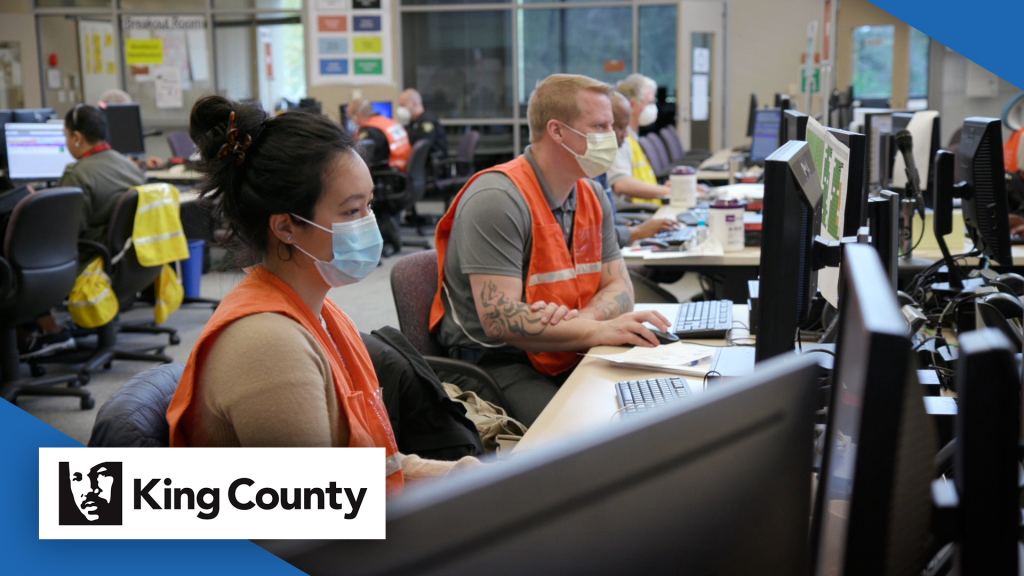
Crossposted from KC Emergency News Did you know there are more than 1,400 long term care facilities in King County? These include skilled nursing facilities (nursing homes), adult family homes, and assisted living and supported living facilities that provide care for older adults and people with disabilities who need help with activities of daily living. “People who live in long term care facilities are at high risk for COVID-19. Many are over age 60 or have underlying health conditions. They are often sharing a bedroom or bathroom and it is challenging to follow… Read More
Mental Health Month webinar: A Conversation on Self-Care, May 14

According to Psych Central, “self-care is any activity that we do deliberately in order to take care of our mental, emotional, and physical health. Although it’s a simple concept in theory, it’s something we very often overlook. Good self-care is key to improved mood and reduced anxiety. It’s also key to a good relationship with oneself and others.” The COVID-19 pandemic is affecting everyone’s mental health in unique ways. Now, more than ever, self-care and connection are needed. In recognition of Mental Health Month, join Shawna Johnson, Balanced You Employee Health Specialist,… Read More
King County mental health resources during COVID-19

King County is sending a mailing to all employees’ homes next week that highlights the mental health benefits and resources available to employees and families during the COVID-19 pandemic. Highlighted services include how to access mental health counseling remotely via telehealth, how to get support via the Employee Assistance Program and Making Life Easier, and Balanced You and community programs and resources that support mental health. Please look for the mailer at home next week, and remember you can always get mental health resources information online via the Mental Health Resource Guide, the… Read More
Tips for staying safe outdoors as more recreation lands reopen

King County Parks is reopening parks and trails on May 8 following a six-week closure in support of Gov. Jay Inslee’s Stay Home, Stay Healthy order to help flatten the curve of COVID-19 transmissions through the state. Outdoor recreation is a great idea but we absolutely need to continue to take precautions to prevent bringing COVID-19 back home with us. Everyone must practice safe distancing and good hand hygiene whether indoors or out because lives depend on it,” said Dr. Jeff Duchin, Health Officer for Public Health – Seattle & King County. “Where… Read More
Phone donation gives instant access to mental health support in isolation/quarantine

Crosposed from Cultivating Connections When King County opened its first isolation/quarantine site this March in Kent as part of its emergency response to the COVID-19 crisis, the need to support guests’ mental health in addition to their physical health was immediately revealed as a top priority. “It would be challenging for anyone to isolate or quarantine in a hotel room for up to 14 days, and this challenge is exacerbated when you have this terrible virus,” said Isabel Jones, Deputy Division Director, Behavioral Health and Recovery Division, Community and Human Services. “As part of our response we… Read More






 Employee News