
IE web browser is no longer supported – please use Edge
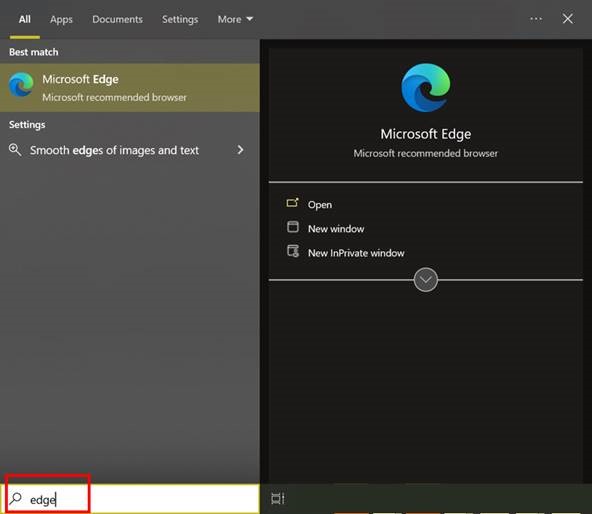
Microsoft is disabling their Internet Explorer (IE) web browser in favor of Edge. Going forward, any links you click will automatically open in Edge rather than IE. You can manually open Microsoft Edge by searching your Windows start menu in the lower left corner of your screen. For easier access, you can add the Edge browser to your task bar (the bottom ribbon on your screen) by simply right clicking on the Edge icon and selecting the “pin to taskbar” option. The Edge browser is expected to work with nearly all websites;… Read More
Security tips – Lock your screen
Locking your screen when you get up from your desk is a security action that is often overlooked and can have dangerous consequences. Failing to lock your screen can open you up to several vulnerabilities–some more serious than others. Although many organizations have a policy which automatically locks your screen with a screen saver after a certain amount of inactivity, not all screen savers are password-protected, leaving your workstation defenseless. Here are a few actions the bad guys can do when you leave your workstation unlocked and unattended: Files can be downloaded… Read More
Security Tips – Watch Out For Smishing!

What it is: Many companies, products, and services have started offering text message alerts to keep you up to date. Scammers are aware of these alerts and they’re taking advantage of unsuspecting individuals. They send a text with dangerous links, or prompt you to respond with personal information by posing as your bank, an online account, or other service–to name a few examples. This Short Message Service (SMS) or text-based phishing scam is called Smishing, and the bad guys have taken a liking to it. How it works: The following are only a couple… Read More
Annual Cybersecurity Training required for all King County employees
Cybersecurity Training is an important safeguard that protects King County systems, and the number of employees who complete training each year impacts our insurance rates. When your training is assigned, you will receive an email from kc-knowbe4@kingcounty.gov with a direct link to your required training modules. If you can’t find the email, check your Junk folder or login with your work email here. All employees must complete annual Cybersecurity Training by Dec. 31, 2022 unless your agency has specified a different deadline. Thank you for doing your part to protect King County. Read more.
King County Security Tips: Vishing
Cybercriminals not only use the internet and email to gain access to sensitive information, they use telephones to their unlawful advantage. Vishing is the term for criminal attempts to influence action or gain confidential information over the phone using social engineering. How it Works: Criminals have the ability to call from a blocked, “spoofed,” or private number, making it easier to pose as a fellow employee, an authority figure, or any person or organization that you would commonly interact with. Any information regarding the processes or technologies a company uses would assist… Read More
Create diagrams and flowcharts with Visio Online – now free for all King County employees

Visio is the ultimate tool for creating professional diagrams and flowcharts. Now any King County employee can access the free Visio Online app through your Office 365 portal. Visio Online offers most of the same tools and templates as the paid desktop version, allowing you to easily create flowcharts, org charts, network diagrams, and more. Learn more by watching this video demo (28:20) from our recent KCIT Office Hours with Microsoft webinar series, or check out the Office 365: Get Started with Visio Online Skill Track in the KCIT Training Hub. For further assistance, Executive branch employees can LiveChat with… Read More
KCIT Tech Centers now located in Tukwila, Northgate, and South Seattle

Executive Branch employees can now get IT support at any of KCIT’s new Tech Centers in Tukwila, Northgate or South Seattle. KCIT Tech Centers provide employees with convenient onboarding/offboarding services, docking station and monitor replacements, and general PC fixes that can’t be solved remotely. KCIT Tech Center support is available by appointment only. If onsite help is needed, KCIT staff will contact you to schedule an appointment at your preferred location. KCIT Tech Centers are another example of how KCIT is supporting King County’s hybrid workforce as we move forward with the Future of… Read More
Tech Tip: KCIT shares accessibility tips for Outlook, Office, and Teams
Since one out of five people has a disability, it is important to support everyone’s accessibility needs. Whether it’s larger text sizes or closed captioning for online meetings, accessible technology makes a real difference. KCIT developed this online training series with Microsoft to discuss accessibility features in Outlook, Office, and Teams. Take a look to learn how you can support this work. Accessibility Tools for Low-Vision Accessibility Tools for Hard of Hearing Accessibility Tools for Neurodiversity Creating Accessible Content for Every Body For help using accessible technology, contact the KCIT HelpDesk here or at… Read More
King County Security Tips – Is That Email Really from HR?

One of the easiest ways the bad guys trick you into falling victim to their fraudulent scams is to exercise a sense of trust by pretending to be someone you know. More than likely, you receive emails from your Human Resources team on a frequent basis. Scammers take advantage of this constant communication by crafting spear phishing attacks using emails that spoof your HR team. Spear phishing attacks are email scams that typically target an individual or organization by spoofing, or appearing to come from a trusted sender. Don’t blindly trust emails… Read More
Tech Tip: Teams Breakout Rooms are here
Microsoft Teams offers users the option to use a Breakout Room. Meeting organizers can use Breakout Rooms to break meeting attendees into small groups during you meeting. Breakout Rooms rolled out the week of Dec. 7. Meeting organizers should now see the icon in their meetings. Only meeting organizers can create and manage Breakout Rooms. Anyone in a Teams meeting can participate in a Breakout Room though. To use Breakout Rooms, as a meeting organizer, select the Breakout Rooms icon (a square within a square). Follow the instructions that pop-up in the next screen. To learn more about Breakout Rooms, read this… Read More






 Employee News