
Pride is coming! Order your t-shirt by June 14!

 The 2019 Pride t-shirts are ready to order! Fill out the order form, get payment ready ($8.50 each shirt, cash or check preferred, no credit or debit cards) and return the completed form with payment to Mariah Taylor in person or via interoffice mail (CNK-PH-1250) by Friday, June 14. Orders without payment will not be submitted. If you work outside of the downtown core and want your shirt sent through interoffice mail, include your mailstop on your order form.
As a reminder, we will have an additional 150 adult size t-shirts available at no cost on a first-come, first-serve basis the morning of the Parade, Sunday, June 30. Further details about when and where we will meet for the Parade will be sent out once it is available. To stay up to date on all things Pride Parade related, send an email to Mariah.Taylor@kingcounty.gov with the subject line PRIDE Info.
Share this:

King County employees featured in film at SIFF
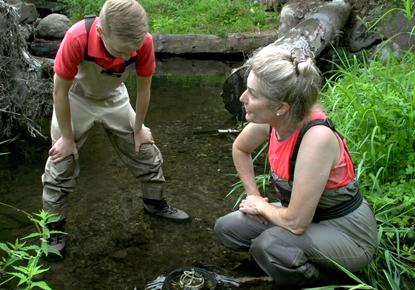
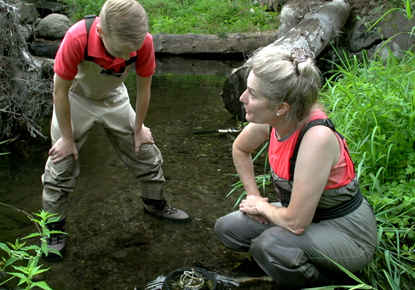 King County’s Environmental Lab and the Roads Services Division will be featured in a free public screening of the film, “Engineering with Nature – An Ode to Water, Wood, and Stone” on Saturday, June 8 at 2 p.m. An entry in this year’s Seattle International Film Festival, the film is the story of Seattle Public Utilities’ Thornton Creek Project to reduce flooding and restore Chinook spawning habitat. The Environmental Lab did the analysis and testing to monitor how well the project worked, while the Roads Services Division also worked on the project and are interviewed in the film.
The screening will be held at the Seattle Central Library, 1000 4th Ave. Seattle, WA. This will be followed by an extended Q&A with director Shelly Solomon, members of the National Oceanic and Atmospheric Administration (NOAA), U.S. Fish and Wildlife Service, Natural Systems Design, and other project participants. More information is available on the Seattle Public Library website, and seats can be reserved here. Tickets are free, but seating is limited.
Share this:

PSB staff set newly planted trees up for success!
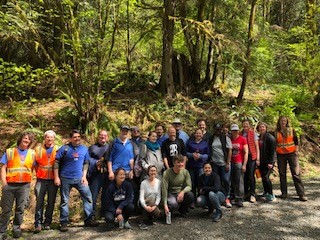
On Friday, May 3, staff from the Office of Performance, Strategy and Budget (PSB) volunteered at the Cougar-Squak Animal Migration Corridor. This busy hiking area, formerly a private camp ground, was acquired by King County in 2016. Earlier this year, numerous trees and shrubs were planted to fill in the spaces that had previously been campsites. Our work for the day was to place mulch around the plantings to protect them and increase their chance of survival.
The team got right to work and exceeded expectations! In fact, King County Parks staff had to buy more mulch in order to keep everyone busy. We overheard them marveling over the speed at which we worked and wondering what distinguished our group from other volunteers.
In summary, we worked hard, learned that we are a great team whatever the work we’re doing, and we got to spend a beautiful day in nature working to make our County a better place!


Share this:

King County Executive and employees volunteer at Jefferson Day Center
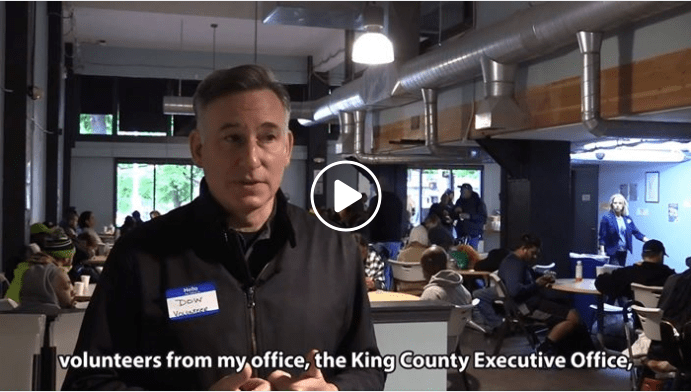
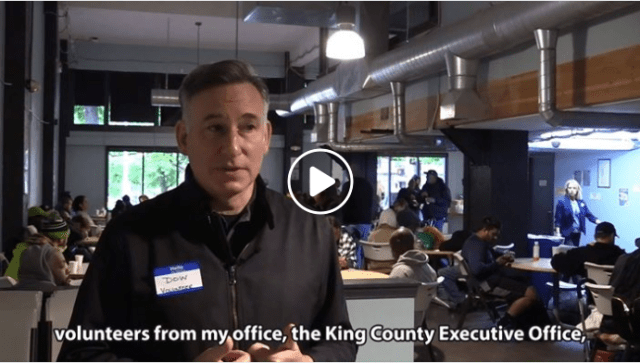
Recently, Executive Constantine and members of his office staff volunteered at the Jefferson Day Center.
“We brought and served breakfast and, more importantly, got to spend time with some of our neighbors who we are helping to transition out of homelessness,” he said.”
Hear more about the experience in this video, posted to Executive Constantine’s Facebook.
Share this:

PeopleSoft weekend outage beginning 3 p.m. Friday, June 7

To allow for system maintenance, the PeopleSoft system will not be available this weekend beginning 3 p.m. Friday, June 7. During this planned outage, the Business Resource Center (BRC) will apply vendor updates and maintenance.
This work will begin on Friday, June 7, at 3 p.m. and is scheduled to be completed by 6:30 a.m. on Monday, June 10. The system will not be available for access by any County staff during this outage window. There will be a communication sent out to all County staff when the system becomes available.
We realize that this outage impacts PeopleSoft users. We appreciate your understanding and support.
Share this:

Mark Rowe is the new Deputy Director for King County Local Services Permitting Division
Crossposted from Local Services
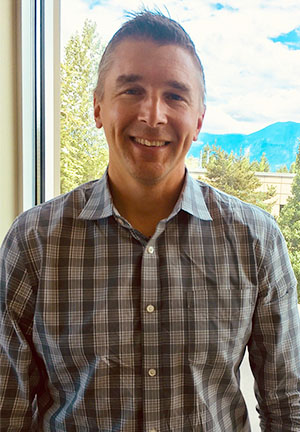
Recently, King County Local Services Permitting Division welcomed Mark Rowe as its new Deputy Director.
It’s somewhat of a homecoming for Rowe, who had two prior stints with the county. He first spent six years as a Registered Environmental Health Specialist for Public Health-Seattle & King County before joining AT&T Broadband, where he managed the teams that established high-speed data and voice networks in the state. In 2003, he rejoined Public Health as Program Manager for Emergency Preparedness, then as Food Protection and Water Recreation Facilities Section Manager.
Read more from Local Services
Share this:

Supporting and advancing immigrant rights
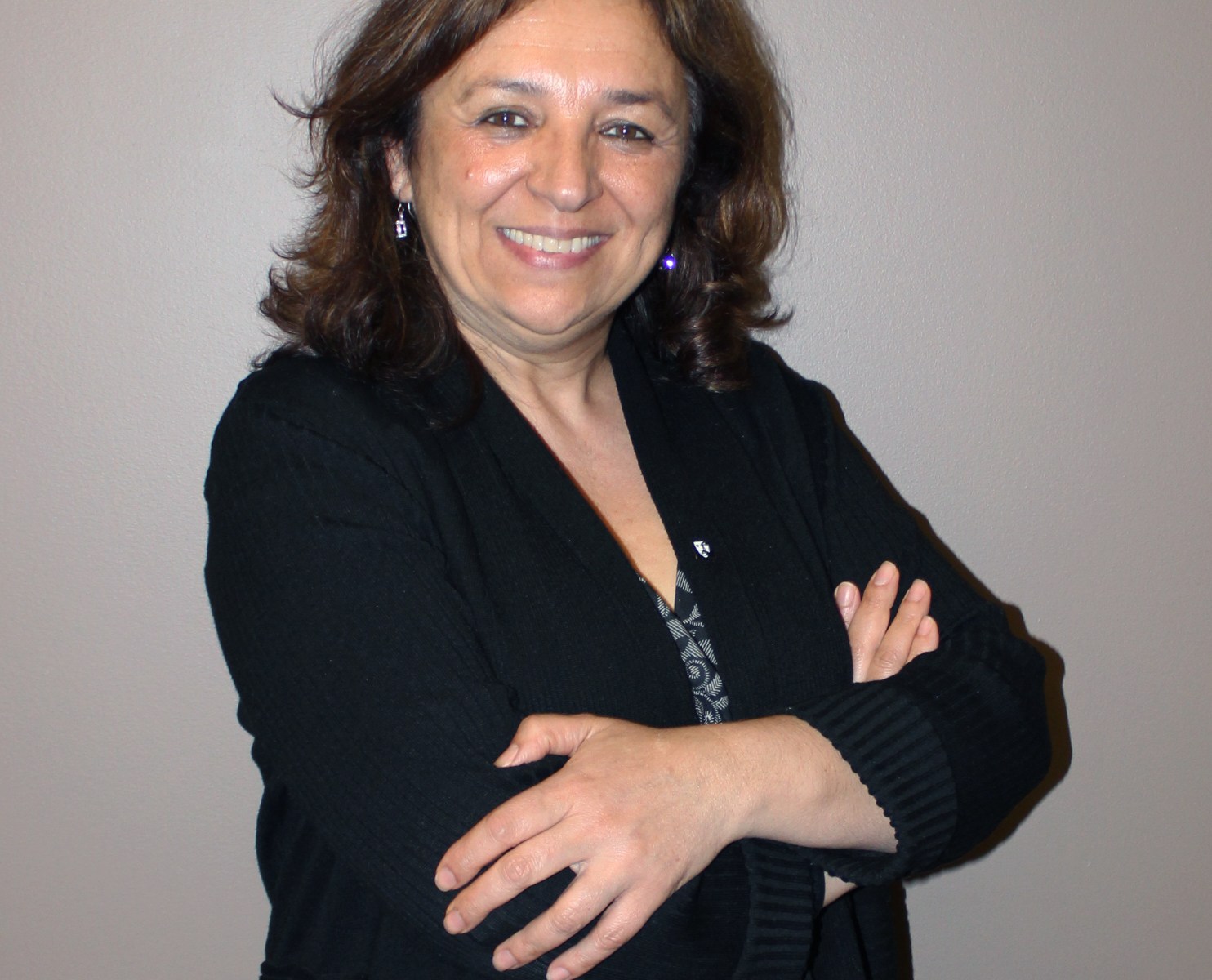
Bookda Gheisar has been the Immigrant and Refugee Policy Advisor for King County in the Office of Equity and Social Justice (OESJ). This is Bookda’s last week before she transitions to take a new position at the Port of Seattle as their first Senior Director for Equity, Diversity, and Inclusion.
In this article, Bookda shares some of her reflections and learnings while at the County and provides resources that are available to support King County employees as we all work towards more equitable work places and communities.
In 2015, the King County Council and King County Executive formed the King County Immigrant and Refugee Task Force. I was hired as a consultant to conduct community engagement and provide recommendations. Over nine months, we held more than 20 community meetings hearing feedback from more than 500 immigrant and refugee community members. This critical work identified barriers in accessing King County services and offered many solutions as identified by community members. The final report can be viewed here.
I then joined the Equity and Social Justice team to support immigrant community partnership and engagement, developing policies to advance and protect the rights of immigrants. After three years, I am now moving on to help create the first office of equity for the Port of Seattle. As I leave, I reflect upon some of our joint accomplishments.
Immigrant and Refugee Commission
The task force recommended an Immigrant and Refugee Commission for King County. The Commission is now in place with 13 members from very diverse backgrounds and expertise.
The Immigrant and Refugee Commission (KCIRC) plays a significant role in engaging immigrant and refugee communities to establish long-lasting trust-based relationships with County offices and programs. KCIRC strives to leverage existing programs and funding, and advocate for increased dedicated resources necessary for immigrant refugee communities to thrive. Meet one of our Commission members in this video.
The Commission is currently engaging with a group of 50 Somali women business owners who have been displaced in Seatac. Read more here about how we are supporting efforts to develop short term and long term goals for their next steps.
I hope that all departments continue to reach out to the Commission through Matias Valenzuela (Matias.Valenzuela@kingcounty.gov) to ask for advice and support on initiatives and policies impacting our communities.
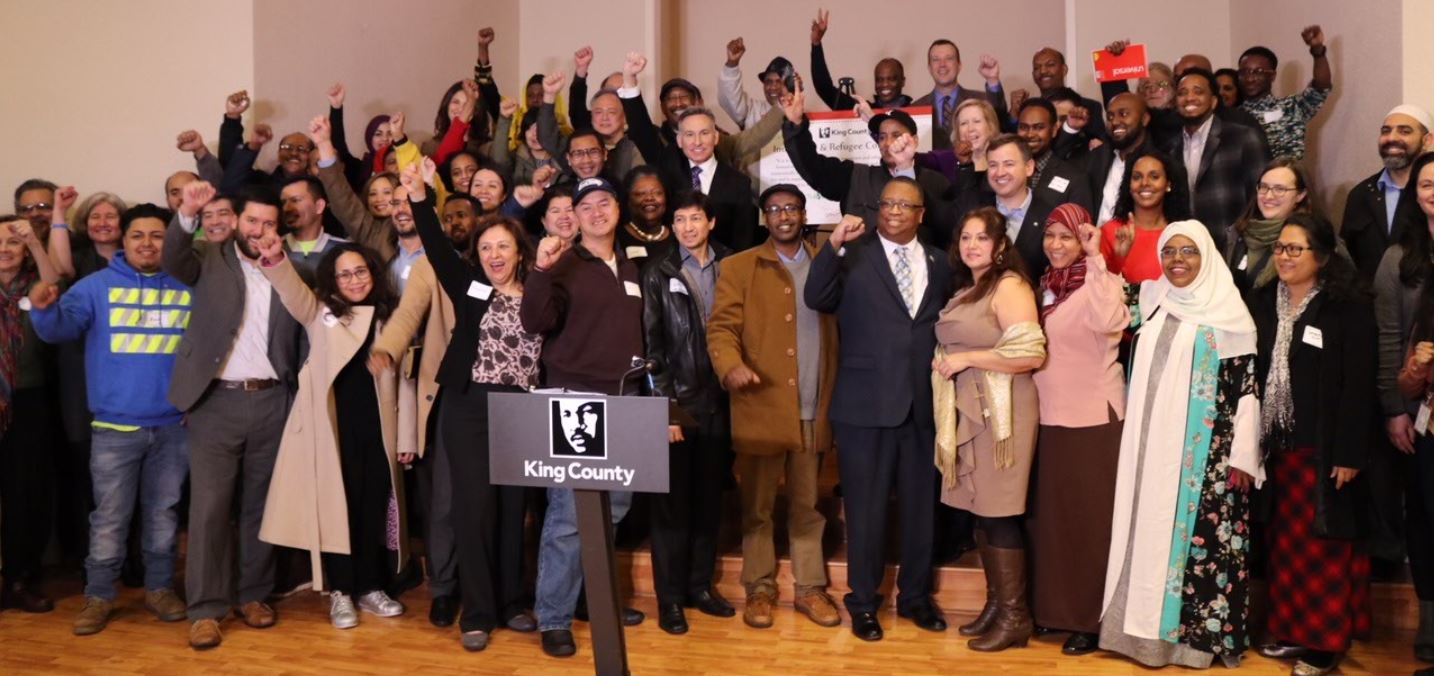
Pictured: Members of the community, King County Council, and the King County Executive celebrate the passing of legislation to create an Immigrant and Refugee Commission.
King County Legal Defense Fund
We founded the first King County Legal Defense Fund to support organizations serving low-income immigrants and refugees in King County whether in detention, facing removal, or in danger of losing their immigration status. Leveraging City of Seattle support between October 2017 and April 2019, Legal Defense Network partners have utilized $1.8 million to screen 1,072 individuals, conduct 885 intake assessments, provide direct representation for 357 individuals, and place another 12 with pro bono attorneys, and provide legal advice to an additional 339 individuals.
I am so happy to report that we have been able to continue this critical work and have just awarded $5,446,333 of funding for the next five years.
Immigration Ordinance
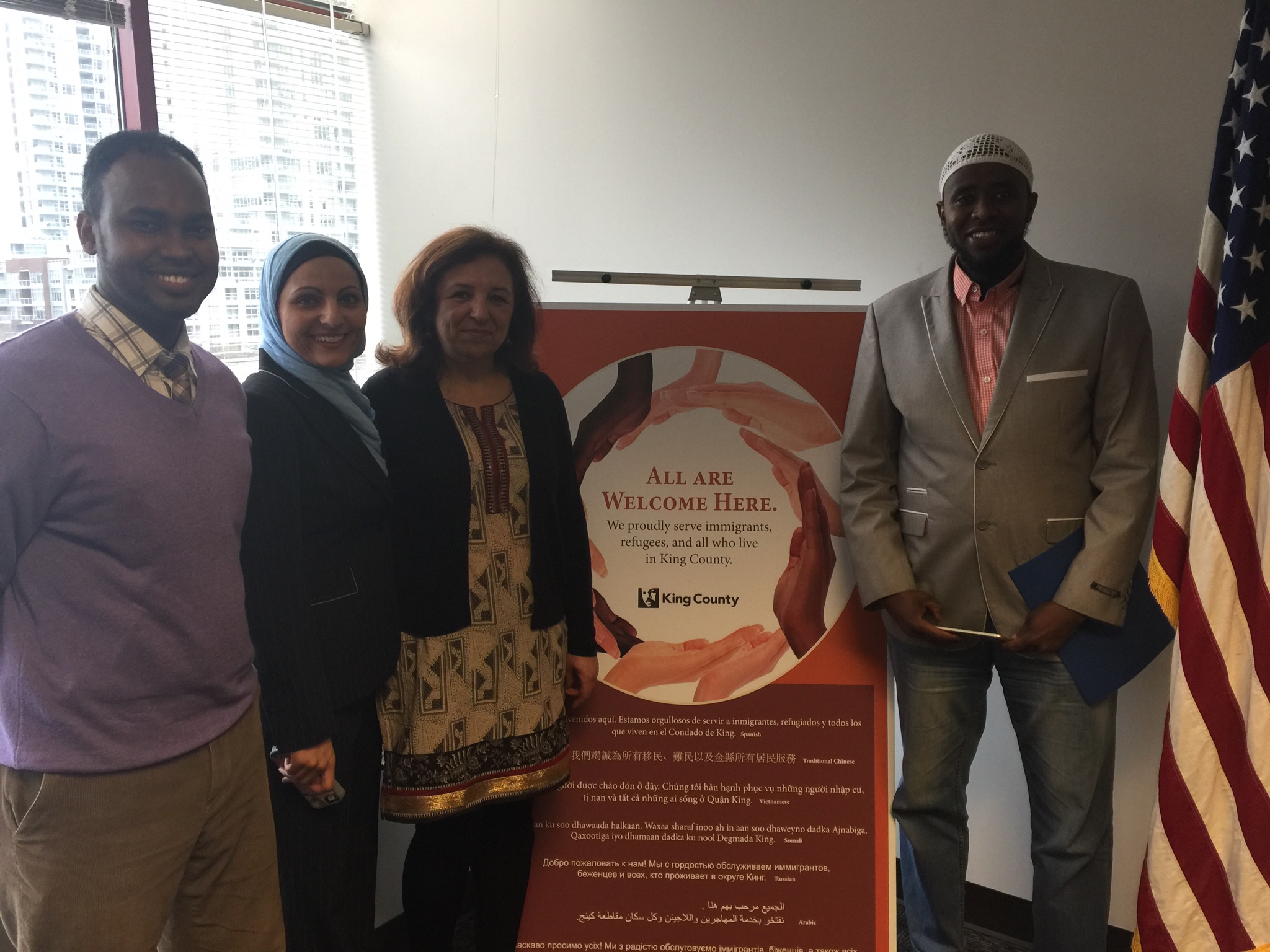
Pictured: Members of the community and King County executive staff celebrate the passing of the immigration ordinance.
In collaboration with community partners, advocacy organizations and Councilmember Gosset, we passed a historical robust immigration ordinance.
The ordinance fosters trust and fairness for King County immigrant communities. It established requirements for how agencies, offices and employees will provide services to immigrants, and requirements for the Department of Adult and Juvenile Detention honoring of federal administrative detainers, granting access to inmates and sharing information. It also provides translation assistance requirements for non-English speaking persons, a formal complaint process and an immigrants and refugees fund.
Other tools, models and resources
Much of the work I have done at the County provides a framework or resources for others to also perform similar work. I am happy to share the following tools and encourage you to refer to them when working towards your own equity goals:
- A racial equity framework that contributed to the Workforce Development Council for King County and the City of Seattle.
- Equity and Social Justice values that shaped our community engagement approach related to Puget Sound Taxpayer Accountability Account (PSTAA).
- Tools and resources and training materials for King County employees to help support your efforts.
Thank you for everything and may we have many reasons to collaborate together when I am at the Port of Seattle.
Share this:

Solidarity with our Virginia Beach colleagues
Dear fellow King County employee,
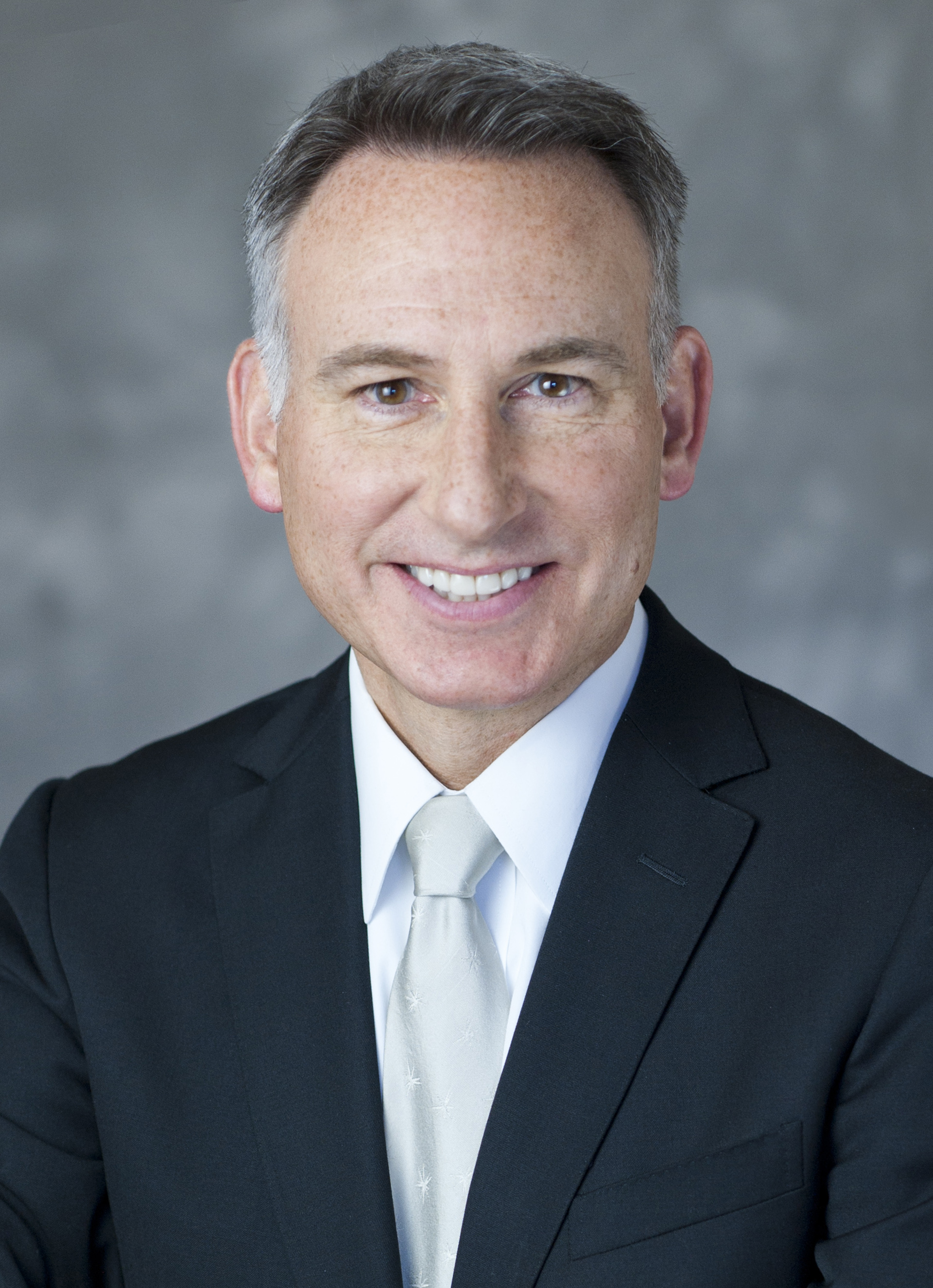
King County Executive Dow Constantine
On Friday, our nation witnessed another mass shooting, this time at a municipal building in Virginia Beach. Most of the people who lost their lives were public employees, dutifully serving the people of their community.
Public service is important work, and it only compounds the tragedy that these individuals died while working to improve the lives of their fellow Virginia Beach residents.
Each time a shooting occurs and lives are senselessly cut short, it erodes our sense of safety. Sometimes it is worshipers. Sometimes schoolchildren. This time many of the victims were our colleagues in municipal government. We send our message of sympathy and solidarity to the entire Virginia Beach family.
Keeping you safe in the course of your work is paramount, and we work hard to maintain the security of our worksites. If you ever see anyone or anything that looks potentially dangerous, please call the Facilities Management Division Security at 206-296-5000. If it’s an emergency, call 911 first.
I also encourage you to sign up to KCInform, our employee emergency alert system, to make sure you can be reached in a major emergency. If you haven’t yet registered your contact information in KCInform, please email kcinform@kingcounty.gov or call 206-296-3830 between 8:30 a.m. – 4:30 p.m. Monday – Friday to request your unique registration link.
When we witness outrages like this one, it is important that we support one another. If you would like to speak with someone, King County provides two free services to employees that offer professional support and advice: the Employee Assistance Program and Making Life Easier. Both resources are free and confidential.
Thank you for everything you do for the people of King County.
Sincerely,

Dow Constantine
King County Executive
Share this:

Pet of the Week: Miss Daisy

 Hi! My name is Miss Daisy and I am available for adoption. I was brought in by my previous owner on May 24, 2019 because they could no longer house me safely. I lived in a home with another dog named Miss Leena, we are best friends and would love to find a home together! I’m a social butterfly and I am the party of the room everytime! I’m such a sweet little gal with so much love in my heart! My personality color is GREEN. I am an adaptable dog who loves to go with the flow! I am outgoing and carefree, and I just can’t wait to find my forever home! For more information, please reference Animal ID Number A585555 and call 206-296-3936.
To see this pet and view other animals available for adoption, visit www.kingcounty.gov/adoptapet.
Share this:

Featured Job: User Experience Designer

Salary: $106,889.33 – $135,488.70 Annually
Location: Seattle, WA
Job Type: Special Duty Assignment or Term Limited Temp (TLT)
Department: KCIT – Information Technology
Job Number: 2019-09564
Closing: 6/7/2019 11:59 PM Pacific
King County is looking for an experienced UX designer to join our growing User Experience team. As a UX designer, you will own the design of a product from start to finish: from conducting user research and creating elegant designs that help users achieve their goals, to validating designs through usability testing. We’re looking for someone who will bring a deep empathy for the user, an outstanding visual aesthetic, and a conscientious approach to projects. You should have a great design sense, a thoughtful portfolio, and enthusiasm for working through complex problems.
King County Department of Information Technology (KCIT)
KCIT is providing the building blocks for many of the region’s most critical services. As the business solutions partner, we collaborate with the 18 County departments to develop products and services that better serve the needs of our customers and our community. To learn more about KCIT, please visit: http://kingcounty.gov/depts/it.aspx
Learn more about this position or view all available positions.






 Employee News