
Save the date: Fifth Annual PRIDE CLE and Happy Hour event

Spread the word about this Pride Month event sponsored by King County Superior Court and QLaw.
Two Steps Forward; One Step Back: The State of LGBTQ Rights
King County Superior Court and QLaw are sponsoring their Fifth Annual PRIDE CLE and Happy Hour event Monday, June 25 in the 12th floor jury room of the Seattle Municipal Court, 600 Fifth Avenue. The CLE will take place from 5:30 to 6:30 p.m., and the happy hour will be from 6:30 to 7:30 p.m.
The panel will explore up-to-the-minute legal issues related to state and federal public accommodation cases, and other vital issues related to civil rights. No registration is required, the event is free and all are welcome.
King County Superior Court Judge Michael Scott, Washington State Deputy Solicitor General Becca Glasgow, and attorney Jake Ewart will be presenting. Approval for one CLE and one CJE credit is pending.
For more information, reach out to Judge Joanna Bender at Johanna.Bender@KingCounty.gov.
Share this:

44th Annual Seattle Pride Parade Sunday

Why not bring your family and friends and join the King County contingent? We’re number 21 in the lineup (out of 220) and will be staging on 4th Ave, between Union and University. Just look for the Metro Bus or Medic One Rig to find us. We recommend people arrive at 10:30 a.m. to decrease the amount of stand-around waiting time. Even though the parade starts at 11 a.m., our contingent won’t start moving right away (we likely won’t start moving till noon-ish). This will give us enough time to hand out the free t-shirts and help decorate the vehicles! The 150 free t-shirts will be available on a first-come, first-serve basis in adult sizes only.
If you want to watch the parade, viewers are encouraged to watch from the sidewalks, leaving the street open for the parade. No parking will be permitted in any area along the parade route and all vehicles must be registered, must display an event pass and must have a driver in the vehicle at all times. Unattended vehicles will be towed at the owner’s expense.
Visit the Seattle Pride website for more information.

Share this:

Newest transit-to-trails service makes it safer, more convenient to explore Mailbox Peak

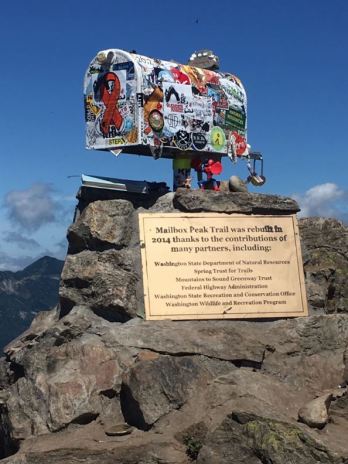 Trailhead Direct – a public-private partnership co-led by King County Metro and King County Parks –launched its third route this weekend, offering transit service from North Bend to one of the most popular trails in the Pacific Northwest; Mailbox Peak.
The newest transit-to-trails service reduces unsafe overcrowding at the Mailbox Peak parking lot. Transit vans depart every 20 minutes from a satellite lot in North Bend during weekends and holidays.
“We are making it safer and more convenient for hikers to explore one of the premier trails in our region,” said King County Executive Dow Constantine. “Trailhead Direct is the latest example of the creative, customer-focused transit system we are building for the people of King County.”
The new service is expected to decrease the number of vehicles that illegally park along Southeast Middle Fork Road, which King County Roads recently paved and built new bridges, culverts, and guardrails.
Trailhead Direct launched its first two routes earlier this year, offering service from the Mount Baker Transit Center to the Issaquah Alps and from Sound Transit’s Capitol Hill Link light rail station to Mount Si.
The transit vans can haul two bicycles for each trip. Passengers pay Metro’s standard off-peak adult fare of $2.50 until July 1, when Metro implements a $2.75 flat fare. Passengers can pay with an ORCA card, Transit Go Mobile ticket, or cash.
Dogs may ride at the discretion of the operator under Metro’s guidelines. Passengers with larger, non-service dogs may need to pay to an additional fare.
Trailhead Direct – Mailbox Peak
Start and end point: Twin Falls Middle School: 46910 SE Middle Fork Rd, North Bend, WA 98045
Trailhead Direct – Mount Si
Start point: At the East Olive Way and Broadway East Metro bus stop across from the Sound Transit’s Capitol Hill Link Light Rail Station located at 140 Broadway E, Seattle, WA 98102
End point: At the East John Street and Broadway East Metro bus stop near Sound Transit’s Capitol Hill Link Light Rail Station located at 140 Broadway E, Seattle, WA 98102
Stops: Corner of East Pine Street and Bellevue Avenue in Seattle; corner of East Pine Street at 9th Avenue in Seattle; the Eastgate Freeway Station in Bellevue; and the North Bend Park & Ride
Trailheads: Mount Si and Mount Teneriffe
Trailhead Direct – Issaquah Alps
Start and end point: Mount Baker Transit Center: 2824 Rainier Ave S, Seattle, WA 98144
Stops: Eastgate Freeway Station, Issaquah Transit Center
Trailheads: Margaret’s Way, Chirico Trail-Poo Poo Point, the High School Trail, and East Sunset Way
For more information, visit our Executive News page.
Share this:

Metro managers who #RideTransit: Alina Tanzer
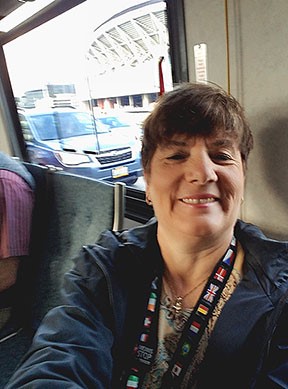
Shared by the Employee Transportation Program
In observance of Ride Transit Month in King County, the Employee Transportation Program is talking with four Metro managers about their transit commutes, and sharing any advice they’d like to pass along to new riders.
King County Metro Power and Facilities Director Alina Tanzer is the second manager ETP chatted with. She lives in West Seattle, near the Fauntleroy Ferry Dock. After 37 years with Metro, Alina knows a thing or two about her commute options. Her choice on any given day? She said, “Depends on my morning.”
When she’s not rushed, Alina can catch a Route 116 bus at the end of her street or take a 10- to 15-minute walk to the ferry dock, where buses come more often. “It’s a nice walk, and I enjoy it,” said Tanzer. “Especially during the less-rainy months.” When she’s in a hurry, she may forego the bus entirely and drive to a parking lot near her office. Or, she might split the difference; driving part way and then hopping on a bus or train to finish her trip.
Tanzer enjoys riding transit, even though she can’t read on moving vehicles. “When you’re driving, you have to be focused and paying attention, so riding the bus is an opportunity to relax,” Tanzer said. “I’m also a people watcher.” She doesn’t mind sitting in traffic when she doesn’t have to be responsible for getting through it.
Her advice to new riders? “There are many ways of getting information about how to ride. Metro’s website, for example, has a lot of good information on getting from Point A to Point B. Also, sign up for email alerts about the routes you use so you’ll be notified of any changes or interruptions in service.”
Don’t forget to consider transit for non-commute trips as well! “My husband and I are Seahawk season ticket holders,” said Tanzer, “and we’ve never driven to a game!”
Tanzer shot a selfie as her bus passed one of her favorite transit destinations — Century Link Field
During Ride Transit Month, you can enter to win prizes all month long if you:
- Log at least three transit trips on RideShareOnline during the month of June, and/or
- Take the Ride Transit Month pledge to ride transit three times in June, and/or
- Use the #RideTransit hashtag on Facebook or twitter to share your transit stories
To learn more about all your employee transportation benefits, visit your Employee Transportation Program website.
Share this:

Training Spotlight: Building Change Management and Effectiveness

In support of Investing in YOU, Employee News is rolling out a Training Spotlight, and we’re kicking it off with Building Change Management and Effectiveness!
Building Change Management and Effectiveness is a one-day training being offered July 27 and Sept. 7 in room 560 of the King County Administration Building. Craig Fleck will join King County’s own Debra Baker in delivering the session.
Helping your team, department or organization navigate the challenges of constant change is a critical part of any leader’s or manager’s work. Dealing with change effectively can reduce anxiety, fear and stress, and can increase productiveness, innovation and employee engagement. By exploring the dynamics of change and an effective system of navigating it during this one-day session, you will:
- Understand the nature of organizational change and transition and why a methodology for facilitating the acceptance of change is important
- Understand the CAP model, each individual element, and their intent
- Understand and have applied several tools associated with the elements
- Have a greater awareness of what is required to navigate change and be able to assist others in fostering the right conversations to create greater change acceptance for significant projects.
Learn more and register on Eventbrite before the session fills up, and visit Learning and Development on KingCounty.gov to learn more about trainings and other opportunities to invest in YOU!
Share this:

Roads Career Development Academy demonstrates Investing in YOU mindset

When engagement survey data revealed the importance of career growth and development to employees of the Department of Transportation’s Road Services Division, leadership reached out to Human Resource Division’s Career Support Services section to explore a partnership, and the Roads Career Development Academy was born. The program was designed to help employees identify their professional goals and take charge of their careers.
 Employee engagement scores at Roads are slightly higher than the countywide average, as are Roads employees’ feelings about opportunities for growth and development. Still, division leadership saw that the growth and development scores were lower than in other areas of their survey results, and they turned their attention there.
For Division Director Brenda Bauer, it was important to put control in the hands of employees and empower them to guide their own careers. “I wanted to provide the tools and support, and let them be the drivers,” she explained.

Roads Division Director Brenda Bauer
“We listened to what Roads needed and repackaged services we already offer to fit their goals,” said HRD Career Support Services’ Susan Navetski. “Then we brought it on site to make it more accessible to their employees.”
In 2017, the three-session career academy was offered to 46 people at both King Street Center and the Roads’ Maintenance facility in Renton, where many of Roads’ crews work.
The tailored Roads Career Academy consisted of:
Session 1: (3 hours) Introduction to Career Building
Identify individual interests and values as they relate to career options, explore similar job classifications, learn the importance of competencies when identifying career options, leverage tips for engaging in conversations with leadership, and gain the knowledge of how to research and seize career opportunities.
Session 2: (2 hours) Lominger Competency Building – Identifying Your Job-Related Competencies
Leadership Architect is a comprehensive, integrated set of tools that provides employees with the ability to identify and analyze their strengths relative to a number of job skills and competencies. Generate a list of self-evaluated competencies that are your Towering Strengths, competencies that are demonstrated talents and competencies that reflect areas for improvement. Having a clear understanding of your strengths and challenges, as well as requirements for your next job, are first on your path to career advancement.
Session 3: (1.5 hours) Creating Your Personalized Career Path
Participants learn how to create and manage a meaningful career development plan to guide them in closing the gaps between where they are and where they aspire to go. Assess areas of development and ways to identify and explore career opportunities. Create and manage a meaningful career development plan.
Employees who signed up committed to participating in the whole program. Roads leaders encouraged managers and supervisors to support their employees who were interested in attending.
The DOT Director’s Office and the King County International Airport team quickly followed suit and offered the Career Academy to their employees. They also chose to offer some additional workshop options, including Strategic Interviewing Tips and Myers/Briggs personality types.
The Career Academy is one of several actions Roads has taken to enhance professional development opportunities. The data show these efforts are making a difference! Scores increased around having equal access to advancement opportunities, being satisfied with opportunities to achieve career goals, and having opportunities to attend trainings, learn and grow.
“Participating in the Roads Career Development Academy provided a wonderful opportunity to examine my own career path and interests,” said Brandy Retting, Customer Service Administrator. “It introduced me to a wide array of practical tools and resources to help me identify, plan and work towards my goals.”
Roads is offering the academy again this year, realizing there were some who didn’t get to take it in 2017 – and word of mouth was so positive, even more want to participate. One enhancement was made; an optional fourth class is being offered, Creating Effective Application Materials. This class will share techniques to help employees effectively demonstrate how they meet job qualifications, identify transferable skills, and showcase their accomplishments on job applications.
Share this:

Metro HR employee athlete competing in 2018 Special Olympics USA Games July 1-6 in Seattle
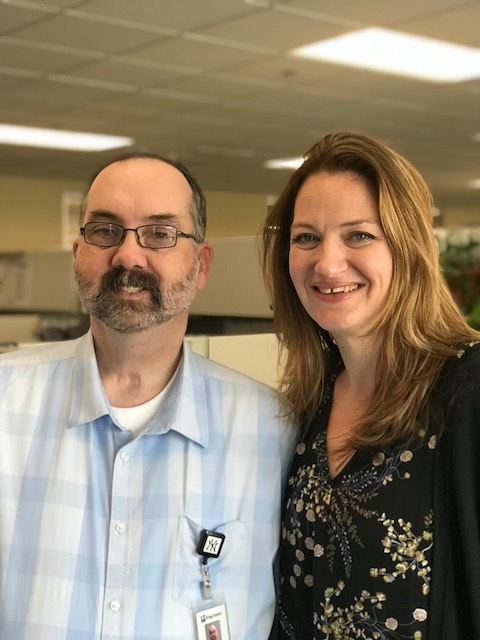
The 2018 Special Olympics USA Games will be held in Seattle and King County during the first week of July, and – in addition to being a public partner of the games – King County is proud to have employees participating!
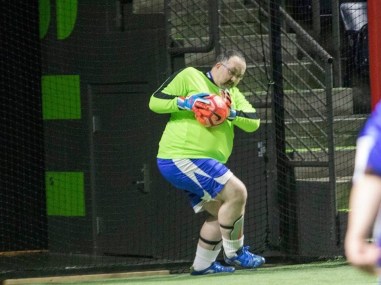
Jonathan Leckband enjoying one of his lifelong passions – soccer.
Jonathan Leckband, Office Assistant with the Department of Transportation, is one of the employees who will be competing in the games. He is a soccer player who will be representing the State of Washington during the Seattle- and King County-hosted games. More than 4,000 athletes and coaches representing each state and the District of Columbia will compete in 14 team and individual sports. The opening ceremony takes place July 1 at Husky Stadium, and the soccer team will compete July 2-5.
Jonathan is a North Seattle native who has been playing soccer for 33 years. He brings a lot of experience to the games, including preparing for and participating in similar games during high school, and keeping active in extracurricular opportunities like those offered by Kent Parks and Recreation. “I’m excited! This will be my first time playing at this level,” Jonathan said. “There will be more than 4,000 athletes at the games. I’m looking forward to the chance to show how good our team is. This will also be a chance to demonstrate sportsmanship, and maybe make new friends.”
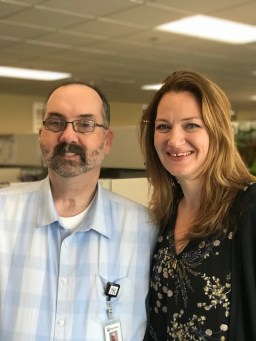
Jonathan Leckband with his job coach, Employment Consultant Meghan Spellman.
Jonathan recently joined King County Transit, providing administrative support to Operations and Human Resources, after working for District Court for 17 years. Employment Consultant Meghan Spellman, Jonathan’s job coach from Highline College Employment Services, has been working with him during his transition to his new position. “It has been amazing to see Jonathan grow both professionally with his new job and personally with this great opportunity to participate with Special Olympics,” said Meghan. “He has truly worked very hard with his team so that they are as ready as possible for the USA Games. The support Jonathan has been given from King County and his supervisors has allowed him to thrive and grow.”
In addition to being great to work with, Jonathan’s managers Jessica Carter and Abdi Elmi also supported his opportunity to participate in the games. “We worked out a schedule together and my colleagues have been very supportive of me as I’ve prepared.” said Jonathan.
The USA Games showcase the abilities of athletes with intellectual disabilities and the impact of Special Olympics through world-class competition, inspirational experiences, and modeling inclusion for all.
That is the mission of the USA Games, and it is much like our own King County goal of seeing both our employees and those we serve have the opportunity to fulfill their potential. “It is great to see Jonathan recognized both for his contributions to King County and as an athlete competing in the upcoming games,” said Christina Davidson, King County Supported Employment Program Manager.
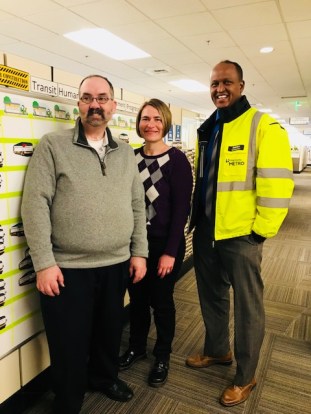
Jonathan Leckband with his managers Jessica Carter, HRIM Supervisor, and Abdi Elmi, Superintendent of Planning and Technical Support.
The Supported Employment Program matches qualified candidates with developmental disabilities to business needs within King County government. “Over the last three years, 14 supported employees have been hired into King County and I have consulted on 17 countywide recruitments,” said Christina. “This is the largest increase of new positions within the program since the 1990s and early 2000s.”
Adding value to the program, quality employment agencies provide job coaches, like Highline College’s Meghan Spellman, to support job candidates through their application process, onboarding, training, and retention of employment, as well as with ongoing career growth. King County teams are gaining awareness of and embracing the program. “DOT has become a big champion of Supported Employment, with Transit hiring four new positions over the past six months, and Roads hiring a new position in 2017,” said Christina. “A big Thank You to Transit and Roads leadership for their commitment in building an inclusive workforce!”
King County joins the State of Washington and the City of Federal Way as a Public Partner of the 2018 USA Games, and King County Metro has joined Sound Transit, Alaska Airlines, REI Co-op and others as a Bronze Medal Partner. In a joint effort with Sound Transit, King County Metro is an Official Transportation Sponsor of the 2018 USA Games. “We’re honored to do our part for the Games, and invite the athletes, families and volunteers to ride and enjoy our frequent and reliable transit services,” said King County Metro General Manager Rob Gannon. Additionally, King County HR representatives from Human Resources, Transit and Parks Divisions will be hosting a booth at the Special Olympics Job Fair July 5 and 6 at the University of Washington for athletics and the general public.
For more information, tickets, schedules and special events details, visit the Special Olympic USA Games website. In addition to event information, there are details on the site about a variety of ways to get involved and opportunities to volunteer. You may also nominate a game changer. If you know a person or a company that exemplifies what it means to be inclusive, the 2018 Special Olympics USA Games wants to hear from you!
For more information about the King County Supported Employment Program, visit the website and reach out to Program Manager Christina Davidson at 206-477-3372 or Christina.Davidson@KingCounty.gov.
Share this:

New Nondiscrimination and Anti-Harassment Policy for Executive Branch, Elections, Assessments and Sheriff’s employees

Chief People Officer Whitney Abrams has launched King County’s new Nondiscrimination, Anti-Harassment and Inappropriate Conduct Policy, effective July 1, 2018, which applies to employees in Executive Branch departments, Elections, Assessments and the Sheriff’s Office.
“Through our Investing in YOU initiative, we are building a workplace culture that is respectful and supportive of all employees and the unique skills, experiences and perspectives that each of us brings to King County.,” Abrams said in an email to employees. “There is no place for any type of harassment or discrimination in this culture, and our new Nondiscrimination, Anti-Harassment and Inappropriate Conduct Policy makes it clear that this type of conduct towards a fellow King County employee will not be tolerated.”
The new policy goes further than our existing policy by also prohibiting inappropriate conduct. Inappropriate Conduct is defined in the policy as “conduct that, while not rising to the level of unlawful discrimination or harassment, communicates a hostile, derogatory or negative message about persons based on protected status. Inappropriate conduct can be either verbal or nonverbal and includes slights, insults and other conduct that a reasonable person would find offensive.”
Watch this short video to learn more about the new policy and read the policy here. You can also talk to your department’s Human Resources Manager for more information. We are also preparing a training plan so all employees understand the policy, its expectations of us and the process for reporting and following up on incidents.
Share this:

Hiring Managers: Vets 4 HIRE funding available

Hiring managers have the opportunity to support veterans in their transition to civilian employment by creating a Vets 4 HIRE fellowship within your organization. The Vets 4 HIRE learning experience should last a minimum of six months and can be either full- or part-time. The goal of the fellowship program is to provide veterans with training and practical, hands-on experience to increase their skills for future opportunities at King County and other civilian employment.
You can be reimbursed up to 50 percent of the first six months of the veteran’s wages, up to a maximum of $6,250. There is funding for 16 opportunities on a first come, first served basis. Upon completion of the initial six months, departments have the option to extend the fellowship for up to a maximum of 2,080 hours, and assume 100 percent responsibility for additional costs.
Veterans offer a proven work ethic, and many are problem-solvers, fast learners, excellent team players and leaders. They have great experience working effectively in multi-cultural environments and are very comfortable with technology.
For more information, contact Vets 4 HIRE Program Manager Susan Navetski at Susan.Navetski@KingCounty.gov or 206-477-3271. Please speak with your department HR staff to begin the process of creating a veteran internship opportunity. Thank you for supporting our veterans!
Estimated cost for a six-month Veteran Fellowship
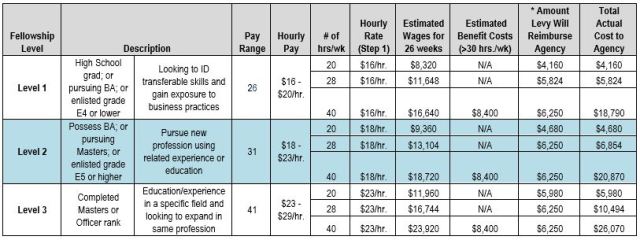
* Levy will reimburse 50 percent of wages, up to $6,250, upon completion of the first six months.
Share this:

Environmental education programs and resources

King County’s Department of Natural Resources and Parks has made it easy for educators and students to find guidance on habitat, invasive plants, clean water projects and more in curricula that meet state and federal education requirements, that is customized for our Pacific Northwest environment, and that offers students ideas for future careers.
The guides provided list resources that include curricula, transportation, in-class trainers, workshops, costs, presentations, camps, and grant and professional development opportunities.
The Stormwater Runoff Education Resource Guides, the Green Schools Program, internships and more are in the Environmental Education section of our Services website.
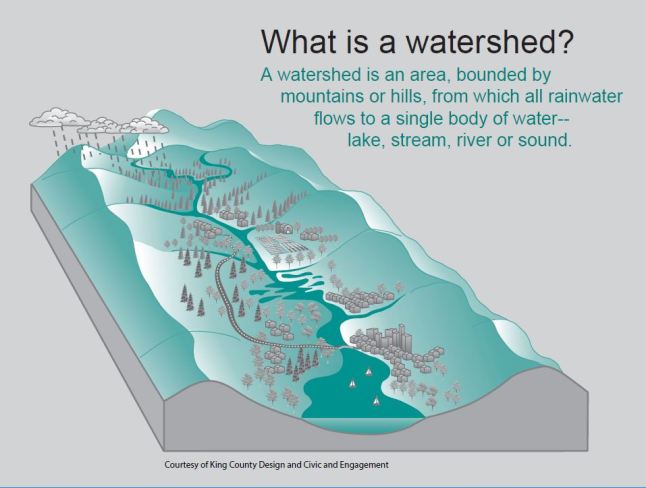
Graphics like this are just some of the many resources available.






 Employee News