
New facility will build on work to keep youth out of justice system
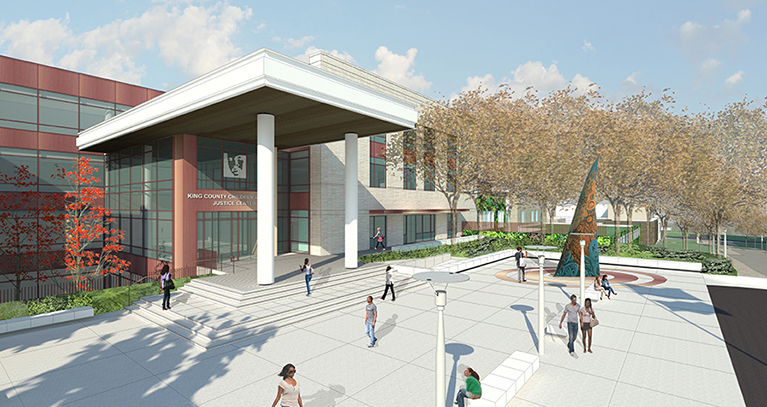
King County is currently constructing a new Children and Family Justice Center to replace the failing Youth Services Center that will help the County build on its efforts to keep young people from entering the criminal justice system, deliver nation-leading diversion programs, and connect youth and their families to services and support.
The CFJC, which is being constructed with funds from a $210 million levy approved by King County voters in 2012, will have space for courtrooms, youth and family program space, a resource center, childcare facilities for families on court business, and a juvenile detention center with 100 fewer beds than the existing detention facility.
About $45 million of the $210 million CFJC project – around 20 percent of the project’s budget – is estimated to be spent on the detention portion of the new center. King County has reduced the number of youth in detention by more than 70 percent since 1998, and the new facility will help the County build on that work.
In a recent interview, Chief Juvenile Judge Wesley Saint Clair said that the new building will “give us a new framework” to help young people and families learn, grow and heal.
“I was in a community meeting last night and someone asked ‘Judge, why are you guys building a new building?’ And I said ‘have you been to our building? Have you seen how disrespectful it is?’ Our building sends vibes that say ‘we don’t care about you families or children.’ Because we’re giving you this raggedy building, where you can’t drink the water out of the water fountain, that leaks, where you are forced to have private conversations in the lobby because there’s not enough space for you to have those behind closed doors.’ So I think when you look at what’s happening it [the new building] will give us a new framework to keep evolving the change model.”
The new facility will provide a respectful and supportive environment to link even more youth and families – court-involved or not – with services and non-profit organizations in their own communities. Learn more.
Share this:

Celebrating recently promoted DAJD employees
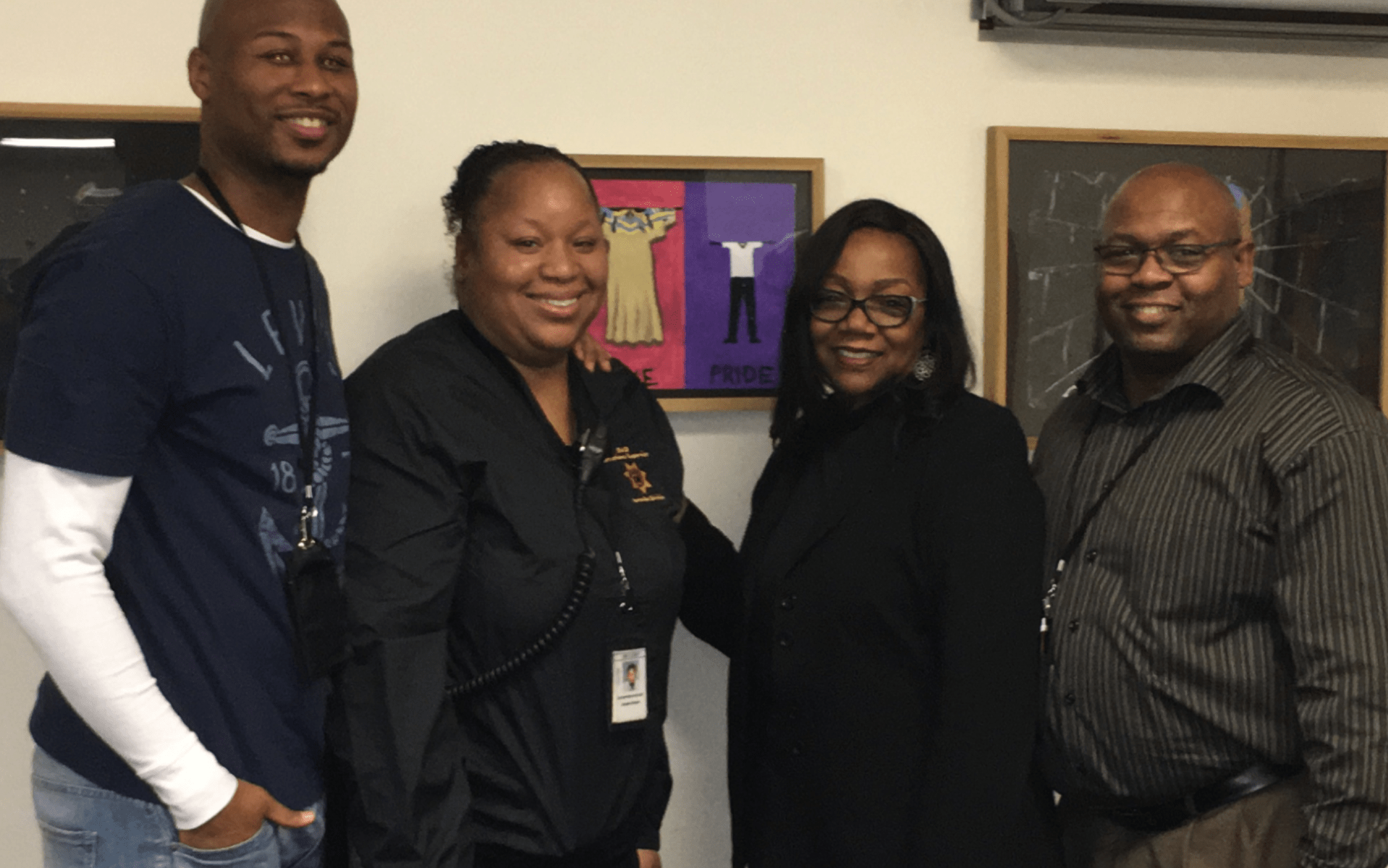
On November 7, 2017, the Juvenile Division within the Department of Adult and Juvenile Detention hosted a promotion ceremony for several employees:
- Randy Green was promoted to Corrections Supervisor
- Belenda Wilson was promoted to Corrections Supervisor
- Rich Reed was promoted to Restorative Justice Coordinator (PPM II). Rich also received his 25 year Service Award.
Congratulations to Randy, Belenda and Rich on a job well done!
Pictured: Left to right are Randy Green, Belenda Wilson, Juvenile Division Director Pam Jones and Rich Reed.
Share this:

Kudos! Cecilia Camino, Juvenile Probation Counselor, Superior Court

The Family Intervention and Restorative Services (FIRS) team received this note from a thankful parent:
Parent: Thank you so much Cecilia… As traumatic as this was, the result is already much improved at home. I am so grateful for FIRS – I wish this program existed everywhere. The flow into the prison pipeline for young black males is definitely slowed by this program! Juvenile court should be a prescription for kids getting back on track. Thank you! Barb
Share this:

Featured Job: Public Defense Attorney – Recent Fellowship / Clerkship experience

Salary: $65,109.41 – $98,162.48 Annually
Job Type: Multiple job types-career service and/or temp
Location: Seattle, WA
Department: Department of Public Defense
Job Number: 2018IVB07894
Closing: 3/26/2018 11:59 PM Pacific
The Department of Public Defense (DPD) is now actively recruiting Attorney applicants with graduation dates between January 2016 and June 2017 that have been engaged in legal fellowships or clerkships. Individuals would be committed to working in public defense in King County to begin employment in late summer 2018 through early spring 2019.
The successful applicant will have a passion for public defense and a demonstrated commitment to helping those who are less fortunate. He or she will also have a demonstrated ability to receive feedback and integrate that feedback into his or her practice.
For inquiries, please feel free to contact Irma Van Buskirk at 206-263-9002 or Irma.VanBuskirk@kingcounty.gov.
Learn more about this position or all available jobs.
Share this:

Social Media Spotlight: King County Prosecuting Attorney’s Office LinkedIn

 The King County Prosecuting Attorney’s Office employs more than 400 people, including 210 attorneys.
Follow the Prosecuting Attorney’s Office on LinkedIn today.
Click here to view all King County social media pages.
Share this:

Juvenile Justice: The stats

Children and Family Justice Center
$210 million: Levy amount King County voters approved in 2012 to build a Children and Family Justice Center to replace the outdated Youth Services Center
$45 million: Estimated detention portion of the $210 million CFJC
$40 million: Estimated cost of repairs to existing YSC
112: Number of juvenile detention beds at new CFJC, a reduction of 100 from the YSC’s 212 beds
Juvenile Detention
136: Reduction in number of youth in detention from 187 in 1998 to 51 in 2016
49%: African American composition of youth in detention in 2016 (see below):
- African American 49%
- Asian/Pacific Islander 7%
- Caucasian 23%
- Hispanic 16%
- Native American 6%
- Other/Unknown 0%
Family Intervention & Restorative Services (FIRS)
79%: Percent of youth arrested for a family violence incident in 2017 who avoided secure detention due to FIRS (229/290 youth)
Share this:

Judge focused on keeping youth out of juvenile justice system

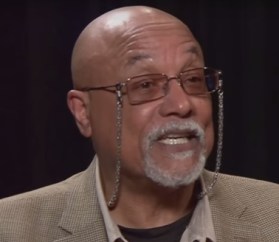 When Judge Wesley Saint Clair was named Chief Juvenile Judge for King County Superior Court in 2012, he saw it as an opportunity to make a difference for the community and particularly for young people of color in the community.
“When I came to Juvenile Court I felt that was a shift in the alignment of the stars and the moons because I think there was a conversation occurring that’s going to really allow us to manifest change in a concrete fashion,” Judge Saint Clair said. “It’s been accelerated at this point in time, I still have that feeling.”
Judge Saint Clair is focused on challenging, disrupting and ending the systems that have resulted in and perpetuated racial disproportionality in the criminal justice system.
“Is that really what we want it [the criminal justice system] to do, especially to young people, when the impacts of what we do often result in generational impacts, not only for the person who is appearing before you but for their children, and for their children?” Judge Saint Clair said. “How do we begin the process of disrupting that in an appropriate way?”
The issue goes well beyond the juvenile justice system and Judge Saint Clair encourages us to look system-wide to see how society is failing young people of color. This includes child welfare and dependency cases where children are removed from the home.
“Part of the conversation has been around ‘let’s blame the kids, let’s blame the families,’ and my pushback is that it’s not families that are broken – there are dysfunctional families that have a variety of challenges that oftentimes are not of their own making – but what’s really broken are the systems that allow it to be perpetuated without having any sort of will to change it.”
Judge Saint Clair views the work that King County is doing in juvenile justice reform as a “petri dish” of people willing to try different things.”
“My hope is, what should be happening is, that this should be the petri dish and then it moves to the adult side, and becomes part of a true criminal justice reform. Because what we’re doing here, what we see in a microscopic fashion at Juvenile Court, is happening at a macro level in the rest of our justice system.”
Progress is being made. The Average Daily Juvenile Detention Population fell from 187 in 1998 to 51 in 2016, but the number of African American youth in detention remains disproportionately high. Black youth make up approximately 10 percent of the county’s total youth population, but they make up almost half of the detention population.
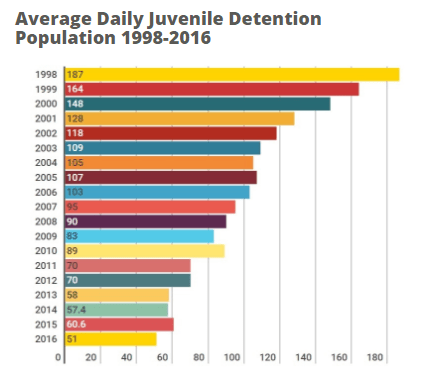
Pictured: Graphic: Average Daily Juvenile Detention Population 1998-2016.
Two of the initiatives Judge Saint Clair is pursuing to tackle disproportionality are disrupting the “school-to-prison pipeline” by providing effective alternatives to school suspensions and detention, and embracing the concept of restorative justice, where offenders go through mediated sessions to fully understand the impacts of their actions directly from victims and find the community-based support they need to stay out of the criminal justice system in the future.
Judge Saint Clair believes that when the new Children and Family Justice Center opens in 2019 it will allow the County to expand this type of programming, pursue more alternatives to detention, and provide a space that helps young people and families learn, grow and heal.
“I was in a community meeting last night and someone asked ‘Judge, why are you guys building a new building?’ And I said ‘have you been to our building? Have you seen how disrespectful it is?’ Our building sends vibes that say ‘we don’t care about you families or children.’ Because we’re giving you this raggedy building, where you can’t drink the water out of the water fountain, that leaks, where you are forced to have private conversations in the lobby because there’s not enough space for you to have those behind closed doors.’ So I think when you look at what’s happening it [the new building] will give us a new framework to keep evolving the change model.”
Asked about what legacy he hopes to leave behind when he one day steps down from the bench, Judge Saint Clair replied, “I guess it would look like ‘Thank goodness Judge Saint Clair was here because he really set the foundation for us to move to a new place.”
Share this:

Marcus Stubblefield: Washing the windows of a glass house
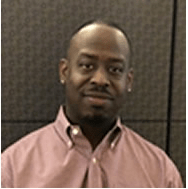
When you ask Marcus Stubblefield why he joined King County to work on juvenile justice issues, his passion for the work quickly becomes evident.
“Because there are a lot of folks that are products of that system that look just like me and that system has demonstrated inequities, and I personally believe that you’re either part of the problem or part of the solution,” Marcus said. “You can either throw stones at a glass house, or you can come inside a glass house and wash the windows so you can see out and in. That component takes action from those working inside the system and those outside the system to keep pushing to really transform and be transparent. And I believe that that’s really the philosophy that we need to embrace.”
Before joining King County Marcus worked in the nonprofit sector with young people on gang intervention, but he was at first unsure whether the public sector was a good fit.
“I really had some hesitations about working in government because I thought they would tell me what I had to say and not let me give the message the way I felt like I needed to give the message,” Marcus said. “But one of my young people that I work with told me that I don’t have the opportunity to turn that job down because they needed somebody like me that represented them and reflected them to be in a place where they can speak to their issues that they could trust. So he told me that I had to take the job.”
As Manager of Criminal Justice Strategy and Policy, Marcus is focusing on how King County and its partners in the community and the criminal justice system can work upstream to change the conditions and structures that lead to young people coming into contact with the justice system, and be more thoughtful of alternatives to traditional forms of justice and diversion programs.
“I don’t believe they’re bad people; I believe they’re products of environments and situations that land them in situations that allow them to be consumed in this treadmill called the criminal justice system.”
That’s what drives him to push the envelope, to think outside the box and look for ideas that can keep young people from taking the wrong path, or building a system that is restorative and provides an opportunity to get their lives back on track.
“The most rewarding thing about this work is to see somebody change their life around, when I see a young person that has been dealt a certain deck of cards and played those cards to the best of their ability and then rise above that,” Marcus said. “To me, that’s a sign of success. But the ultimate success is for them not to touch our system entirely.”
Share this:

Program helps young people mend family relationships, stay out of detention

 A young person can act violently in the home for all kinds of reasons. FIRS – Family Intervention and Restorative Services – is an innovative King County program that works to address the underlying issues that led the youth to in-home violence and keep them out of juvenile detention.
“Domestic violence can be pretty complex and it’s not just as simple as a kid acting badly and being violent in the home – sometimes it is – but more often there is a bunch of other factors at play,” said Jeremy Crowe, Supervisor of Restorative Programs for Superior Court. “There are lots of efforts to do things with kids that don’t involve detention and this [FIRS] is one of them.”
Launched in January 2016, FIRS is a different approach to domestic violence perpetrated or threatened by young people. Before FIRS the County looked at the daily youth detention population and saw that approximately one third of all bookings on new offenses into the juvenile detention center were for domestic violence-related incidents.
Now when a young person is arrested for a domestic violence-related incident and brought to the juvenile detention center in Seattle, a member of the FIRS team reviews the case, looking at the screening report, the police report, and any prior notes or case history. They also reach out to the parent or guardian and the youth to get their perspectives on what happened, before determining if they qualify for FIRS. If the youth is both eligible and agrees to participate, they are not charged with a crime but instead enter the FIRS program.
What makes FIRS different is that it works with the family to resolve some of the issues that led to the police being called in the first place. Prior to FIRS many young people would be released without any mitigation planning being put in place. They’d just go home. Now FIRS staff work with the youth and family to develop an out-of-court agreement that can connect the family to services such as counselling and mediation, and that identifies one or two actions that all parties think will be helpful in repairing relationships and avoiding future incidents.
“Those could be restorative tasks to do at home, ways to make amends with family members, they could be formal in-home family counselling services, they could be mental health services or evaluations in the community, we can put a lot of things in those agreements, but the youth and parent sign them and our field probation counselors are charged with monitoring these agreements,” Crowe said. “Hopefully they finish what’s in the agreement and we close the case and there’s no criminal history, there’s no formal court and there’s no detention.”
Youth accepted into FIRS are quickly transferred to the FIRS Center, a seven-bed facility at the Youth Services Center so they never have to be booked or spend any time in detention. It also provides a safe place where youth can stay for a few days when families need a break from one another.
Of the 290 youth arrested for a family violence incident in 2017, 229 or 79% avoided secure detention due to the FIRS Respite Center.
“The goal is always for them to go home and for the break to have been therapeutic and hopefully to bring them together to work on these agreements and safety plans so things can be a little better when they go home,” Crowe said. “We don’t want kids in detention who don’t absolutely need to be in detention.”
Crowe joined King County from a non-profit in 2004, moved to Juvenile Probation in 2007 and was recently promoted to his current role.
“I’m pretty passionate about restorative justice, being able to jump on things quickly but without the heavy hand of the Court and Detention, and kids getting a criminal history and the adversarial process that can be going through formal court. There’s a lot of great work that can be done without that,” he said. “We work hard to make the experience register as much as we can with the kid that this is a serious thing, that you’re being given a really cool and appropriate opportunity to stay out of detention, to stay out of court, but you’re going to have to work with us on how things are at home, and hopefully buy into what we all can agree on will be helpful moving forward.”
When the new Children and Family Justice Center opens in 2019 Crowe is looking forward to having more room and a more therapeutic space for young people in FIRS.
“One of the challenges with the way it’s currently set up in the building is it’s really small, and there isn’t as much programming to get the kids outside to do things,” he said. “The new facility is going to have a lot of space that we’re going to able to be creative on how to best use it.”
And while FIRS staff and partners have done their best with the location, it’s still not the most welcoming or therapeutic space for young people.
“It’s an old wing of detention and it’s literally right across the hall from the detention area,” Crowe said. “It’s a much more positive looking place with colors and artwork and information on the walls, but you don’t have to look too closely to see that it used to be detention.”
As a new program FIRS has had some initial challenges along the way but Crowe is adamant that it is making a difference for the vast majority of youth and families who take part in it.
“We’re going to have some kids and families where this FIRS process doesn’t work, but we’re also going to have some kids and families where probation and formal court doesn’t work,” he said. “We get to put them onto this other track, work pretty intensively with them, but make it more about healing the relationship, providing support and definitely providing accountability. They’re still in a place they were brought to by police, and there’s certainly a consequence inherent to it, but we’re not putting them in with more serious offenders and they’re not experiencing detention, which we’re trying to keep them from.”
Share this:

Juvenile Justice practices build community for youth, connect them to opportunities
King County is committed to helping youth succeed. Through a variety of services, at-risk youth are given the tools needed to make healthy decisions and are surrounded by a community of adults dedicated to helping each individual make the changes needed to get their life back on track.
Understanding that each person faces different challenges, the county’s Department of Adult and Juvenile Detention (DAJD) provides two options as alternatives to secure detention: electronic home monitoring and group care.
“Our philosophy has always been placing youth out of detention and focusing on community education and success for the future,” said Dominique Porter, Community Corrections Placement Specialist.
Dominique started with King County in 1979 with the Department of Judicial Administration. She moved to the Youth Services division and has been with the program’s Juvenile Detention side within DAJD since 1999. Her role focuses on screening youth for which rehabilitative program is the best fit.
“I assess, screen and then place young people who are either in detention or going through the Juvenile Court on electronic home monitoring or group care,” she said.
Dominique explains that electronic monitoring is basically house arrest for young people who have a residence and parent or guardian to watch over them, while group care is a location where young people who are in detention, but don’t have a residence or family to stay with, can live. Deciding which option is better depends on a variety of factors.
“Every youth that comes into detention is assessed by myself or my two coworkers,” she said. “We look at the youth, the age, the offense description and any psychological or social information that we may be able to research.”
“Then we make a recommendation to the court as to whether or not we would be able to provide the supervision necessary for that youth if they are placed on electronic home monitoring or group care.”
Dominique and her workgroup take into account if this young person has been in the in the system before and review that reporting information. If necessary, brief interviews are held with the parent or guardian, the youth themselves and any other adults, like probation counselors. Depending on the child and relevant information needed, assessments can take anywhere from 15 minutes to a few hours.
For youth in electronic monitoring or group care, reintegrating into the community in a healthy, structured way is a top priority. Dominique explains that for some children who aren’t used to staying home, following rules, going to school, or complying with services the family is interested in, the house arrest through electronic monitoring gets that child back into the home and introduces them to a positive lifestyle.
“We want to connect them to the community and to services that are going to help them better themselves and to be successful,” she said. “Getting them back into school, providing added support for counseling and continuing any community ties they have is huge.”
In her time at the County, Dominique has seen second generation families exposed to the repetitive cycle of crime and punishment. Providing a way for youth and families to move out of the detention cycle is an important part of the work Dominique and her colleagues do.
She is proud to be a part of the change towards a more comprehensive rehabilitation style that takes into account the many variables impacting youth choices today.
“We are now focusing a lot more on trauma and adolescent brain development, and when you dig deeper into those elements within family and the youth, you get a much clearer picture on how we can help them,” she said. “And maybe not to excuse, but certainly to help explain some of the behaviors.”
The support provided by staff within DAJD to families and youth involved in juvenile detention is integral to them overcoming difficulties and developing meaningful relationships for a successful future. For some it even goes beyond their interaction with the juvenile justice system. Dominique shares how powerful creating these connections for an at-risk youth is, and how meaningful it is for youth to have a community that cares.
“Some youth come back as adults, just to say hello, to let me know how they’re doing and show me their family,” she said. “And then there are those who have that ‘bond.’ I may not have seen them for years but when crises hit, they call looking for support, for assistance in navigating through whatever problems they may be going through and for us to help connect them with resources.”
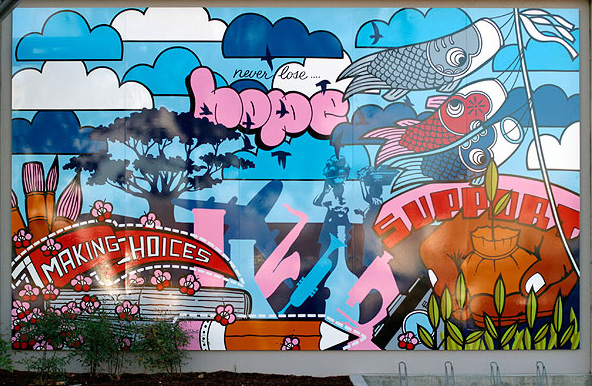
Pictured: From Making Choices, by Nhon Truong (2003, enamel paint on aluminum).
Regarding artwork: Before Nhon Truong designed his mural, Making Choices, he interviewed youth and families involved in the justice system. Common themes and values sprung from the conversations: Family, community, cultural diversity, future and dreams. Arts agency 4Culture says the work’s youthful style “incorporates content that is reflective of the older community, hoping to bridge gaps between audiences of all ages and cultural backgrounds.” The mural currently stands on a wall near the front entry to the Youth Services Center. When the new Children and Family Justice Center is built, it will be relocated inside of the main courthouse cafe. Read more here.






 Employee News