
Tech Tip: KCIT Problem Solvers, Episode 2: My MSFT Outlook is Broken!

The most frequent question into our KCIT Problem Solvers Call Center is… “My Outlook is Broken”. Problem Solver Brian Lencho explains how to fix Outlook or at least help him help you.

Share this:

BLS CPR (Health Care Provider) class added for December

Two additional classes have been added for Public Health certified staff who need to complete BLS CPR/AED certification before the end of the year. Register with maryalice.allenbach@kingcounty.gov:
- Wednesday, December 14 from 9 a.m. – noon, Downtown Public Health Center, fourth floor conference room
- Wednesday, December 14 from 1 – 4 p.m., Downtown Public Health Center, fourth floor conference room
Share this:

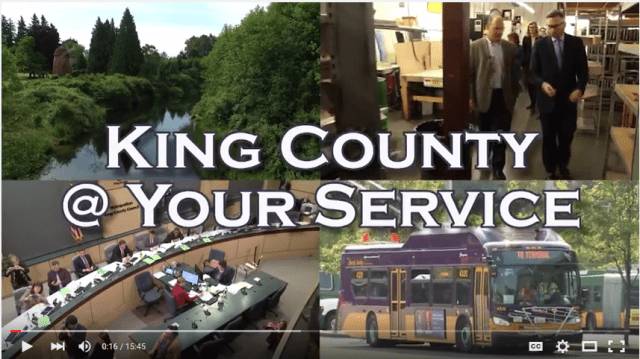
Latest edition of King County @ Your Service show

How will Metro Transit’s new long range plan impact you? What’s it like to be a King County Sheriff Detective, and take a ride on Bellevue’s Wilburton Trestle?
View this video to get the latest information on a few of the most recent King County hot topics. Join host Kimberly Hill for King County @ Your Service.
Share this:

Meet the Canvassing Board
Crossposted from Election Connection
 The King County Canvassing Board has kicked off its meetings for the November 8 General Election. The board is a public entity that conducts a formal assessment of the election. The assessment includes reviewing vote totals, determining the validity of challenged ballots, certifying the vote and administering a recount.
Canvassing Board meetings take place at the King County Elections office in Renton. All meetings are public. State law mandates that the county auditor – or commensurate official – serve as the Canvassing Board chair. Other members are the county prosecuting attorney and the chair of the county legislative body. Let’s meet the board!
Read more at Election Connection
Share this:

Celebrating the history and heritage that helped shape the region
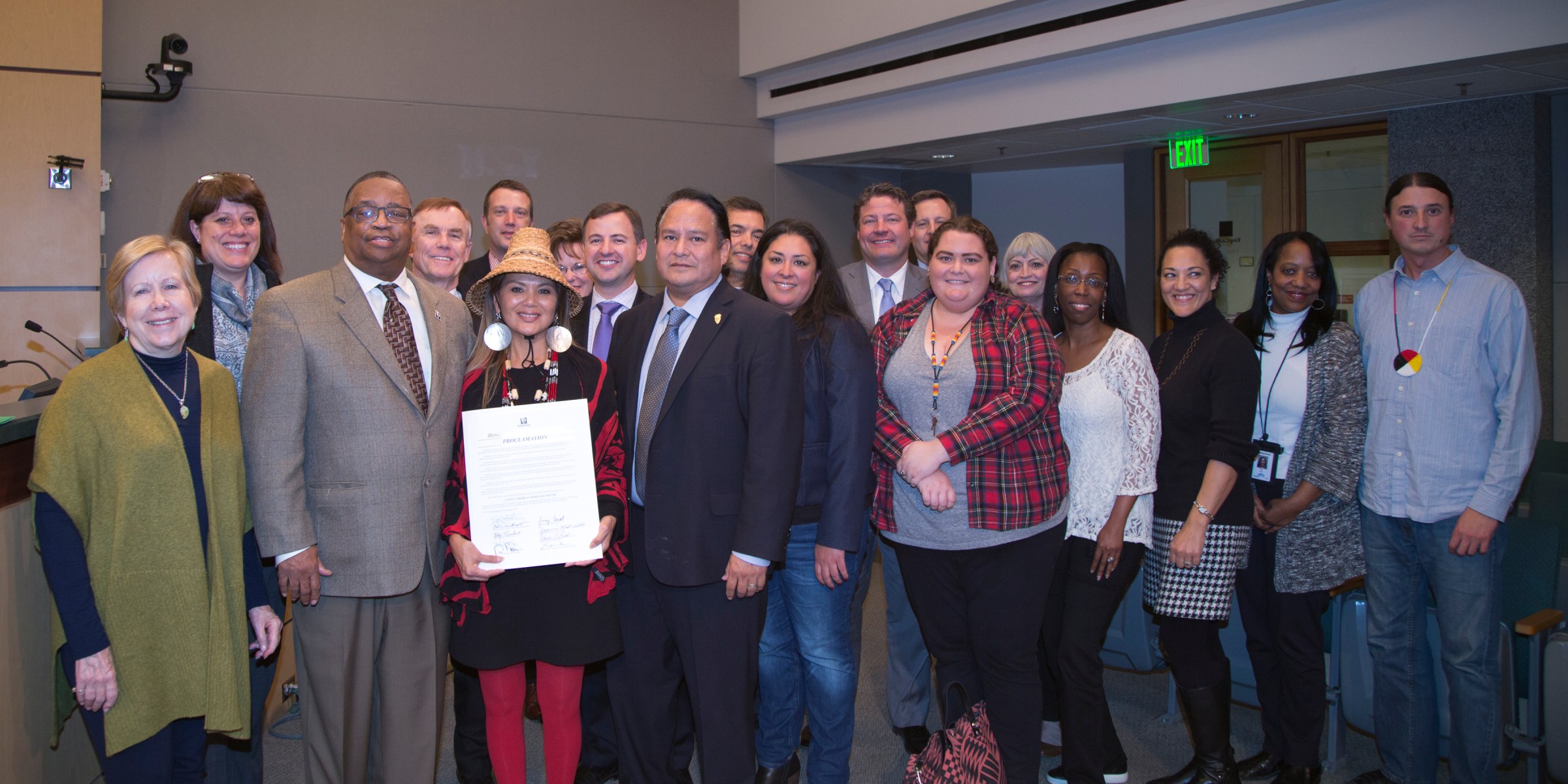
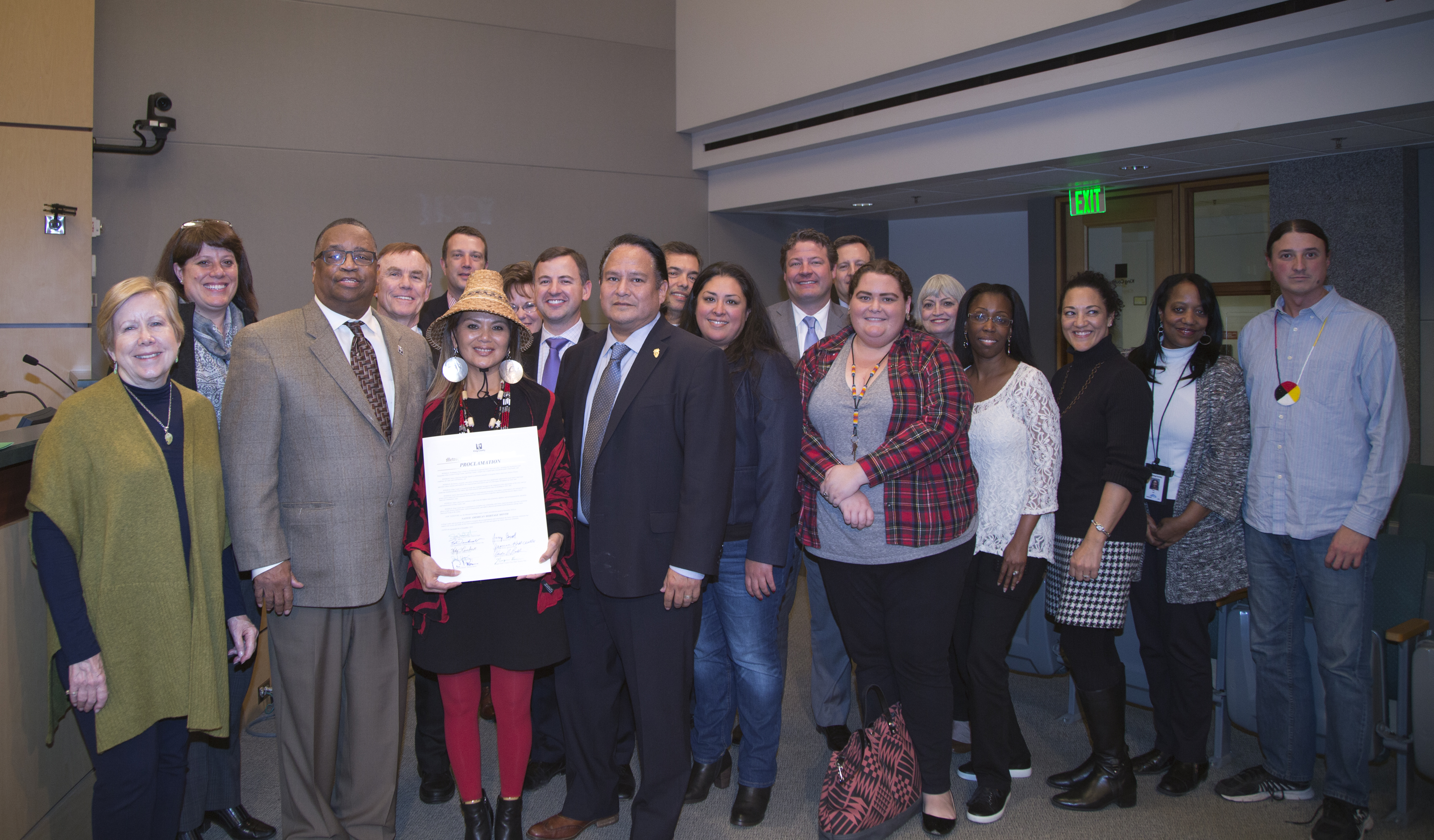
In recognition of the history, culture and traditions that continue to be a part of our region, the Metropolitan King County Council declared the month of November Native American Heritage Month. Native American history is intertwined with both King County and Washington state. King County’s largest city is named in honor of Duwamish leader Chief Sealth, and there are 29 federally recognized tribes in Washington.
“The remarkable survival of Native Americans in this region – after the coming of white settlers – has been amazing. They continue to fight hard to maintain that their culture, language, dance, food and values are not destroyed,” said Councilmember Larry Gossett, sponsor of the recognition.
Read more in the official press release.
Share this:

Governing Magazine names King County Executive Dow Constantine a 2016 Public Official of the Year

Every year since 1994, Governing Magazine has honored individual state and local government officials for outstanding accomplishment by naming them Public Officials of the Year. This year, the magazine named King County Executive Dow Constantine as one of these honorees.
Read the article about this honor and his work as King County Executive at Governing Magazine.

Image courtesy of Governing Magazine.
Share this:

Social Media Spotlight: King County WTD Instagram

 King County’s Wastewater Treatment Division (WTD) protects public health and the environment by treating the region’s wastewater and recycling resources.
Follow King County WTD on Instagram today!
Click here to view all King County social media pages.
Share this:

Featured Job: Senior Crime Analyst

Closing Date/Time: Sun. 11/27/16 11:59 PM
Salary: $78,634.82 – $99,674.22 Annually
Job Type: Career Service, Full Time, 40 hrs/week
Location: Metro Transit Police Administrative Office, 1301 Airport Way S., Seattle, Washington
Department: Department of Transportation – Transit Division
Description: Metro Transit Police is seeking a Data-Driven Senior Crime Analyst who is experienced in all aspects of crime analysis including but not limited to tactical, strategic and administrative analysis reporting and presentation. Not only will this position serve as a classic model of assisting the Metro Transit Police team in strategic deployment and problem solving efforts, the successful candidate will utilize considerable creativity and expertise to recommend, establish and utilize anticipatory policing tools, data-driven analysis paradigms, and data collection procedures for her or his tactical and strategic analysis of crime related to Metro Transit operations and services.
Learn more about this position or view all available jobs.
Share this:

The Annual Employee Giving Drive: Final Week!

The County’s 2016 Annual Employee Giving Drive is wrapping up this week, and this year’s goal is to raise $1.82 million by Friday. King County employees have donated $1,040,180.65 so far, bringing the drive to 57.2% of the goal!
If you haven’t yet decided where you’d like your charitable dollars to go, here is a sampling from the service categories not yet featured to give you ideas. You can also take a look at the 2016 Annual Giving Drive Nonprofit Guide. Each is eligible to receive donations through the Employee Giving Program!
- Historical Society of Seattle and King County (dba MOHAI) (9794) 860 Terry Ave N., Seattle, WA 98109 – Collecting and preserving artifacts and stories of our diverse history to highlight our regional tradition of innovation and imagination.
- Fred Hutchinson Cancer Research Center (2712) 1100 Fairview Ave N, J5-200 – Our pioneering cancer research has dramatically increased survival rates, saving hundreds of thousands of lives. Help us find the next big breakthrough – be a lifesaver.
- King County Library System Foundation (9160) 960 Newport Way NW, Issaquah, WA 98027 – Promotes literacy, learning and libraries by providing support beyond public funding enabling KCLS to provide equal access to ideas and information to all members of the community.
- Emergency Feeding Program Seattle King Co. (9625) 851 Houser Way N, #A, Renton, WA 98057 – Provides nutritionally balanced emergency food packs to King County residents struggling with hunger. Accommodates special dietary needs.
The Employee Giving Program is a philanthropic resource for King County employees that benefits county employees by providing prescreened nonprofits, allowing you to plan your giving, making it possible for you to donate time (vacation or compensatory hours), and offering anonymity.
Share this:

King County FAX Update
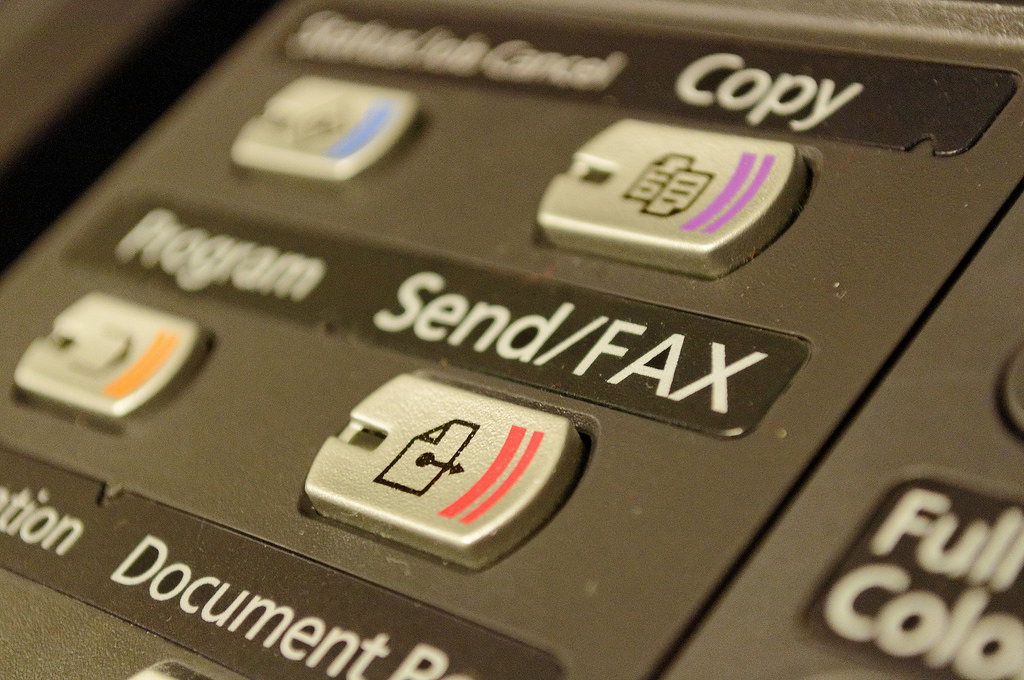
KCIT is leading a project to convert legacy fax machines to digital fax machines (otherwise known as IP FAX). This allows users to send and receive faxes via computer with the fax coming directly to an inbox in the form of an attachment. Converting these fax machines saves money because it uses less paper, less toner and has fewer machine failures.
IP Fax is the Fax standard. If you’d like to learn more, informational sessions will be held via Skype every Tuesday at 11:00 AM from November 22 – January 31. To join one of the sessions, call 263-8114 and enter conference ID 684233. Ready to convert? Just contact the HelpDesk. Questions? Contact Jamie Holter, KCIT.
IP Fax systems
- Easy to use like a shared email account
- Create and store faxed documents in Outlook
- Reliable, secure and HIPPA compliant
- Retain existing fax number
IP Fax cost
- A mailbox with a fax number attached: $00.90/month
- One-time setup fee: $1.20/mailbox
- One-time porting fee: $3.60 per ported fax number
- Cost per page (send/receive): $.045
- Cost per page (retry): $.04
Cost comparison for legacy fax machine
- $40/month
- Fax machine toner: $59-$99
- Paper cost: variable
- Time saved walking back and forth: priceless






 Employee News