
Kudos! Helpful and considerate Metro driver praised by rider

 This Metro driver went the extra mile to help riders with questions and directions.
Kudos to this driver and others who continue to provide excellent customer service!
Share this:

Environmental Protection Agency recognizes asthma program’s leadership
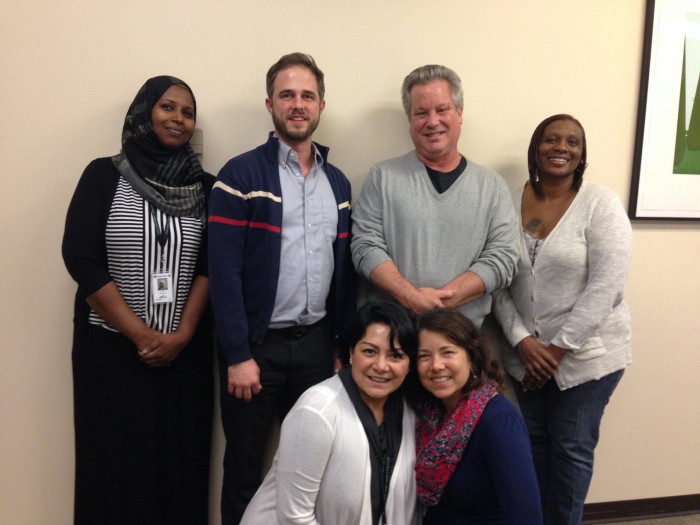

The King County Asthma Program has made a huge impact for people with asthma living in King County.
Crossposted from the KC Public Health Insider blog
On May 3, the U.S. Environmental Protection Agency announced the King County Asthma Program as a recipient of the 2016 National Environmental Leadership Award in Asthma Management. The award honors local asthma programs for leadership in improving the lives of people with asthma, especially those in underserved communities.
Asthma is a respiratory disease that makes breathing difficult. Nine percent of adults and five percent of children in King County have asthma, a chronic disease that can seriously impact quality of life and increase risk of death when left untreated.
Read more at KC Public Health Insider blog
Share this:

ESJ fairs to showcase how we’re addressing equity
 Achieving equity and social justice doesn’t just happen on its own. It takes thoughtful intention, a willingness to honestly evaluate our practices, a spirit of innovation, and persistence in the face of obstacles. Throughout King County, committed employees have not shied away from the challenge. In every department, concrete actions are underway to further equity and social justice in how we do business, how we work with the communities we serve, and how we interact with one another.
You can find out about these efforts at one of three Equity and Social Justice (ESJ) Fairs held during the month of May. The fairs will be a fun and informal opportunity for fellow employees from across the King County departments to showcase their ESJ activities and results, and for all staff to share information in order to learn from each other, stimulate additional actions, and inform future work efforts.

Employees at last year’s Equity and Social Justice Fair.
The large and enthusiastic turnout at the first ESJ Fair held last year in the Chinook Building prompted the organizers to offer fairs at three County locations this year, making it possible for more employees to attend:
- May 12, 11:30 a.m. – 1 p.m. King Street Center, 8th Floor Conference Room
- May 16, 11:30 a.m. – 1 p.m. Chinook Building, Conference Rooms 121/123
- May 24, 11:30 a.m. – 1 p.m. Maleng Regional Justice Center, Rotunda
Please plan to join us for what promises to be an energizing and inspirational celebration!
Share this:

Spring – a natural time for lawns
 Use Natural Yard Care tips to create and keep a lush, healthy lawn. This season start mowing about 2 inches high for most lawns, and switch your blade to mulch mow, which chops the leaves into fine clippings for free fertilizer. For lawns in poor condition: aerate, overseed, and top-dress with 1/2 inch of compost.
Kasey Keller, Hall of Fame soccer player appreciates that Puget Sound Starts Here with every lawn. Watch his and the new how-to videos at naturalyardcare.info.
Brought to you by STORM (Stormwater Outreach for Regional Municipalities) a coalition of cities and counties.
Share this:

May is Puget Sound Starts Here month

 May is dedicated to appreciating the streams, lakes and stormwater drains that connect everyone with Puget Sound. Puget Sound Starts Here has programs that get people involved in habitat restoration and preventing water pollution. Cities, counties and nonprofits have hundreds of local programs and events lined up at PugetSoundStartsHere.org.
Join us at Puget Sound Starts Here Night at the Mariners (Safeco Field) – May 14, 6:10 PM game against the Angels and visit our booths. Tickets are $15 View Level, $32 Main Level; Deadline to purchase: Friday, May 13 – 5:00 p.m.. Get a pair of Mariners/Puget Sound Starts Here sunglasses when you get a ticket through the special online offer at Mariners.com/PugetSound. See your name on the scoreboard if you have a groups of 20 or more!
Brought to you by STORM (Stormwater Outreach for Regional Municipalities) with funding from Ecology.
Share this:

Trade industries fair highlights the ‘other’ four-year college
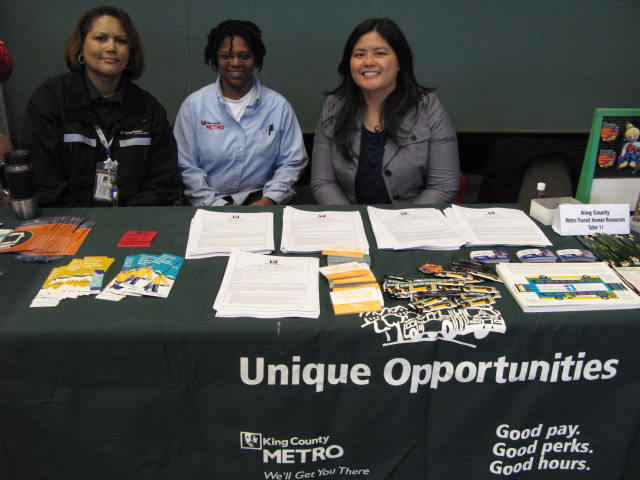

The Women in Trades Fair offers information from every field, including King County Metro.
For more than 35 years, the Women in Trades Fair has helped young women (and some young men) learn about career opportunities in diverse industries from transportation and utilities to maintenance, energy, and more. The event is held every spring at the Seattle Center, and is attended by more than 1,000 people.
Over 80 exhibitors are featured at the fair, providing workshops, first-hand learning opportunities, career information and resources. Notable exhibitors have included Seattle Pipe Trades, Pacific Northwest Ironworkers, and last year’s first place exhibition winner, King County Wastewater Treatment Division. The Fair is a great way to meet people in the trades and build connections for a future career.
“The Fair is where we can plant the seed for a different opportunity,” said Linda Romanovitch, Carpenter Foreman for King County Executive Services Facilities Management Division. “It gives people a place to say ‘Oh yeah, I think I’ll check that out.’”
Share this:

Vets 4 HIRE, a bridge from military to civilian employment

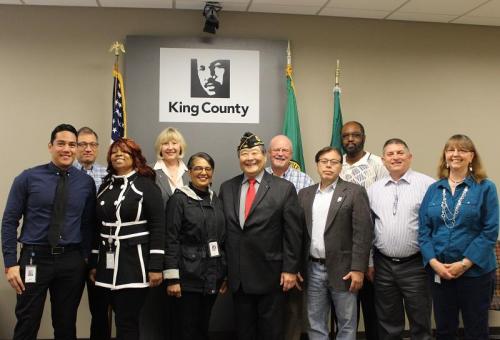
King County employees and recent participants in the Vets 4 HIRE Program.
The King County Vets 4 HIRE (Heroes In Reintegration Experiences) Fellowship Program was created to support military personnel and veterans in making a successful transition to civilian employment. The Program goal is to provide veterans with valuable hands-on, practical experience to increase their competitiveness for King County and other civilian positions.
The Program started in response to President Obama’s 2012 plans to downsize the military. King County Councilmember Reagan Dunn and others motioned for the Human Resources Division to explore creating an internship program for veterans.
“A disproportionate unemployment rate exists among Veterans of the Iraq and Afghanistan conflicts,” said Dunn, prime sponsor of the Motion. “King County should help to provide our veterans the opportunity to apply the skills they acquired in our nation’s armed forces—skills which would benefit not only King County, but any employer in our region.”
Share this:

From the Hip: Lorinda Youngcourt, Director, Department of Public Defense
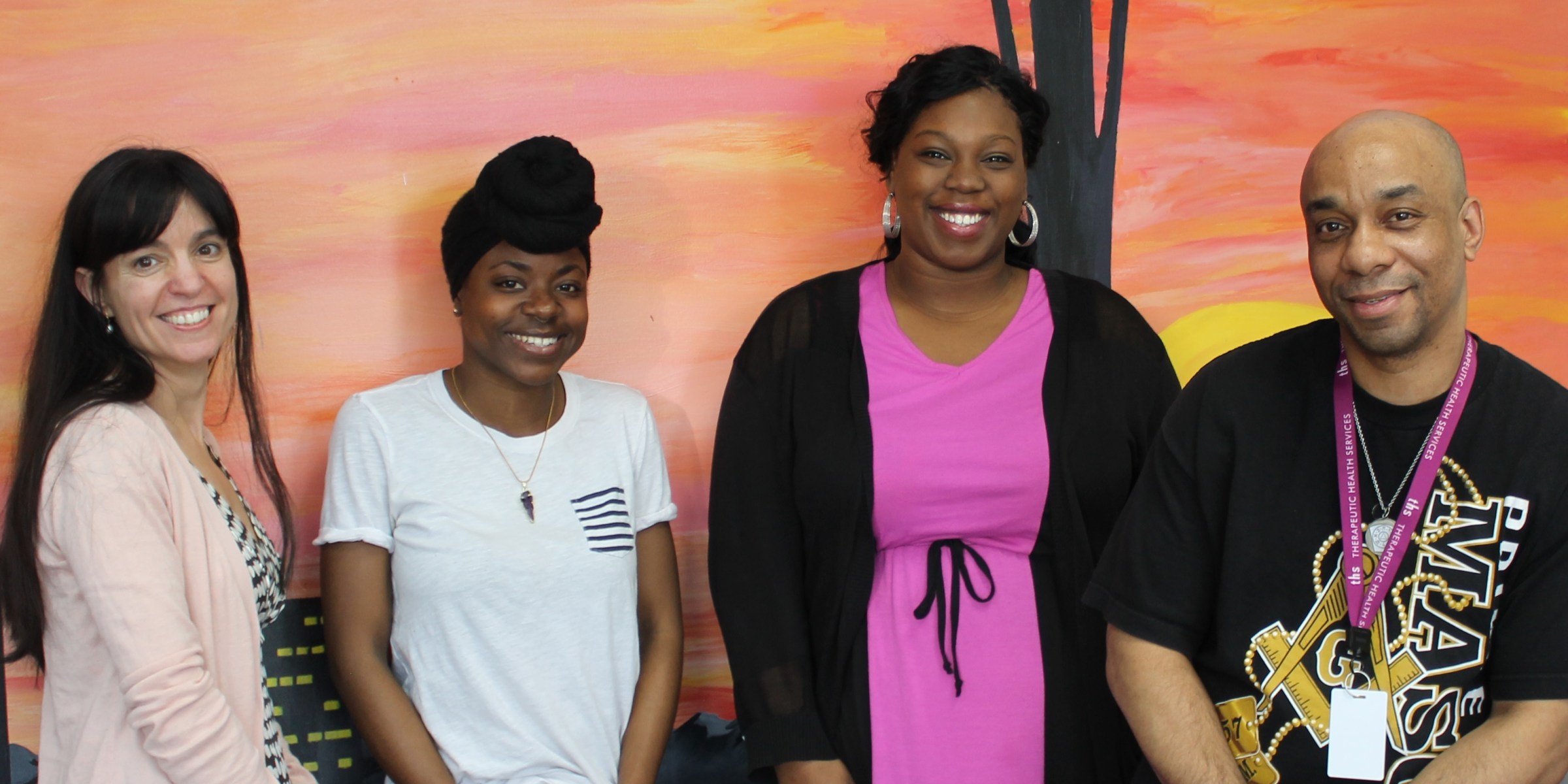
A promising program helps young people take charge of their lives
As public defenders, we’re often representing people who have already experienced considerable trauma in their lives, people in need of much more than a good criminal defense lawyer. We represent people who are homeless and mentally ill, who are poor and jobless, who have few resources and little support.
That’s why I’m so pleased when we’re able to take steps that help to address some of the underlying issues that bring a person into the criminal justice system. And one such program just got a new lease on life. ROYAL – Raising Our Youth as Leaders – was started several years ago by the Society of Counsel Representing Accused Persons, a former public defense agency and now a division within the Department of Public Defense. After a six-month hiatus, during which we retooled the program, ROYAL is once again ready to address one of our most pressing needs – supporting youth of color who are considered at high-risk of reoffending.
Share this:

Supporting Employee Growth and Development

When Kathy Waymire in the Department of Natural Resource and Parks’ Water and Land Resources Division talked to her staff about the One Thing the group would focus on for their action plan, Growth and Development bubbled to the top of the list. Some were interested in improving skills for their current jobs and some were interested in looking down the road at what might come next for them. So, Kathy, eager to do something to support these aspirations now, turned to development plans as a tool to help her staff identify their goals and see how she could support them.
“I had worked with my manager on a development plan and it really helped focus my trajectory and goals, so I wanted to do the same with my staff,” she said.
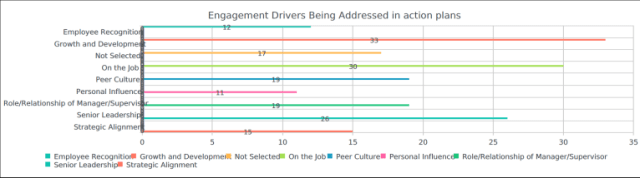
Kathy’s group is not alone in looking to Growth and Development as a way to improve engagement. Professional Growth and Development emerged as one of the key drivers of engagement countywide and is the issue most action plans are focused on.
The Human Resources Division (HRD) is hard at work on longer term, systemic fixes like an apprenticeship program, a mentor program and expanding the Bridge Fellows program to provide an experience that can stretch and grow someone. One of the most ambitious projects HRD has taken on is redesigning the classification system to make career paths more transparent.
In the meantime, managers like Kathy have applied ingenuity and drawn on current resources to meet her employees’ need for growth and development now. To support the development plans she is working with her employees to create, Kathy asked HRD to come present the eLearning offerings available. King County eLearning is an online learning platform that gives King County employees free access to more than 8,000 training courses and videos from work or home, 24/7.
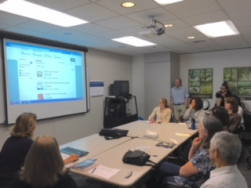 Karen Cramer from HRD spent about 45 minutes orienting the team to the offerings and showing them how to create learning plans where you queue the courses, books and videos you want to support your learning goals. Want to improve your proficiency with Microsoft tools like Access and Excel? You can find all of that in eLearning . Want to improve communication? There are e-books you can listen to on the bus to and from work. Want to improve your project management skills? eLearning can take you through all of the training you need to take the test for certification.
The Action Planning tools kits also have one focused on Growth and Development that has questions and a manual employees and a managers can use to have a conversation about career aspirations.
Share this:

A local organization’s perspective on why Communities of Opportunity is receiving national attention
Crossposted from the Best Starts for Kids blog
 In King County, many have taken note of Communities of Opportunity (COO), a ground-breaking partnership between community, the Seattle Foundation and King County to address inequities in health, social, racial, and economic outcomes. Now this approach is getting national attention.
This past weekend, US Department of Housing and Urban Development (HUD) Secretary Julián Castro honored Communities of Opportunity. The Seattle Foundation received the Secretary’s Awards for Public-Philanthropic Partnerships in Washington D.C. at the Council of Foundations annual conference.
Read more at Best Starts for Kids






 Employee News