
Five Questions with Emmanuel Rivera, Health & Environmental Investigator III, Natural Resources & Parks
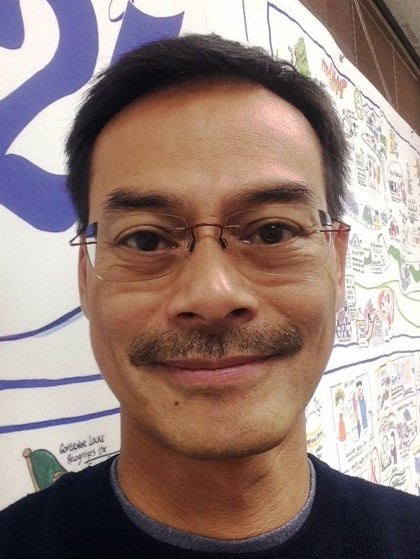
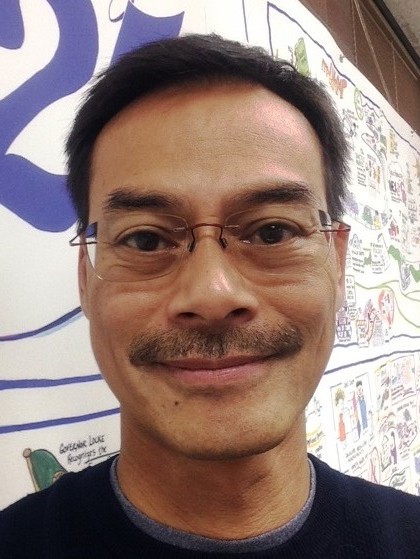 1. What was your first role at King County? My first role at King County involved working within the Local Hazardous Waste Management Program (LHWMP) as a Health and Environmental Investigator. As part of the Survey Team, I did business cold calls throughout King County regarding proper use, storage and disposal of hazardous products and waste.
2. What do you do as a Health and Environmental Investigator? As an HE&I III, I am currently the outreach coordinator for LHWMP’s Indoor Chemical Hazards project. My primary function is to provide outreach to underserved communities regarding cleaning products with the goal of reducing exposure to and use of harsh cleaning chemicals. The outreach relies on building relations with community organizations, participating in networking group meetings, tabling at community events, and providing Cleaning with Caution workshops.
3. What sort of training is needed for the job? Because the cleaning outreach efforts involve communities with unique cultures and languages, my training involves attending specific cultural competency workshops when available and learning from community partners and advocates. Training in equity and social justice is also necessary to be effective and successful in working with the target audience and in building community relations.
Share this:

Get to know four participants in 2015 Annual Giving Drive

 Whether your passion is protecting animals, improving literacy, preventing hunger, helping seniors or young people, or supporting the arts, there are more than 930 participating nonprofit organizations that you can choose to contribute to in the 2015 Annual Giving Drive, which kicked off October 5. Click here to make a pledge.
Meet four of this year’s participating nonprofits below (see full list of participating nonprofits here):
Cowgirl Spirit Equine Rescue (9406) shelters, rehabilitates, and rehomes unwanted and slaughter-bound horses. Located in Carnation, Washington, its horses are cared for by an all-volunteer staff and supported entirely by donors.
Maple Valley Food Bank and Emergency Services (9269) provides food and emergency services to residents in its service area and aims to educate, empower and engage the community in solving issues of hunger and nutrition. Its long-term goals are to increase client ability to meet other financial obligations, significantly reduce the likelihood of homelessness, help families stay together through difficult times, improve nutrition and reduce hunger.
The Mockingbird Society (9177) trains young people who have been homeless or in foster care to be their own best advocates. By doing so, they change policies and perceptions that stand in the way of every child having a safe and stable home. Its family programs advocate for innovation in the way services, such as foster care, are delivered. By creating supportive systems of care, youth thrive while developing lasting connections to support their successful transition to adulthood.
Northwest Kidney Centers (9121) is a nonprofit, community-based organization with a mission to promote the optimal health, quality of life and independence of people with kidney disease through patient care, education and research. It provided 247,254 dialysis treatments in 2014 alone, for 1,544 patients who chose to dialyze in one of its centers or at home.
Find out more about all of the 930 nonprofit organizations participating in this year’s Annual Giving Drive, and click here to make a pledge.
Share this:

How Metro Transit helped employees make leap from driver to chief

Helping employees grow in their King County careers is a key objective of the Best-Run Government: Employees initiative and Metro Transit recently piloted an intensive program to help employees make the leap from bus operator to base chief.
Transit’s Human Resources group built a process that recognized the skills of existing employees and helped them highlight their skills in the recruitment process.
“We were understanding that we had a very well-qualified, diverse, talented pool of employees,” said Susan Eddy, Human Resources Service Deliver Manager with Metro Transit. “However when you took a look at those employees, resume writing has changed over the course of the years, interviewing skills have changed over the course of the years, and these employees have been dedicated to their job tasks not necessarily dedicated to padding their resumes.”
Transit HR worked with resources across the County to provide potential applicants for one of seven Base Chief positions with support such as resume writing and interview skills.
Watch this short video to learn more about the process and meet one of the successful candidates.
Share this:

Healthy Local Eating coming to Healthy Incentives
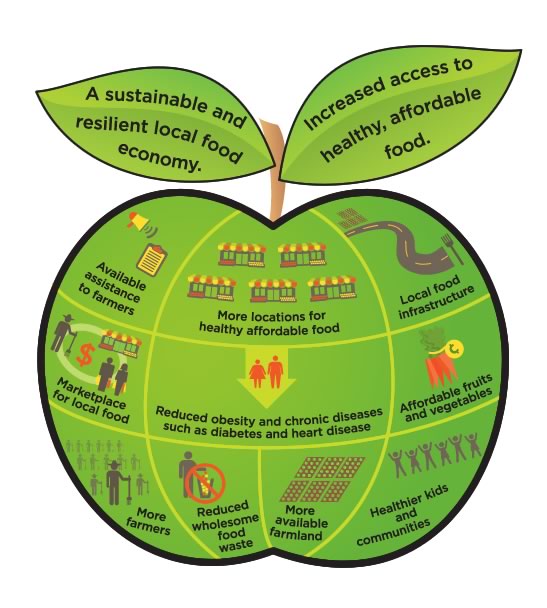
 King County’s Healthy Incentives program will begin a new pilot project in 2016 designed to help employees reduce their healthcare costs and support local farmers.
The Healthy Local Eating pilot project, which will be implemented in two stages over 2016 and 2017, will offer employees the opportunity to reduce their out-of-pocket healthcare costs by purchasing locally grown fruits and vegetables through the Healthy Incentives employee wellness program.
“We’re building on the success of our wellness program by providing employees and their families an extra incentive to support local farmers,” said Executive Constantine. “This is a great opportunity for King County to once again create an innovative model that can be replicated in the public and private sectors.”
Share this:

Environmental Lab protects local waters and public health
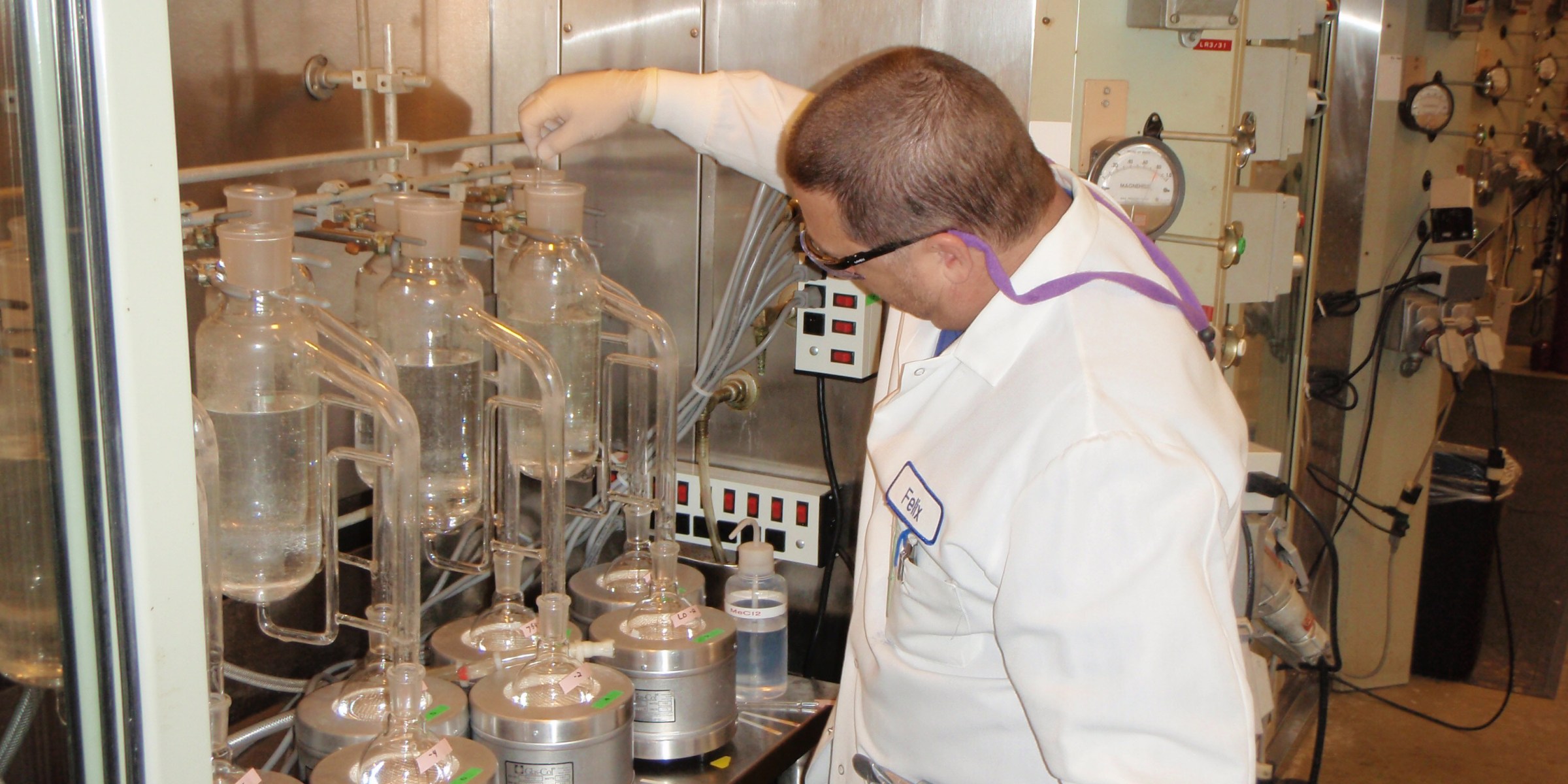
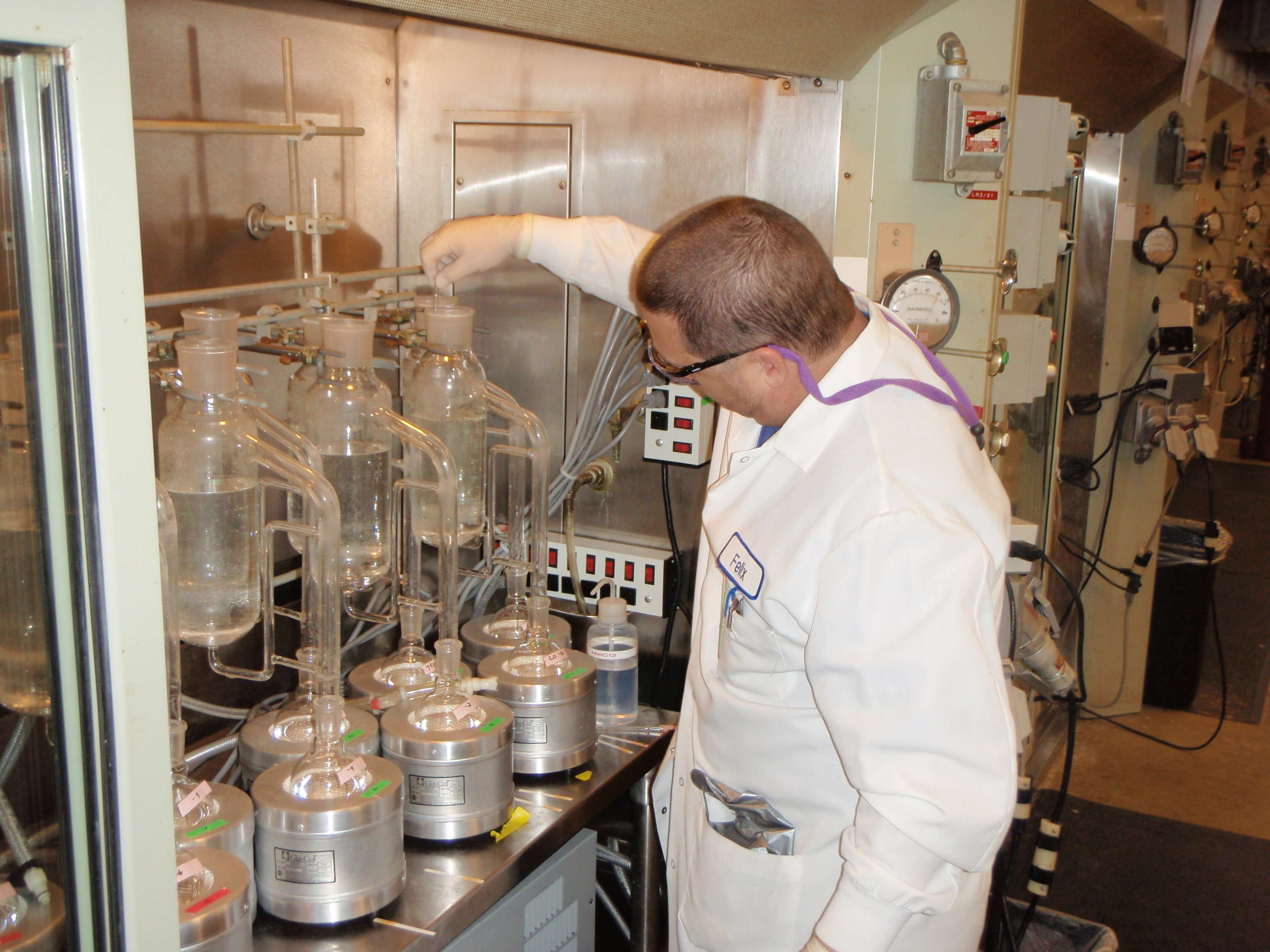
With more and more people enjoying water activities across our region each year, the work of the King County Environmental Laboratory is more important than ever in protecting the health of local waterways, wildlife and people.
With five different lab areas, Lab employees are constantly collecting samples, analyzing environmental samples and generating data to protect the environment and those that live in it, Kate Leone, the Environmental Programs Section Manager, said.
Unlike other laboratories, the Lab is a full service lab, meaning it runs through all the steps, from project planning, sample collection and testing, through to data generation. It processes an average of 15,000 samples in a year, which it uses to advise on environmental policy and to generate environmental data points.
Share this:

Untapped Potential: Behavioral Health Employment Program helps individuals with disabilities join the workforce


Sue Wyder (left) and Tiffany Turner
At a recent employment resource fair, staff from the King County Behavioral Health Supported Employment Program ran into Tiffany Turner, a graduate of the program. Tiffany now works full time as a manager at the Recovery Café, a community of support for individuals who have experienced trauma, mental health and/or substance use issues.
As a single parent of three children, Turner had many challenges trying to raise her children with limited resources or support from others. She found herself overwhelmed and unaware of the symptoms of her illness or how to use healthy ways to cope. “It’s a stigma in my community to reach out and get support. That’s why I want to share my story with others.”
Turner enrolled with Valley Cities Counseling and Consultation, one of King County’s contracted Mental Health Providers through the Division of Mental Health, Chemical Abuse and Dependency Services Division She then got connected to Supported Employment Services, an evidence-based practice that provides an integrated team approach to employment services that has demonstrated double the rate of job placements than traditional employment programs for achieving long-term employment.
Turner got connected with Sue Wyder, a behavioral health employment specialist. “Sue never gave up on me. Even when I had bad days, Sue still reached out and told me she had faith in me.”
Share this:

One King County for ending sexual exploitation and trafficking
Dear fellow King County employee,
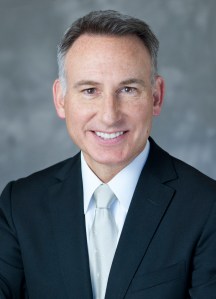
King County Executive Dow Constantine
We’re fortunate to have a talented workforce dedicated to making King County a more just, more equitable community – a place where people’s rights are protected and everyone has the opportunity to achieve his or her full potential in life.
As we showed when we helped nearly 200,000 residents sign up for affordable health insurance, we’re most effective at improving people’s lives when we work together as One King County to achieve a common goal.
Now, I want to apply that same collective approach to confront a destructive, often overlooked scourge in our region. Tomorrow, I will publicly announce that King County is a founding member of a national alliance of employers dedicated to ending sexual exploitation and trafficking of women and children.
The alliance is led by a Seattle-based nonprofit organization that provides resources to help public- and private-sector employers prevent their assets from being used by traffickers. Research shows that a peak time for people going online to solicit sex for hire is 2 p.m. – in the middle of the work day.
We will start by revising our policy to make it unequivocally clear that employees are prohibited from using county government resources, facilities, or time to solicit prostitution. While the existing policy covers all illegal activity, it is important that we raise awareness of the damaging effect exploitation and sex trafficking have on individual lives and families, and how it undermines our commitment to equity and social justice.
Most people assume that sex trafficking is largely confined to other countries. But it occurs in our region at a startling rate. Researchers at Arizona State University found that in a single 24-hour period, more than 8,800 people in the Seattle area went online to solicit sex for hire. An estimated 27,000 people solicit prostitution each day in King County. The victims are among our most vulnerable, many forced into prostitution between the ages of 13 and 15.
While preventing our resources from being used by traffickers is an important, necessary first step, I also want us to consider all the opportunities we have as public agents to help victims of sex trafficking, and help prevent these horrific crimes from occurring. We have more than 13,000 employees – most of whom work directly with the public – who can help identify victims and circumstances that contribute to sexual exploitation. I want each of us to know what we can do in our individual roles to contribute to this effort.
This fall, the Executive Office, the Prosecutor’s Office and the Sheriff’s Office will host a screening of “The Long Night,” an insightful documentary on the underlying causes and devastating impacts of sex trafficking in south King County. After the screening, we’ll have a discussion about what actions we can take across departments to combat this growing challenge. I will send you an invitation in the next few weeks.
To be clear, I have no knowledge of any county employee violating our employment policies in this way. However, given the vast numbers of daily solicitations, it is unlikely that any major employer is completely immune from this problem. My goal is to establish King County as a model for how employers can strengthen community efforts to end slavery and trafficking, and to encourage private-sector employers to help create a united front.
This is an opportunity for us to once again lead by example and bring us closer to our promise of a more just and equitable King County.
Sincerely,

Dow Constantine
King County Executive
Share this:

Watching out for salmon in King County Waters

It’s that time of year again. The time when King County’s many creeks and rivers begin to receive colourful salmon for their spawning season. Each fall, several salmon species make their way from the ocean into the Puget Sound and into King County’s urban and rural streams to lay their eggs.
It is an amazing natural process, Jennifer Vanderhoof said. As a senior ecologist for DNRP’s Watershed and Ecological Assessment, Vanderhoof coordinates a volunteer program to monitor salmon in the Lake Washington Watershed, called the Salmon Watcher Program.

Salmon Watcher Distribution Map for 2014 // photo courtesy of King County Water and Land Resources Division
A multijurisdictional effort, the program trains and educates volunteers throughout the Lake Washington Watershed. Now in its 20th season, the Salmon Watcher Program operates in coordination with King County Water and Land Resources Division, Bellevue Stream Team, and the cities of Seattle, Bothell, Issaquah, Kirkland, Renton, and Redmond.
Through the trainings, volunteers are taught to identify the salmon they may see spawning in local streams. Volunteers also learn about the impact humans can have on salmon and what they can do to help, Vanderhoof said.
“It is things like not washing your car in the driveway,” she said. Soapy water runs into storm drains, which in most cases lead directly to streams, lakes and Puget Sound. The soapy water from home car washes contains metals, such as copper and zinc, which can cause problems for fish by affecting their ability to keep the right balance of ions in body fluids, particularly blood. Surfactants and fragrances from soap can reduce reproduction and impact the hormone balance in fish.
Volunteers attend one of four workshops after which they are assigned a site along a stream to watch over. They are asked to go out to their assigned location twice a week and watch quietly for fifteen minutes. Volunteers record the number of salmon they see – dead or alive. They are also asked if they saw anything that needed attention, and the volunteers are provided with spill response hotline numbers. The volunteers are referred to as “the eyes and ears of the watershed.”
Professional fish biologists can’t cover the entire watershed, which is why the data collected by volunteers is so important, Vanderhoof said.
“We can use the data to inform people doing restoration if there are salmon in their project streams,” Vanderhoof said. “We have expanded the known fish distribution in some of our streams through this program. Our volunteers have found Chinook in a few streams where they had not been previously documented.”
The Salmon Watcher Program typically has between a 60 and 80 percent return rate of volunteers and normally has about 120 volunteers through the September to December salmon spawning season.
“People love this program,” she said. Volunteers participate because they love nature and are interested in helping the environment and the fish.
The Salmon Watcher Program will host its final training Wednesday, September 30th, at Carkeek Park in Seattle. For more information visit the Salmon Watcher website.
Share this:

Breaking down language barriers to make King County accessible to all

 Imagine not understanding public service announcements or not being able to call an information line because they are not offered in your language. It is a problem that many King County residents face and something the Office of Equity and Social Justice (ESJ) and Customer Service Officers are trying to change.
An Executive Order already requires printed public communications pieces and vital documents for broad distribution to be translated into at least Spanish, but the Office of ESJ and county agencies have been developing and implementing new ways to interact with the community and provide information.
One approach is working with ethnic media, such as the local Spanish language Univision TV channel. Unlike many other forms of journalism, ethnic media, such as in Spanish or Chinese, are growing instead of shrinking, Director of the Office of ESJ Matias Valenzuela said. Working with media can create a greater trust in King County and help non-English speaking residents access the information they need.
Share this:

New IT tool helping local law enforcement

After two years of hard work, King County Information Technology (KCIT) and the Prosecuting Attorney’s Office (PAO) launched a new system known as eLODI, or Electronic Log of Detective Input. eLODI allows law enforcement officers throughout the county to electronically submit their referrals, evidence and case documents to the PAO’s case management system, PROSECUTORbyKarpel.
One of the first to involve a Software as a Service (SaaS) vendor of this scale, eLODI was a collaboration of the PAO, Karpel Solutions, the KCIT Project Management Office (PMO), Business Analysis Group, Business Solution Services (BSS) and local law enforcement agencies. Several departments within KCIT assisted in putting together the infrastructure.
“eLODI was developed from the ground up and allows law enforcement to search for and select actual PAO data, including charges, persons, businesses and police officers to the referral,” Dennis Fong, technical project lead said.






 Employee News