
Executive brings together funding partners to help maintain public health services in Auburn
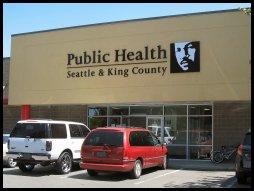
King County Executive Dow Constantine today announced that he has brought together funding partners from local cities, tribes, nonprofits, and companies to help maintain services at the Auburn health clinic for the next two years. He will work with the Metropolitan King County Council to identify the additional funds needed to continue operations during the 2015-2016 biennium.
The Auburn Public Health Center – which includes satellite offices in Enumclaw and the Muckleshoot Reservation – provides health services to 10,000 clients, 97 percent of whom live below the federal poverty line. The Public Health – Seattle & King County staff primarily provides maternity services, nutrition programs and family planning. The clinic had been identified for closure due to declines in state and federal funding.
“This partnership brings together cities, tribal government, nonprofits, and business – united in a shared commitment to the health and prosperity of the people who live here,” said Executive Constantine. “I’m proud of the innovative local solutions we’ve crafted to help maintain important health services, but we must ultimately develop a sustainable funding source for Public Health that our state has lacked for many years.”
To read more, click here.
Share this:

LEAN work leads to drop-in locations for Assessments staff
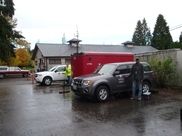
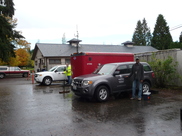 Following the completion of a LEAN session with department staff, the Assessor’s Office has been working in 2014 to place drop-in office locations around the county for appraisal staff as they complete their work in the field.
Three of these drop-in locations are now up and running as appraisal staff begin their physical inspections. These sites are located at Marymoor Park in Redmond, Shoreline District Court, and on Vashon Island at the Community Service Center and the Fire Station. Fleet vehicles are placed at these sites for convenient pick-up, along with working space inside the facilities for the appraisal staff.
The partnerships to develop these new drop-in locations demonstrate a commitment to the “One King County” vision. Assessor’s Office partners include King County Parks Division, King County Shoreline District Court, and on Vashon Island, the King County Facilities Management Division, and the Vashon Island Fire and Rescue Department.
This dispersed office location Lean project combined with a newly designed telecommuting agreement is getting appraisers closers to where they do their field work. The efficiencies gained from not having to report to Black River facility in Renton and usage of better technologies will result in a savings of 2500 hours that would have been wasted in traffic while reducing our carbon footprint.
Share this:

Open enrollment closes November 15

If you’re eligible for benefits with the County, you should have received important information about this year’s benefits open enrollment, which will run Nov. 1 – Nov. 15.
2015 benefit highlights
- Regence BlueShield is issuing new KingCareSMmedical cards for next year.
- SmartCare Connect (Group Health) has added a cardiac rehabilitation program.
- You can enroll in a health care flexible spending account with debit card reimbursement.
- You can carry up to $500 of unused health care flexible spending account funds into 2015 and still elect the maximum $2,500 for 2015.
Options during open enrollment
- Change medical plans.
- Add dependents to your coverage.
- Add, increase, decrease or discontinue supplemental accidental death and dismemberment insurance.
- Decrease or discontinue supplemental life insurance or discontinue supplemental long-term disability insurance.
- Confirm your Healthy IncentivesSMcolor for 2015 medical out-of-pocket expenses.
- Update your benefit access fee for 2015, which increases for most KingCareSM members.
If you have questions after your receive your open enrollment information or if you need help during open enrollment, please call us at 206-684-1556 or email kc.benefits@kingcounty.gov.
For more information, click here.
Share this:

Need help logging into new KCWeb?

The new KCWeb Intranet is now live and is your new one-stop shop for employee news, information and the tools you use every day – all in one central location.
If you are unable to log in, here are the five steps to follow:
- Open your browser (recommended: Internet Explorer 9 or above).
- Go to SharePoint.kingcounty.gov.
- Type your King County alias followed by “@kingcounty.gov” and, if allowed, your network password into the fields.
- Make sure to check “Keep me signed in” (this will reduce having to login again and again).
- Click “Sign in.”
Get complete instructions here. If you still cannot access the new KCWeb, please contact the KCIT Service Center at 206-263-HELP or helpticket@kingcounty.gov.
Share this:

Coverage Is Here King County enrollment reopens Nov. 15
The second open enrollment season for enrolling in Apple Health (Medicaid) or Qualified Health Plan coverage through WA Healthplanfinder runs from November 15, 2014 through February 15, 2015.
In King County, we expect an increase in the number of insurance carriers and Qualified Health Plans from which individuals will be able to choose, and small businesses will also be able to begin purchasing coverage for their employees through WA Healthplanfinder.
In preparation for the new enrollment season, Public Health-Seattle & King County — the lead In-Person Assister Organization for King County — is working on recertifying the county’s 600+ in-person assisters, as well as planning for a series of enrollment events to be held throughout the county. Along with enrolling newly eligible individuals into coverage, in-person assisters are also working on helping residents who enrolled in coverage last year with renewing their coverage for this year.
Information on upcoming enrollment events as well as general information about open enrollment and renewals can be found at www.kingcounty.gov/coverage.
Share this:

Discounts to A Christmas Story, Summit at Snoqualmie

5th Avenue Theatre – $25 Tickets to A Christmas Story, November 25-30 (check dates). To get this special deal, use the promotion code FAMILY when you place your order. Click the link: www.5thavenue.org/FAMILY.
Summit at Snoqualmie – Get discounts for yourself and your family with your King County ID. Adult Day Ticket (Ages 13+) = $50 (Regular $68), Adult Night Ticket $33 (Regular $41). See all discounted rates and instructions.
See all available discounts on the Employee Discount Webpage.
Share this:
Kudos! Margaret Thompson, Printing Production Specialist/Technician

Margaret Thompson is a Customer Service Hero because customer service is her primary focus even though she is “behind the scenes”. She understands that what she produces in the Print Shop helps other county agencies accomplish their mission of promoting the programs and services King County delivers. Margaret goes above and beyond the norm by immediately contacting her customers when she finds a discrepancy in the work order request. Her patience and dedication to create the best products are displayed when she helps the customer resolve issues associated with their work order requests. Once those issues are resolved, she ensures that the work order is completed and delivered in a timely manner that often exceeds the customer’s expectation.
Margaret’s leadership style provides the foundation of an inclusive and productive working environment at the Print Shop. She consistently welcomes rotating light duty personnel into the Print Shop. Her actions support King County’s Strategic Plan of maintaining a quality workforce because she empowers everyone to be efficient, effective, and productive. Margaret explains and demonstrates how to safely operate the equipment in the Print Shop before assigning jobs to light duty personnel. She always makes sure they know how to operate the equipment and are comfortable with handling it. By empowering light duty personnel assigned to the Print Shop to be efficient, effective, and productive employees, Margaret creates effective partnerships with other agency workforces. These effective partnerships help to develop and retain quality employees to ensure continuity of government – Dave Preugschat, Facilities Management Division.
Share this:

Featured Job: Registered Nurse (Juvenile Division)

Application deadline: Fri. 11/28/14 4:30 PM
Salary: $32.43 – $45.40 Hourly (20 hours)
Department: Department of Adult & Juvenile Detention
Description: The Department of Adult and Juvenile Detention (DAJD) is seeking a highly motivated individual to occupy the position of Registered Nurse for our Juvenile Division. This position is responsible for providing nursing services to detained youth that may possess a wide range of physical, mental health and behavioral problems.
Learn more about this position or view all available jobs.
Share this:
RACE: Are WE so Different?

The King County Employee-Based EEO/AA Advisory Committee presents “Bravery in Equity: Are you brave enough to have a conversation about equity?”
Beginning in November 2014, this project will bring a selection from the Pacific Science Center’s “RACE: Are WE So Different?” exhibit to King County facilities for one year. Each location will host four educational panels that will be rotated every three months. These panels provide a brief history of equity and social justice facts in King County and surrounding areas.
We hope this exhibit challenges King County employees and patrons to begin a conversation about race, equity and social justice in their workplace, neighborhoods and homes.
Site Locations:
- Administration Building, 500 4th Ave, Seattle — 4th Ave lobby
- Bellevue Base, 1790 124th NE, Bellevue — 2nd floor lobby
- Central/Atlantic Base, 1500 6th Ave S, Seattle — 2nd floor lobby
- Chinook Building, 401 Fifth Ave, Seattle — main lobby entrance area
- Elections Office, 919 SW Grady Way, Renton — main lobby
- Kent Regional Justice Center, 401 4th Ave N, Kent — West entrance lobby
- King Street Center, 201 S Jackson, Seattle — outside of 8th floor conference room,
- Learning Center North, 16101 Greenwood Ave N, Shoreline — 2900 Annex Building 2nd floor at Shoreline Community College
- North Base, 2160 N 163rd St, Seattle — North entrance across from lockers
- Ryerson Base, 1220 4th Ave S, Seattle — main lobby
- Renton Shop Administrative Support Building, 3005 NE 4th St, Renton — main lobby
- South Base, 12100 East Marginal Way S, Seattle — main lobby
- WorkSource Renton, 500 SW 7th St #100, Renton — main lobby
To learn more about Equity and Social Justice in King County, please visit: http://www.kingcounty.gov/exec/equity.aspx
To learn more about the Committee, please visit: http://ohrm.metrokc.gov/EEO/index.htm (Intranet site)
This exhibit was made available with funds provided by the Equity & Social Justice Opportunity Fund
Sincerely,
Employee-Based EEO/AA Advisory Committee
Share this:

Motorcycle accident can’t stop employee from returning to work

John Sharp worked as a truck driver for King County’s Solid Waste Division since 1990, something that he loved doing. But in 1999, he lost an arm in a motorcycle accident. Even with his disability, John wanted to get back to driving grapples, packers and other heavy machinery. So with the help of King County’s Disability Services Program, he was equipped with specially-designed accommodations that allowed him to operate heavy machinery at the Cedar Hills Regional Landfill, and get back to work.
Watch this short KCTV video on John’s story.






 Employee News