
On-demand webinar: A conversation on self-care

The COVID-19 pandemic is affecting everyone’s mental health in unique ways. Now, more than ever, self-care and connection are needed.
In recognition of Mental Health Month, Shawna Johnson, Balanced You Employee Health Specialist, and Heather Steffensen, Interim Employee Assistance Program Manager, led “A Conversation on Self-Care.” This live, interactive webinar covered self-care strategies, techniques and tools to reduce stress and anxiety, and benefits and resources available to support King County employees’ mental health.
This webinar, now available on-demand, can be found on the Balanced You blog.
Share this:

Featured job: Senior Microbiologist – Public Health Laboratory

Salary: $30.96 – $39.24 Hourly
Location: Seattle, WA
Job Type: Special Duty Assignment or Term Limited Temp (TLT)
Department: DPH – Public Health
Job Number: 2020AB10643
Division: Prevention
Closing: 6/12/2020 11:59 PM Pacific
Learn more about this position or view all available positions.
Share this:

Featured job: Pathologist (Disease Control Officer – Associate)
Salary: $182,812.45 – $231,725.73 Annually
Location: Seattle, WA
Job Type: Career Service, Full Time, 40 hrs/week
Department: DPH – Public Health
Job Number: 2020AB11527
Division: Prevention
Closing: Continuous
Learn more about this position or view all available positions.
Share this:

Mental Health Month week three: Connecting with others

For the third week of Mental Health month, Balanced You is focusing on the topic “connecting with others.” Social connection helps ward off social isolation and is an important part of mental health. The connections we make with other people enrich our lives and support us through the most difficult times. But, sometimes, it is not easy to know how to make those meaningful, enriching connections, especially during the pandemic.
During the pandemic, you may not be as ambitious about connecting with others as you were pre-pandemic, and that is okay. Still, there are small steps you can take to help maintain connection during this time, using both technology and other resources. Check out the Balanced You blog for more information.
Share this:

D.I.Y. face coverings: Tips on making cloth masks from the Public Health Crafter’s Corner

Crossposted from Public Health Insider
A lot has changed since we published our first Public Health Crafter’s Corner in December (where we featured bedazzled hand sanitizer as a surprisingly prescient holiday gift). Since then, crafting has become a way to fill the many hours at home, and now there is urgent need for homemade cloth masks with the directive to wear face coverings in King County.
Fortunately, making your own face coverings isn’t necessarily hard or expensive. We’ve got you covered–so to speak–with Do-It-Yourself ideas, even if you’ve never threaded a needle or touched a glue-gun.
Read more from Public Health Insider
Share this:

Remembering and honoring our fallen heroes
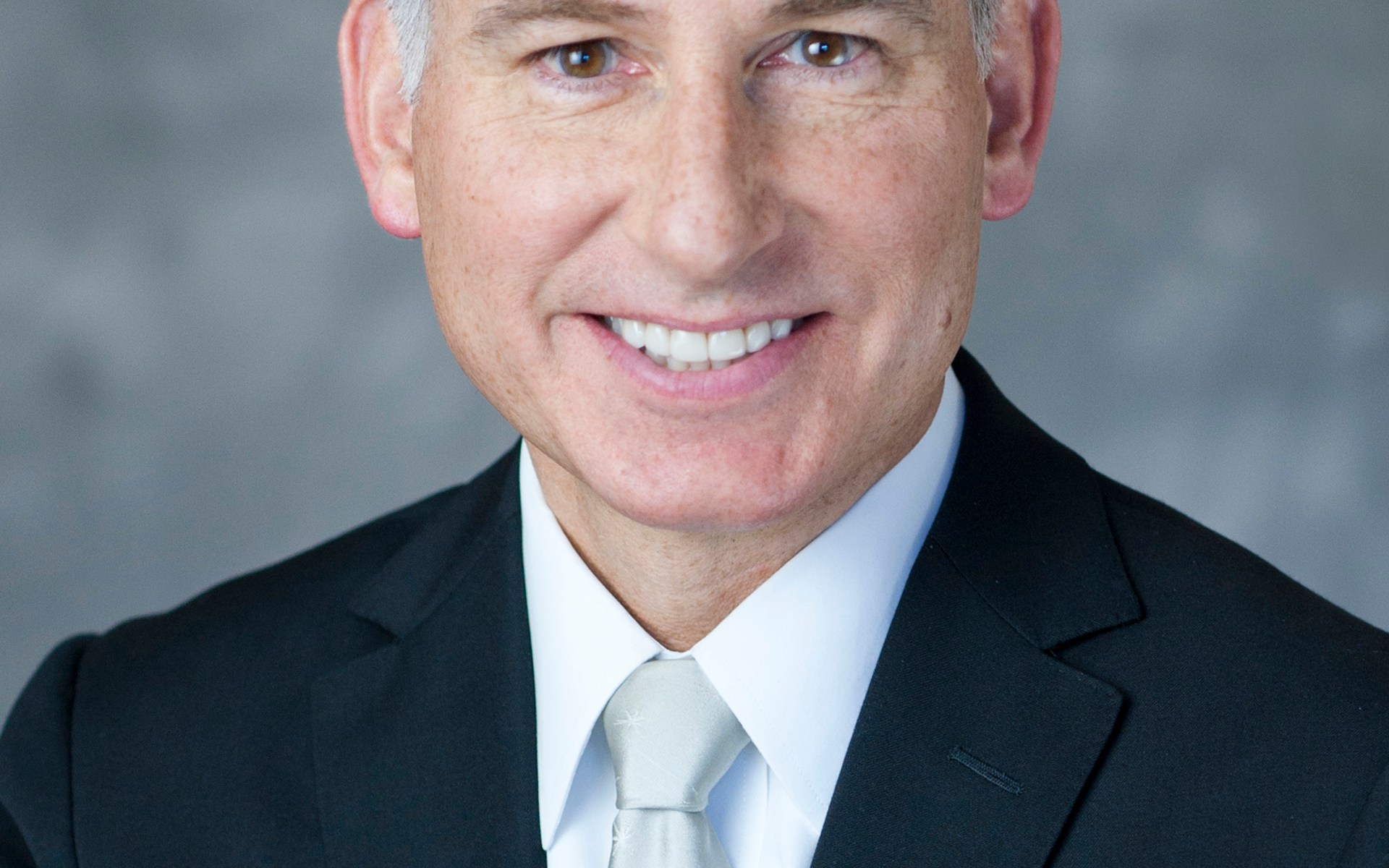
Every Memorial Day, in communities across the nation, we honor the brave members of our country’s armed forces who gave their lives to protect our country and our freedom.
As we reflect on the service of our fallen heroes, let us also remember the families they left behind. We honor the memory of those we have lost when we support their spouses and children, and when we help our returning veterans build healthy and successful lives here at home.
On Monday, May 25, I ask you to join me in a moment of remembrance and respect for all who have died in service to our country, and offer our gratitude to all who serve around the world and here at home.
Sincerely,

Dow Constantine
King County Executive
Share this:

Advice from EAP during Mental Health Month: Finding safe connection while social distancing

Social distancing is one the strongest tools we have to save lives and slow the spread of the coronavirus. Yet for many of us, the practice is difficult; while social distancing keeps us and others safe, it also challenges our important need for connection.
Whether you live alone or in a home full of people, practicing social distancing can lead to feelings of isolation, which can take a toll on your mental health. Fortunately, there are steps you can take to help combat isolation and stay safely connected, both online and offline, to others during this time. Visit the Balanced You blog for more information.
Share this:

Mentoring Lunch and Learn online session, May 26

Would you like to have a mentor, someone who can help you grow professionally? Do you want to strengthen your coaching skills? As a Mentee, you will have a trusted advisor who can help you navigate complex situations, and as a Mentor, you can uncover new or forgotten skills and build influence. If the thought excites you, join King County’s Mentoring Program by signing up for a monthly online sessions to uncover more about mentoring and search for a Mentor,
Tuesday, May 26, 2020 from noon to 1 p.m., register here.
This session is live via Zoom. For questions contact Learning and Development at KCTraining@kingcounty.gov.
Share this:

Celebrating Asian American and Pacific Islander Heritage Month, May 2020

This year the King County Asian Pacific Islander Affinity Group (API) has developed several events and resources to share API culture, support the API community, and learn more about Asian American and Pacific Islander history.
- Volunteering at Danny Woo Garden, Wednesday, May 27, 2020 from 1-4 p.m. Contact Sung Cho to volunteer.
- Asian Americans PBS Series discussion, Thursday, May 28, 2020 from noon to 1 p.m. Join on Zoom.
The API group has also put together resources to help employees learn how they can better support the Asian American and Pacific Islander community. Consider supporting a local business or produce and flower farm owned or operated by Asian American and Pacific Islander individuals. Employees can also learn more about Asian American and Pacific Islander Leaders and Luminaries in a presentation developed by the API group, viewable here.
Additionally, employees are invited to participate in the API “Thank You Campaign” to send letters of appreciation to King County essential workers. To ensure their letter is included, employees will need to submit their letter directly to Stephanie Santos by Tuesday, May 26.
For questions about these events and for more information, contact Stephanie Santos with the King County Asian Pacific Islander Affinity Group.
Share this:

Unemployment fraud is escalating. Learn how to protect yourself

Washington State is seeing an alarming rise in fraudulent unemployment claims as victims’ identities are being used to file false unemployment claims with the Employment Security Department (ESD), including here in King County.
Some individuals who have not filed an unemployment claim have received notification from ESD indicating that a claim as been filed on their behalf. The State is taking this seriously and reviewing its internal processes to identify and prevent these fraudulent claims going forward. This may slow down processing, but is being done in the interest of claimants.
Please see our recommendations for how you can protect your identity and finances, as well as steps to take if you are a victim of this fraud.
To protect yourself from fraud
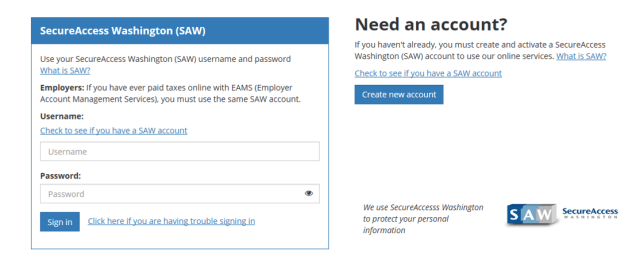
Employees should consider setting up their own account with ESD to prevent a fraudulent account being created in their name at https://secure.esd.wa.gov/home/.
If you are a fraud victim
If you have received a letter from ESD, or if you believe that you are a victim of unemployment fraud, there are several steps that you should take to report this issue to protect your financial identity and credit history:
1. Step One – Contact HR
- Please contact your Human Resources Manager as well as the Department of Human Resources’ unemployment coordinator Elisha Mackey at elisha.mackey@kingcounty.gov.
- Please include a copy of the letter that was mailed to your home so that we can notify our third-party vendor, Employer’s Edge.
2. Step Two – Contact ESD
ESD’s preferred contact method is online at the ESD Unemployment Benefits Fraud website. ESD will ask that you use their Online Fraud Reporting Form to alert them as they are receiving an extremely high number of calls and no longer have email available.
You will need to include the following information when you contact ESD:
-
- Your full name
- Last four digits of your Social Security number
- Your address, date of birth, and phone number
- Information on how you learned a claim was filed on your behalf
3. Step Three – Police report
- File an online or non-emergency report with the law enforcement agency whose jurisdiction you live in.
- Seattle residents can file an online report at the City of Seattle Online Reporting website.
- King County residents can file an online report at the King County Online Reporting website.
- Start keeping a file folder or journal with the information from this incident, including any case numbers. Some government services and accommodations are available to victims of identity theft that are not available to the general public, such as getting certain public records sealed.
4. Step Four – FTC Identity Theft report
- File an Identity Theft report with the Federal Trade Commission (FTC) via their online form at www.identitytheft.gov.
- Review the materials available from the FTC about how to respond to, limit the damage from, and start recovering from identity theft. You can find useful and reassuring resources at the FTC Consumer Information Identity Theft site and www.identitytheft.gov.
5. Step Five – The three major credit bureaus
- Obtain your free credit reports from Equifax, Experian, and TransUnion at www.annualcreditreport.com or call 1-877-322-8228.
- Report to the credit bureaus that the fraudulent claim was made using your identity and provide them with the case number from your police report. You can have a fraud alert put on your identity or freeze your credit. Doing either is free by law.
- A fraud alert is free and will make it harder for someone to open new accounts in your name. To place a fraud alert, contact one of the three credit bureaus. That company must tell the other two.
-
- Equifax: 1-888-766-0008
- Experian: 1-888-397-3742
- TransUnion: 1-800-680-7289
- Check your credit activity at least once a year. As a victim of identity theft, you have the right to check it monthly if you choose.
- Credit Freeze – If you do not have upcoming large purchases, such as a home, you may want to freeze your credit for more protection. It is free, and you can do it yourself. Learn more at the FTC Consumer Identity Credit Freeze site.
6. Step Six – Keep your notes
- Hang on to any notes, copies of emails, etc. This is the paper trail that you can reference if you face any identity issues or locate inaccuracies on your credit history sometime in the future.
If you are a victim of identity fraud, please make sure you follow these steps. They may seem like more work than they are worth; however, they are crucial in helping you recover and combat this crime nationwide.






 Employee News