
Jail employees boost COVID-19 vaccinations with benefit program
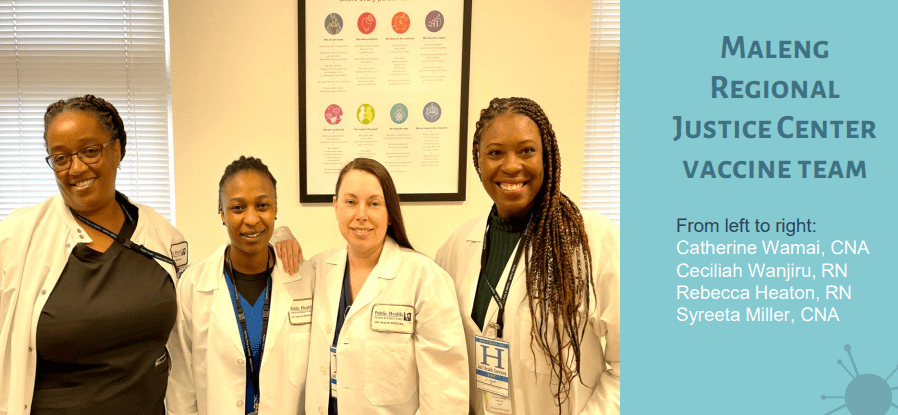
Jail Health Services recently wrapped up a successful month of COVID-19 vaccinations, building on a program that used financial incentives to encourage vaccine uptake among people in custody.
As part of the COVID-19 Vaccine Benefit Program, people detained at the King County Correctional Facility in Seattle and the Maleng Regional Justice Center in Kent were provided a $50 credit to their commissary accounts (“books”) for any dose as part of their overall vaccine series. Anyone receiving a first, second, or a booster dose was eligible.
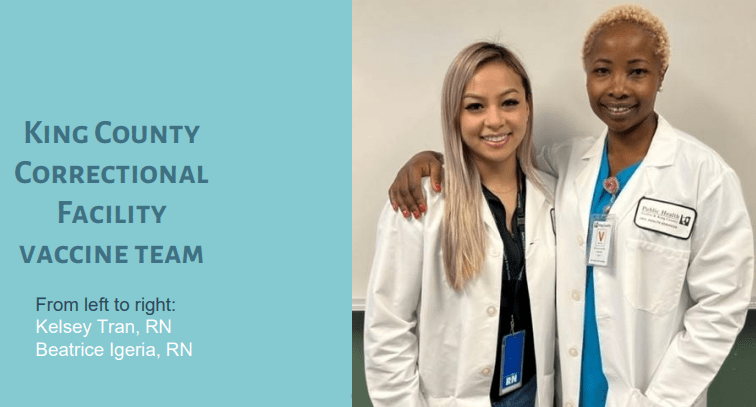
From May 19 to June 21, staff administered 500 vaccine doses totaling $25,000 in donor dollars distributed. This represents a 66% increase in vaccines administered compared to the same period in April 2022. During this period the vaccine refusal rate decreased from 74.3% to 51.9%.
“This strongly suggests that these benefits remain popular among our in-custody populations, and that they represent a significant step in improving the overall health and safety in the facilities,” said Jail Health’s Chris Rampaul, a member of the Vaccine Benefit Program.
COVID-19 vaccination rates inside jails and prisons lag behind the community at large. That’s the case at King County jails, even though everyone in custody is given opportunities to get vaccinated starting at intake.
Among King County residents over the age of 5, an estimated 94% have received at least one dose of the COVID-19 vaccination, and about 54% have received a booster dose in addition to their primary series.
Vaccinations are required for all King County employees working in secure detention.
Leadership at Jail Health Services (JHS) and the Department of Adult & Juvenile Detention (DAJD) commended staff for their efforts on the Vaccine Benefit Program, which brought an increased administrative workload.
Those who helped make the work possible included: the JHS Vaccine Nursing team, DAJD’s uniformed employees, DAJD finance staff, JHS Health Information Management, and the JHS project team.
Staff continue to offer the COVID-19 vaccine to people in custody without the commissary credit.
Jail Health Services is a division of Public Health – Seattle & King County.
Share this:

Connecting families with support

Originally posted in King County Sheriff’s Office News
Recently, Sound Transit Resource Deputies Steve Wright and Marshall Smith were assisting BNSF Railway police with contacting the occupants of the pictured encampment, located on rail property near Skyway. As the photos show, the encampment wasn’t suitable for anyone to be living in or around.
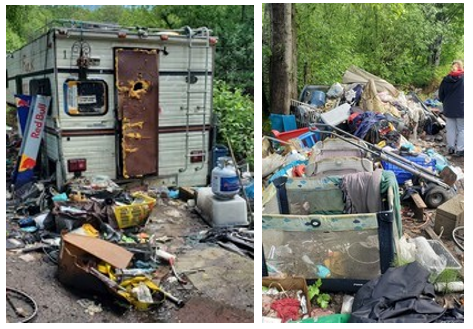
However, Deputies Wright and Smith found a woman and her 21-month-old son living here. The woman said she and her son had been living in the encampment for over a year.
Deputies Wright and Smith knew they needed to step in get this mother and her son some help, so they reached out to the Salvation Army Street Level Group.

Street Level is an arm of the Salvation Army that does outreach for people living in vehicles and parking lots. The Salvation Army was able to get the mother and her child into a clean, safe place while they worked on a permanent solution.
A couple weeks after the initial contact, Deputies Wright and Smith learned the Salvation Army was able to get the mom and son to Idaho to live with a relative.
To learn more about King County’s efforts to end homelessness visit www.kingcounty.gov/housing. To apply for housing or shelter click here.
Share this:

Executive Constantine, Mayor Harrell appoint experienced leader as Director of Public Health

King County Executive Dow Constantine and Seattle Mayor Bruce Harrell have appointed Dr. Faisal Khan, a 25-year leader in public health at global, state and local levels – as the Director of Public Health – Seattle & King County.
“Dr. Khan has the experience and expertise to lead Public Health into the next phase, and he brings a fresh perspective to serving the people of King County,” said Executive Constantine. “We look forward to his leadership as our dedicated employees continue our national reputation for excellence in public health and health equity – making King County a community where every person can thrive.” Read more.
Share this:

Is my baby ready for COVID vaccine? Answers for new and expecting parents

Cross-posted from Public Health Insider
Babies and young children ages six months and up recently became eligible for COVID-19 vaccines.
If you’re the parent of a child under age five, you may be cracking open the champagne, or you may be still wondering if getting vaccinated is the right move for your child. Either way, we understand where you’re coming from.
It’s normal and natural to have questions, especially when it comes to children’s health and Public Health Insder has answers to common questions. Read more.
Share this:

One year later: Collaborative Case Management program houses Veterans in King County

Cross-posted from Cultivating Connections
June 18 marked the one-year anniversary of the first Veteran being housed through the Collaborative Case Management (CCM) program.
King County launched a first-in-the-nation pilot program to help veterans experiencing homelessness connect to safe and stable housing in April 2021.
Since the launch of CCM to date, the program has helped 75 Veterans find and move into permanent housing and 133 (out of an initial allotment of 142) VASH vouchers were issued for Veterans to utilize to find housing so far. Read more.
Share this:

July is Disability Pride Month

Disability Pride celebrates the important history of the disability civil rights movement and recognizes contributions that people with disabilities make in workplaces and communities.
All King County employees are welcome and encouraged to participate in Disability Pride Month events. Join the conversation that honors the lived experience of King County employees with disabilities and highlights continued efforts to advance disability equity and justice in King County.
Movie and Discussion: Crip Camp

Watch and discuss the Sundance Festival award-winning documentary Crip Camp: A Disability Revolution, which tells the story of Camp Jened, a summer camp where teens with disabilities found and built a community that ignited the disability rights movement.
Facilitators will share clips from the documentary and explore the themes of disability inclusive community, activism and self-advocacy, and the intersection of race and disability. The full documentary is available on Netflix and free on YouTube.
The event is sponsored by the King County Disability Equity Network, the King County Disability Awareness Month Committee, and co-hosted by Superior Court.
- Monday, July 11 from 1 to 2:30 p.m. Register in advance here. You will receive a confirmation email about how to join the meeting.
Reasonable Accommodations: The Zoom event includes live captioning, ASL interpretation, and audio descriptions of the video clips. For other reasonable accommodations, contact Ronda Bliey at 206-477-0791 or Ronda.Bliey@kingcounty.gov.
July 26 is Pride Disability Day

Join Anita Whitfield, Chief Equity and Inclusion Officer, and employees in celebration of Disability Pride to honor and recognize the contributions of people with disabilities through the lens of equity.
This event is co-sponsored by the King County Disability Equity Network, the King County Disability Awareness Month Committee, and the Office of Equity and Social Justice.
- Tuesday, July 26 from noon to 1 p.m. Register in advance here. After you register for this event you will receive a confirmation email. Zoom details will be sent out in a separate email prior to the event.
Reasonable Accommodations: This Zoom event includes live captioning and ASL interpretation will be available. For other reasonable accommodations, contact Taryn Farley at 206-263-8927 or tfarley@kingcounty.gov by July 20.
Share this:

Inaugural Muckleshoot Pride event
Originally posted in King County Sheriff’s Office News
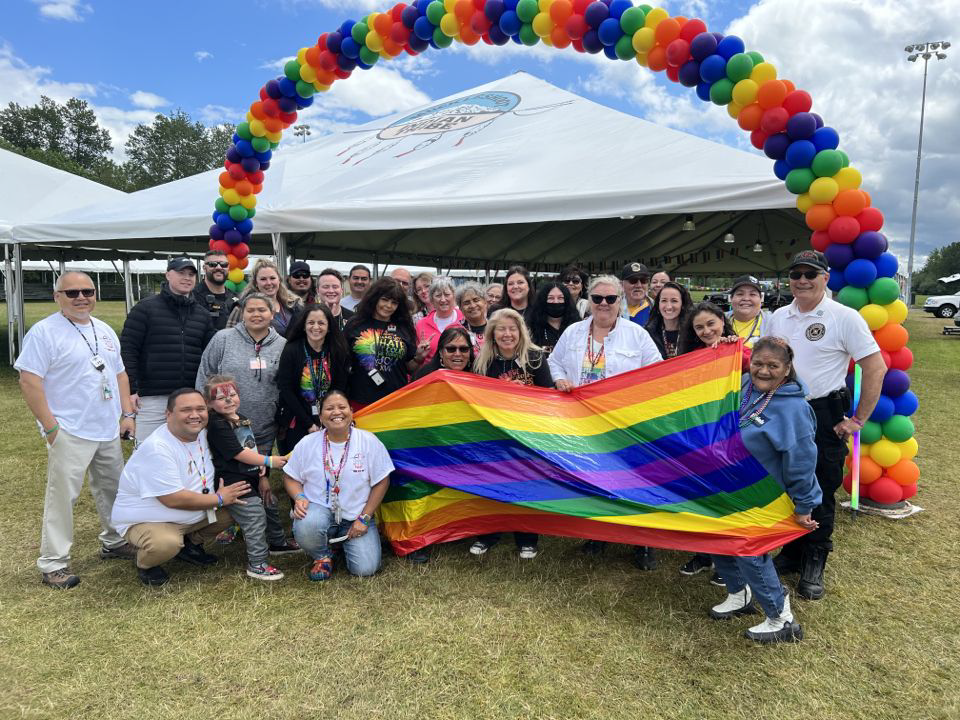
The King County Sheriff’s Office and Muckleshoot Tribal Police partnered and participated in a recent Pride event at the Muckleshoot Pow Wow grounds. This event was monumental as it marked the first Pride event for the community.
In attendance were Chief Val Kelly, MRO Sergeant Corbett Ford, and Communications Liaison Zoe Birkbeck. Muckleshoot Tribal Police Detective Jason Rich and Deputy Damian Walburn were also there to hand out pride beads and bracelets and meet with community members.
Share this:

Free admission to Emerald Downs July 10

King County employees and their families are invited to attend the Emerald Downs racetrack for King County Day on Sunday July 10. They will receive free admission and should check in at Will-Call to receive their tickets. Employees will need to show proof of current employment, such as an employee badge or recent paystub.
Part of the Family Fun Weekend event, gates open at 9 a.m., and the first race of the day is at 2.15 p.m. Throughout the day from 1-5 p.m. children can also participate in several games and activities held in the park.
In addition to King County Day, other events at Emerald Downs this summer include Corgi Races, Premio Esmeralda Weekend which highlights the Latinx community, T-Rex Day, Wiener Dog and Wannabe races, and the final race of the season, Three Stakes on Closing Day.
Parking: Free general lot parking is available. Preferred parking is $10. There is no valet parking available. A shuttle bus service will be offered from parking lots to the main gates during live racing hours only. View more information here.
Seating: General admission bench and table seating is available throughout the track. Picnic tables and umbrella tables located on the track apron are also available. More seating information is available here.
- Adult ticket: $10
- Adult ticket and reserved Grandstand seat: $13
- Youth ticket: $5 ages 5-17-years-old. Ages 4 and under receive free admission and do not require a ticket.
For more information, visit the Emerald Downs website.
Share this:

Law Enforcement Torch Run for Special Olympics
Originally posted in King County Sheriff’s Office News
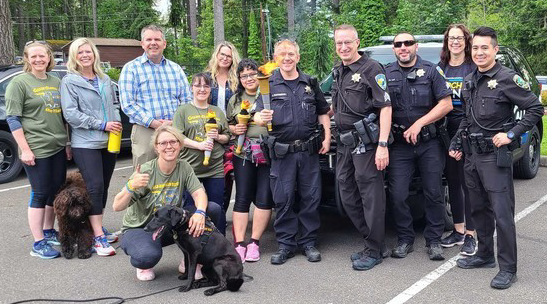
On Thursday June 16, law enforcement throughout the state participated in the Law Enforcement Torch Run (LETR) for the Special Olympics. The mission is to raise awareness and funds for the Special Olympics movement, and several King County contract city partners also participated. Shoreline, Burien, Sound Transit, Sammamish, Maple Valley, and Covington ran or walked alongside community members and King County Deputy Kristi Bridgman, who led the effort.

There were also two Special Olympic athletes in attendance, both of whom have been participating in the Torch run for five years.
The events didn’t end there, as the Special Olympics hosted their annual Olympic Games on Saturday, June 19. In attendance were law enforcement officers, considered the ‘Guardians of the Flame’, who carried the Torch for the opening ceremonies at Pacific Lutheran University. This was the first in person Special Olympics Games in Washington in over two years! For more information on the history LETR, check out this video: Game Changers | History of the Law Enforcement Torch Run – YouTube
Share this:

Commander Todd Clark retires after 40 years with Adult and Juvenile Detention
Originally posted in the June edition of Roll Call, the newsletter for the Department of Adult and Juvenile Detention
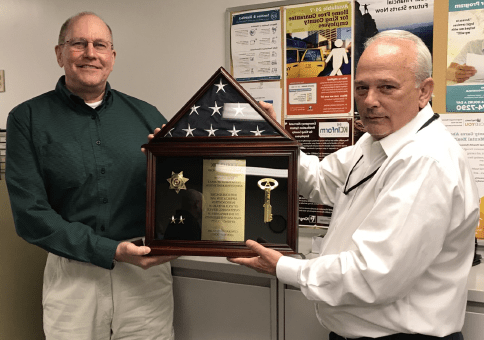
Commander Todd Clark’s deep experience working for King County jails made him a wealth of institutional knowledge. At the end of April, Clark stepped down from the commander’s role for both the Seattle and Kent divisions.

He had been leading the Seattle Division since 2020, following Gordon Karlsson’s retirement. In the fall of 2021, he took on the added role as commander of the Maleng Regional Justice Center, after Ed Bautista retired.
Clark’s tenure as commander spanned unprecedented times, including the COVID-19 pandemic and the added challenges during the Omicron surge.
His career with the department began in May of 1982, shortly after completing his service in the U.S. Army. He was first assigned to the jail that was located inside the Courthouse, four years before the King County Correctional Facility opened.
As a sergeant in the 1990s, he assisted with opening the Maleng Regional Justice Center in Kent, then returned to the Seattle Division years later as a captain and then major.
Interim Commanders Troy Bacon and Lisaye Manning are overseeing the Seattle and Kent divisions. The majors positions are being held open for now.






 Employee News