
Featured Job: Functional Analyst II

Closing Date/Time: Mon. 05/09/16 11:59 PM
Salary: $32.79 – $41.56 Hourly
Job Type: Career Service
Location: Chinook Building, Downtown Seattle, Washington
Department: Department of Public Health–Administrative Services
Description: This position reports to the Health Information Management (HIM) Manager, in the executive branch of Seattle and King County Department of Public Health. The HIM Functional Analyst will support key HIM activities in the following Divisions: Jail Health Services (JHS), Prevention (STD and TB clinics) and Community Health Services (CHS). They will also work with the King County Records Center, King County Information Services (IT) and the Health Information Technology (HIT) team. We currently manage over 2.2 million records. All Divisions are transitioning to the OCHIN Epic EMR. CHS and Prevention are transitioning from paper or a paper/electronic records combination; JHS is transitioning from the PEARL EHR. We expect to be completely transitioned by late 2017.
Learn more about this position or view all available jobs.
Share this:

Apply for the 2016 Bridge Fellowship Program

 Crossposted from the DES Express blog
Applications open soon for the 2016 Bridge Fellowship Program: A Career Development Course for the Emerging Leader. The program is an opportunity for any employee to gain new skills and knowledge to assist in advancing your career at King County.
Employees who participated in the 2015 King County employee engagement survey identified access to training opportunities and career growth as a key driver of their engagement, but less than half responded positively to having fair and equal access to career advance opportunities. The Bridge Fellowship Program is part of a countywide effort to create a culture that develops the next generation of leaders and nurture an empowered workforce.
Share this:

Flood reduction grant opportunity deadline is May 27
 The King County Flood Control District has announced the availability of $3.3 million in grant funding for projects that reduce the impact of flooding in King County. Eligible applicants include homeowner associations, non-profit organizations or associations, schools, special purpose districts, tribes, cities and towns within King County and King County agencies. Individuals who need funding for a local flooding issue are encouraged to work with an eligible group to apply for a grant. Projects must provide a flood reduction benefit so that it directly addresses existing or potential flooding. The deadline for this 2016 grant opportunity is May 27. For more information, visit the King County Flood Control District website.
Share this:

Drug court graduation draws media attention
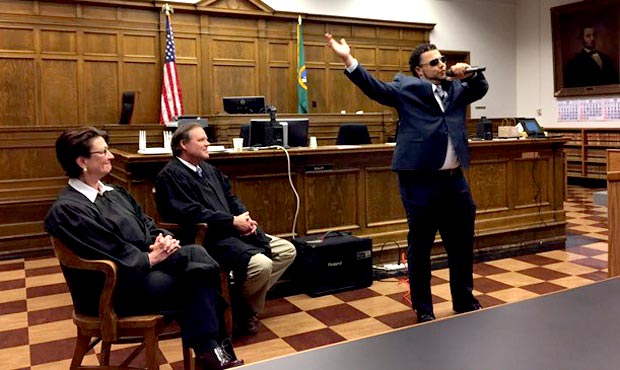
Drug court graduate Josh Kerns shares his story through rap.
Public defender Natasha Coleman recently asked King County Superior Judge Cheryl Carey if graduates from the King County Adult Diversion Drug Court could share a talent at their graduation ceremony. The judge agreed, and the first such performance happened Wednesday, when rapper Shelby Allen – a 22-year-old man and one of Natasha’s clients – shared his story and his appreciation for Drug Court through a rap he wrote. KCTV, KING5 and KIRO radio were on hand to observe him. Natasha said Shelby was thrilled. “It was the best ceremony I have ever attended. Everyone loved Shelby. He put on sunglasses just before he started to rap and had everyone in the audience singing and rapping with him,” Natasha said.
View the King5 story here and read more at the King County Youth Justice blog.
Share this:

Kudos! Seattle Times recognizes KC Metro driver for exceptional service

 The Seattle Times recently profiled KC Metro driver Cherry Gilbert noting her positivity and good-natured approach to her work.
“Cherry Gilbert is so well suited to her job behind the wheel that she’s never caused an accident or gotten a complaint. In fact, she’s never even lost her cool. She’s so good-natured that she’s completely unfazed by drivers who honk or cut her off, bicyclists who flip her off, or passengers who ramble, yell or curse.”
Read more at the Seattle Times. Image courtesy of The Seattle Times.
Share this:

Employee discounts: Sounders FC and Mariners

 King County’s Employee Discount Program has new discounts available:
Seattle Sounders FC – Saturday June 25, 2 p.m. Sounders FC vs. New York City. Ticket prices: Green Zone (Hawks Nest) $24; Balcony (first four rows of 300 level) $27. To take advantage of this offer, click here to purchase tickets and then enter the Special Offer Code: Employee2016. If you do not already have an account you will need to create one. If you have any issues with this offer please contact Gary Boyle.
Seattle Mariners – Friday, May 13 vs Los Angeles Angels, and Friday, August 19 vs Milwaukee Brewers. Ticket prices: $12 View Level / $29 Main Level. To take advantage of this offer, click here to purchase tickets and enter Promo Code: King.
Find more discounts on the Employee Discount Program webpage.
Share this:

Meet our new Lean Transformation Director

 Crossposted from the Lean In King County blog
A message from our King County Executive:
I am pleased to announce that we have selected Gary Kurihara to lead us on the next phase of our Lean journey as our Lean Transformation Director.
Gary comes to King County with experience across several industries and, most recently, led a Lean transformation of a major corporation with more than 18,000 employees in the United States.
Read more at Lean in King County
Share this:

KCIT wants to share Earth Day kudos with DNRP!

 When it comes to Earth Day, move over Department of Natural Resources and Parks and shine a little green glory on KC Information Technology (KCIT)!
While it’s true we don’t clean water, recycle asphalt shingles or plant trees, our paperless programs (SharePoint, CRM, paperless paychecks) can save a forest! Yep, KCIT is helping green the entire county with new processes, technologies and applications.
Share this:

Mark your calendars: Alaskan Way Viaduct shutdown begins April 29
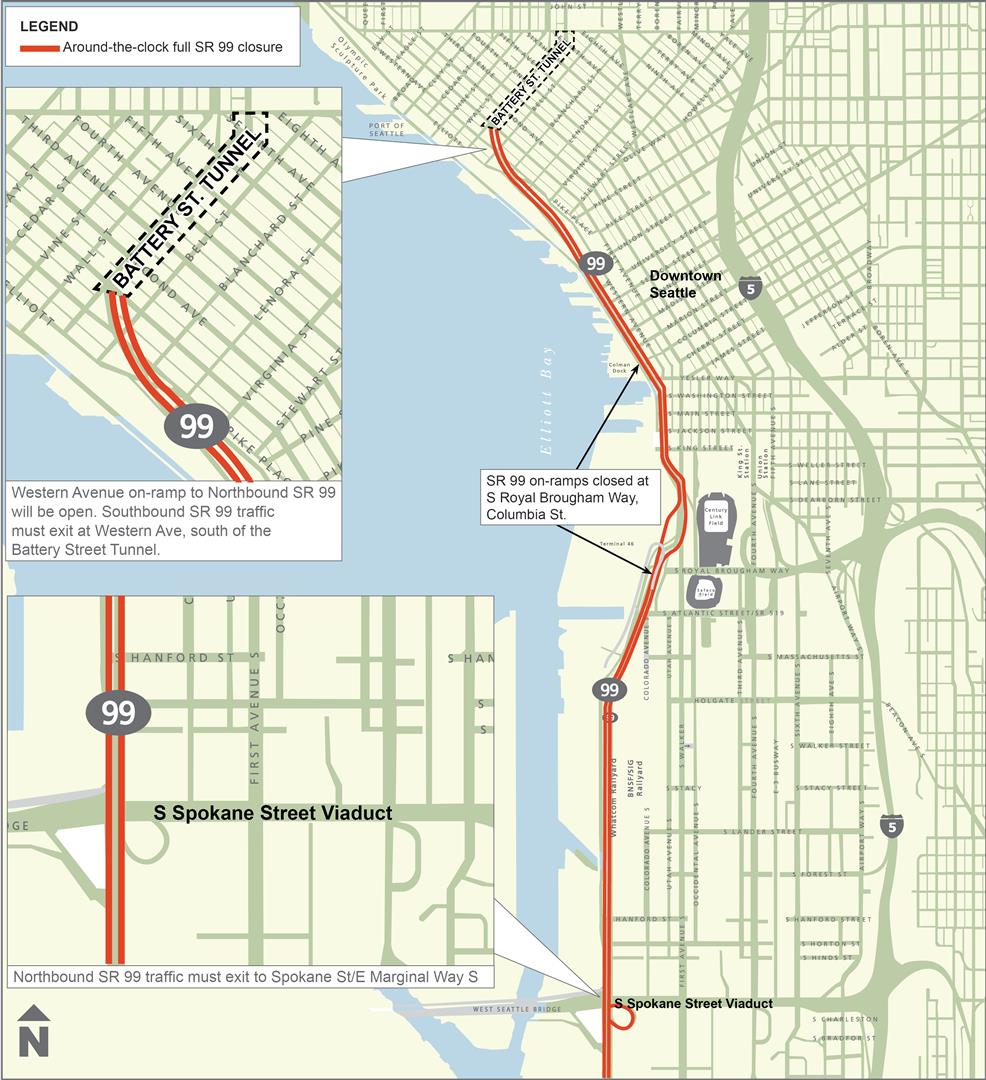
 Commuters and drivers should start planning now; use www.99closure.org
Starting Friday, April 29, the Washington State Department of Transportation will close the viaduct between South Spokane Street and the south end of the Battery Street Tunnel.
This closure is expected to start prior to the morning commute and last approximately two weeks as the SR 99 tunneling machine Bertha digs underneath the roadway near Yesler Way.
Share this:

2016 Special Election ballots mailed out

 The Elections Department has mailed ballots for the April 26, 2016 Special Election to all registered King County voters. Only certain jurisdictions are participating in this month’s election so not everyone will receive a ballot. For a detailed list of what is on the ballot, please visit the King County Elections website.
The May Presidential Primary Election ballots will be mailed on May 4.
Please remember: Do not use interoffice mail service to return a ballot. Also, do not return ballots to the Voter Registration Annex.
The April election day deadline is April 26 and the May election deadline is May 24. You may vote as soon as you receive your ballot. If you should have received a ballot for the April election but have not contact Elections at 206-296-VOTE (8683).






 Employee News
