
KC Connects interview with King County Sheriff John Urquhart
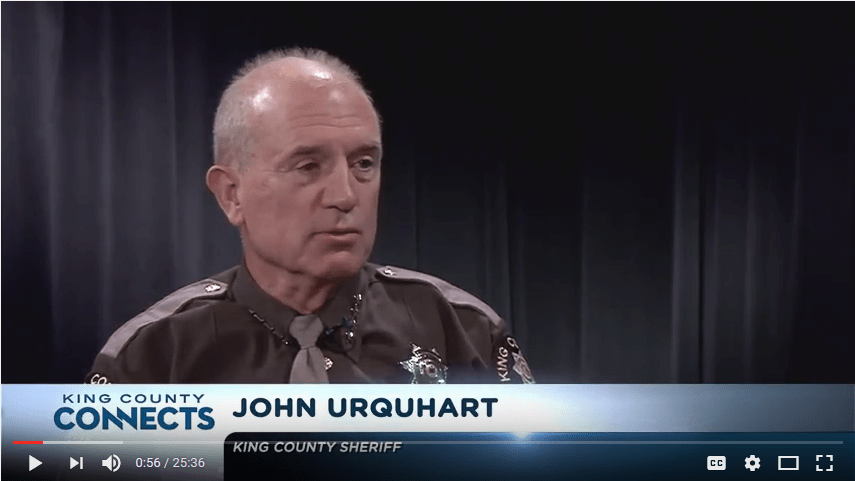
Sheriff Urquhart talks with host Enrique Cerna about building bridges to communities of color. He speaks about protecting the public, the need for collaboration between law enforcement and the community, and the impact of the recent shootings in Dallas, TX, Minnesota and Baton Rouge, LA.
Interviewer Enrique Cerna gets to the heart of the Sheriff’s emotions about building trust, listening and better serving the community through diverse hiring.
“There is an expectation, the community expects us to keep them safe, and we expect and work to keep them safe. The problem that we have is the lack of trust in the community… but that’s not their problem. That’s not their challenge. That’s my challenge. That’s my challenge, to build that trust with those communities. We are trying to do that, and frankly I think we’re doing a good job of working in that direction but we’re not there yet.”
View the entire interview below.

Share this:

Graffiti Contest to decorate the Archives and Records Center!

The King County Archives and Records Center buildings do not normally attract attention. First time visitors will comment that they’d drive by (or some even live or work nearby) but had never known we were here!
On July 30, the Archives and Records Center walls facing Fir Street and the parking lot will be decorated with the results of a day-long graffiti contest, held for young graffiti artists from around the Northwest.
The event is from 6:30 a.m.-8 p.m. and is open to the public. People are welcome to drop by to view the artists at work. We ask that people do not drive into the parking lot for the safety of the artists. The King County Archives and Records Center is located at 1215 East Fir Street, Seattle, WA 98122.
The event is being led by local artist Andrew Morrison, known for his Indian Heritage murals at the Wilson Pacific School in North Seattle and other local work, including a new interior mural underway at Seattle University. Morrison is about to leave Seattle to study at the Maryland Institute College of Art, but before leaving the region, he wanted to hold an event for local youth and artists. The contest is being coordinated in collaboration with 206 Zulu director Daniel Kogita AKA King Khazm. 206 Zulu’s office is at Washington Hall, just down the block from the Archives and Records Center facility, and will serve as the administrative base for the event. Morrison is donating the prize money himself.
Archives and Records Center staff are excited to be able to provide a blank canvas to youth, to support the arts, to work with our neighbors at Washington Hall, and, not least, to see something besides cloud-colored walls when we come to work.
Christopher Young, Facilities Management Division Real Property Agent, is coordinating the event. Contact him for more information at christopher.young@kingcounty.gov.

Above, Indian Heritage murals at Seattle’s Wilson Pacific School, painted by local artist Andrew Morrison, who is leading the graffiti contest for youth. Image courtesy of http://www.andrewmorrison.org.
Share this:

King County runners represent in Reebok Ragnar Northwest Passage Relay

A team of 12 King County employees found their ‘inner wild’ and conquered 200-ish miles of relay running through the Northwest Passage July 15-16 in the Reebok Ragnar Northwest Passage Relay.
A week after supporting his children’s high school team during the 2015 relay, Al Dams, Chief Deputy Assessor, pitched the idea of forming a King County team for the 2016 Ragnar during a regular lunch-time run with his fellow King County Running Club members. A year later, after recruiting nearly 20 runners to ultimately field a team of 12, the King County team not only participated in the Ragnar, but placed 32nd of 523 teams – and second in the “Corporate / Public Service” division – with a time of 26 hours and 25 minutes. When asked what the most rewarding aspect of the event was, Al said, “Being part of a great team, and just escaping into Ragnar …for 30 hours, the only thing on your mind is Ragnar!”
The team members each ran three legs of the relay that began near the Canadian border in Blaine and ended in Langley on Whidbey Island. Along the way, the team enjoyed the views of the Cascade and Olympic ranges, the quaintness of towns like Bellingham and Anacortes, and the bridge in Deception Pass State Park. The average distance covered by each runner was 16 1/3 miles, with an average pace approaching 8 minutes. Three team members covered more than 20 miles each. Al said the most challenging part of the event was the mental aspect of running three legs. “If you run a half marathon, you run and then you are done. In the Ragnar, you run, then you rest for a bit, then you get out of the van and do it again – twice!”
The King County team will host an employee informational session in preparation for the 2017 event in room 560 of the Administration Building (500 Fourth Avenue) August 17 from noon to 1 p.m. The team is looking to maintain the current team, and possibly form more teams, which could either allow placement in different divisions, or simply allow for competitive teams and not-so-competitive teams. “We know other County employees took part in Ragnar because we saw them on the course,” Al said. “Maybe they would switch to a King County team for next year’s relay.” The teams are self-sponsored (no taxpayer funds are used).
For more information about the King County Ragnar team, stop by the employee informational session or contact Al Dams at Al.Dams@KingCounty.gov. If you are interested in the King County Running Club, contact Seth Watson at Seth.Watson@KingCounty.gov. To learn more about the Reebok Ragnar Northwest Passage Relay, visit the official Ragnar site.


Share this:

Featured Job: Health Services Administrator

Closing date/time: Open until filled
Salary: $92,835.60 – $117,674.75 Annually
Job type: Career Service
Location: Chinook Building, Downtown Seattle, WA
Department: Department of Public Health–Community Health Services
Description: King County is seeking to fill a Health Services Administrator position within Public Health – Seattle & King County (PHSKC), Community Health Services (CHS) Division. The purpose of CHS is to assure that basic health and human services are available to the most vulnerable people in King County. The Health Services Administrator position is the leader of CHS’ Health Care for the Homeless Network (HCHN) and is responsible for the oversight, strategic direction, and operational priorities of the Network. HCHN provides critical health care and support services to some of the most vulnerable residents of King County.
Learn more about this position or view all available jobs.
Share this:

Social Media Spotlight: King County Water Taxi blog

 With two routes from the Seattle waterfront, to West Seattle and Vashon Island, the King County Water Taxi provides a high quality and efficient service that moves people safely and quickly. Enjoy a congestion-free, on-time commute with spectacular views of Puget Sound and Seattle’s skyline.
Follow the Captain’s Blog today!
Click here to view all King County social media pages.
Share this:

Kudos! Bus driver shares passion for his job with others

 Kudos to a Metro driver who shows his passengers how much he enjoys his job.
This rider took to Twitter to share how her Metro driver cares about his passengers and loves the work he does.
We’re proud of this Metro driver and all King County employees whose work and passion for public service is helping us become a best-run government.
Share this:

5 Pokémon Go tips from your local health department
 Crossposted from Public Health Insider
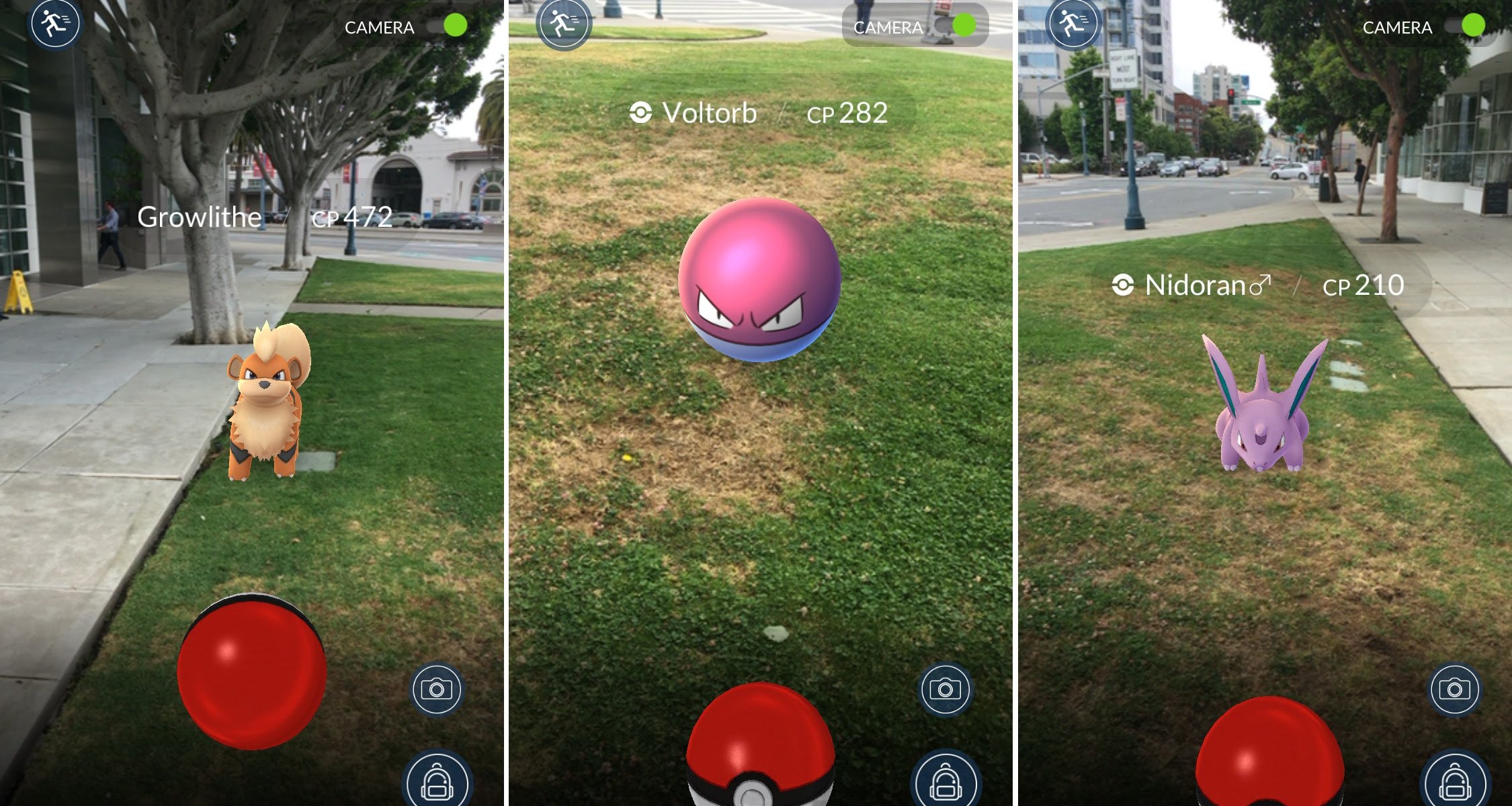
Pokémon nostalgia has roared back with the release of Pokémon Go and those of us in the public health field are not immune to its charms. We wish we could offer you tips on how to catch that elusive Vaporeon, but the only Insider play tip we have so far is that the lobby of the King County Chinook Building is a Pokéstop. We’ll just stick to the kind of tips we do best for those looking to fill their Pokédexes: injury prevention (woot!).
Have fun getting physical activity. Pokémon Go was designed to get people outside, moving around. We’re fans since exercise is largely under-represented in most people’s daily routines. If you’ve got the fitness of a Snorlax, take it slow and gradually increase your activity. And everyone should stay hydrated.
Read more at Public Health Insider
Share this:

Tech Tip: Basic intro to OneDrive and cloud storage access

 Everyone talks about “The Cloud” – where internet users can store files and access them from anywhere. Did you know King County employees have the exact same application available to them through Office 365? It’s easy to navigate and use.
OneDrive is a great tool for uploading files to share with others (including photos), give others permission to edit and work on files at the same time, and get to your files from anywhere, on your computer, tablet or phone. Essentially, it’s an online locker that allows you to back up and share you digital files, while offering you easy access. You can also create unique sharing terms and more with work team members, just like you can in Google Drive.
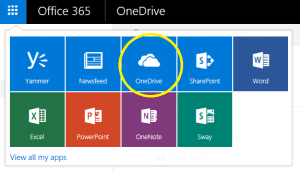
You can access Office 365 by signing in with your King County email address to SharePoint at https://kc1-my.sharepoint.com. Once you’re logged in, if you click on the grid in the top left corner the list of available apps for King County employees will appear. Click on OneDrive, with a little cloud icon, to open your personal OneDrive folder. If needed, this short tutorial explains how it works and walks you through setting up documents or folders to share with others.
Share this:

Employee discounts for Sounders FC, Seattle Storm, Great Wolf Lodge

Seattle Sounders FC has a special offer for employees! Use Special Offer Code Employee2016 when you purchase your tickets for the Sunday, July 31 game against LA Galaxy and choose Green Section (Hawk’s Nest) tickets for $24 or Balcony Loge (first four rows of 300) tickets for $27.
The Seattle Storm host the Los Angeles Sparks Friday, August 26 at 7:00 p.m., and tickets for most sections within sections 101-128 are available for between $16 and $29 with Promo Code KING2016.
Great Wolf Lodge is offering employees up to 30% off their best available rates through December 30. For more information or reservations, visit www.GreatWolf.com or call 866.925.WOLF (9653) and use corporate code KING98104 for the discount.
See all available discounts on our Employee Discounts page.
Share this:
Official roll-out of new ballot drop boxes

 Crossposted from Election Connection
Ballot boxes are now open for the August 2 Primary Election and Elections Director Julie Wise marked the occasion this week with ribbon cuttings at new ballot drop boxes at both Fairwood Library in Renton and Lake City Library. A total of 29 drop boxes will be available for this Primary Election followed by 14 more boxes for the November General Election. A total of 43 ballot drop boxes will increase access and convenience for voters across King County.
For a complete list of boxes visit our website. Boxes are open 24 hours a day until August 2 at 8 p.m.
Read more at Election Connection






 Employee News