
New approach to youth who commit violence in the home


Stephanie Trollen (left), Juvenile Section Supervisor, and Jimmy Hung, Senior Deputy Prosecuting Attorney, are organizing the FIRS program.
The King County Prosecuting Attorney’s Office (PAO), in partnership with King County Superior Court and the King County Department of Adult and Juvenile Detention, plans to launch FIRS (Family Intervention and Restorative Services), a new juvenile diversion program geared to provide services to families who are struggling with domestic violence (DV).
Unlike adult court, juvenile DV rarely involves intimate partner violence. Instead, the vast majority of cases in juvenile court involve youth acting out against their parents or siblings at a misdemeanor level. Many of these youth struggle with substance abuse and mental health disorders.
Juvenile DV cases are referred to the PAO typically after families, in a moment of crisis, call police. Although families look to the juvenile justice system for help, almost none of them want their children to end up with a criminal record. Approximately 40 percent of juvenile DV referrals result in declines because families routinely decline to assist or participate in the formal court system for this reason.
Share this:

Who is your favorite nonprofit?

If your favorite nonprofit wasn’t in last year’s Annual Giving Drive, now is the time to make sure they get in for this year.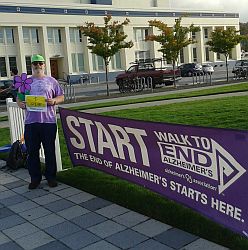
All nonprofits that turn in a complete, on-time application by April 30, 2015, and meet all of the eligibility requirements, can participate in the upcoming 2015 Annual Giving Drive and be eligible to receive payroll and time donations.
“By being in the program nonprofits gain exposure and access to 13,000+ King County employees, payroll donations, which statistically are three to six times larger than one-time check gifts because you can spread them out, as well as time donations, and it is incredibly efficient,” said Junelle Kroontje, Employee Giving Program Administrator. “They benefit from our very low program costs allowing them to maximize gifts even further, and can harness the power of collective giving and community relationships.”
Share this:

Public safety employees reach out to the community to build trust
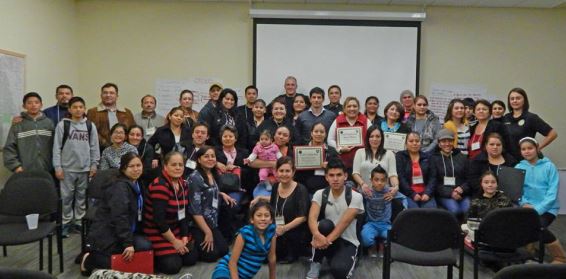
To build trust between law enforcement and Hispanic community in Shoreline and Lake Forest Park, Sheriff’s Office Community Service Officer Dahlia Corona started a workshop series called “Nurturing Trust, With Family, With Community – Padres Unidos-Familias Seguras.”
“You’ll find that when there is a language barrier or a cultural barrier then there’s a disconnect between the police and the community,” Corona said.
The workshops focus on topics such as positive discipline, domestic violence and child abuse, bullying, drug prevention and leadership in the community, and the role that law enforcement plays in preventing negative outcomes and promoting positive ones.

Share this:

Five Questions with Debra Baker, ROYAL Project Manager, Department of Public Defense
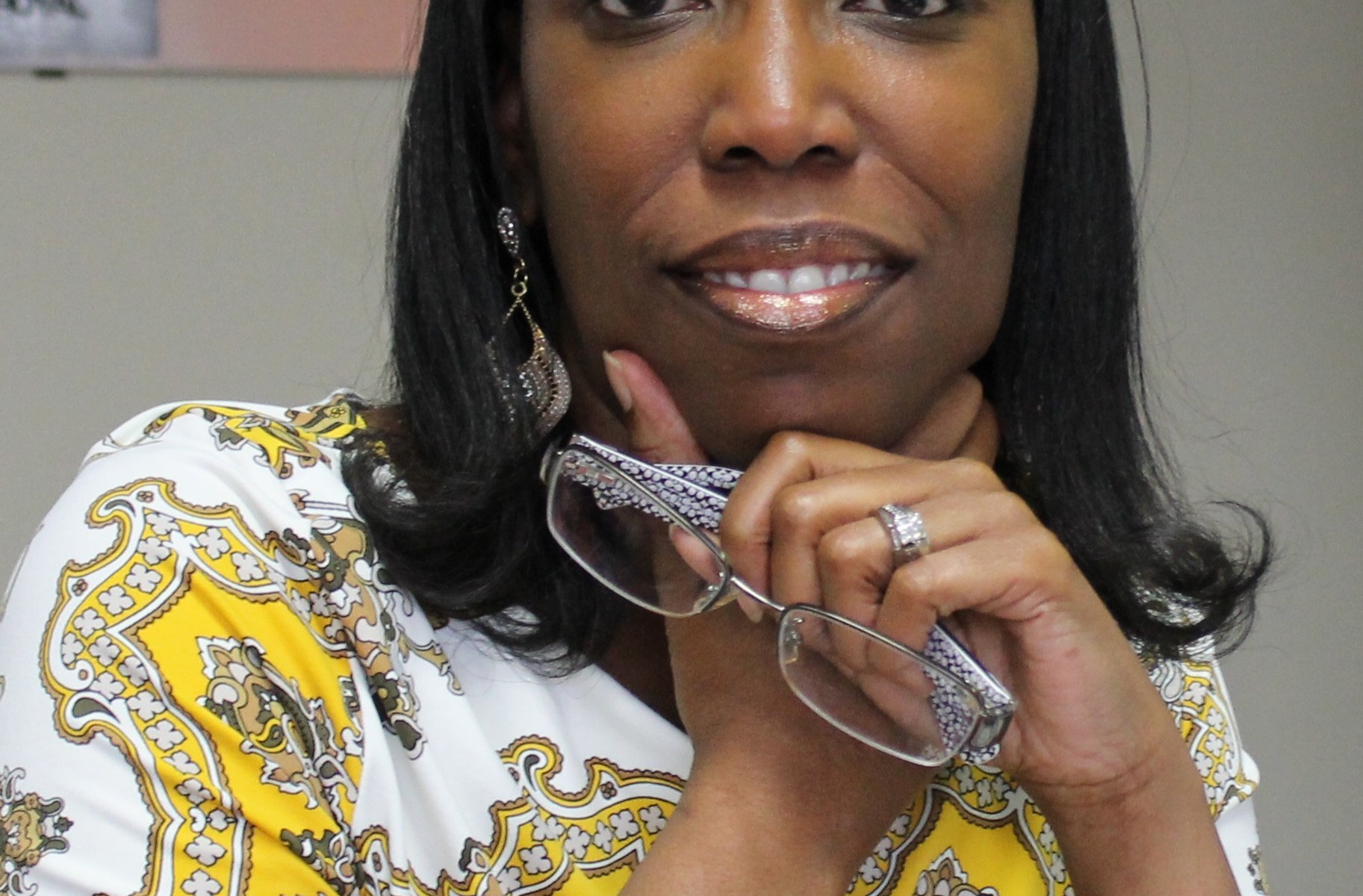
 1. Why did you choose Public Defense as a career? I began working in public defense right out of high school. As a young person I endured a lot challenges and knew that I couldn’t go to college right away. That’s when I stepped into the door of a public defense office – TDA (The Defender Association). I started there as a receptionist and went to school along the way. I fell in love with the work and chose over the years to remain in the work. Public defenders then were my some of my first English instructors, my sociology teachers, and my first law instructors. I am proud of my choice to remain in the field.
2. What is the ROYAL program? The Raising Our Youth as Leaders program is a social service program and strategy that collaborates with other agencies and organizations to provide services – from case strategizing to coaching – to high-risk/high-needs youth involved in the criminal justice system. We serve youth ages 12 to 18. Our motto is “developing minds, changing lives.” We invite our youth to take responsibility and improve their lives by teaching them how to think for themselves. For instance, we teach, “A thought is a suggestion not an instruction.” This helps youth to learn that not every thought that visits the mind should be acted upon. Over the last 12 years, ROYAL has held an 80 percent success rate (average) at keeping youth from reoffending.
3. What do you do as ROYAL Project Manager? As program manager, I provide oversight for the model, including training for staff in the areas of program instruction, legal advocacy, gang intervention, educational advocacy, coaching, and crisis intervention.
Share this:

Marine employees rescue kayaker off Alki Point

 Employees from the Department of Transportation’s Marine Division recently rescued a capsized kayaker in the water about a mile off Alki Point, bringing him to safety aboard their Vashon Island ferry.
On Friday, March 13, 2015, Captain Frank Massaro and Deckhands Joe Chrisman and Scott Denhart, were operating the M/V Melissa Ann serving the Vashon Island route. After departing Vashon Island at approximately 5:58 p.m. bound for Seattle, the crew on the bridge noticed something in the water approximately one-half to three-quarter miles away. They slowed the vessel and looked through the binoculars and determined that there was a person in the water who was waving and appeared to be clinging to a capsized kayak without a life jacket. They immediately notified the other crew on board to announce there was a person in the water and they would be picking the person up on the starboard side of the vessel. Coast Guard was notified of the situation while en route to rescue the stranded kayaker.
Share this:

Singing employee brings unique voice to construction projects

When Patty Overby isn’t managing construction projects, she’s often singing in an a capella, barbershop chorus.
“I think it makes you a better rounded person – for me it’s a big stress reducer and it’s a positive influence. It’s another opportunity to meet new people who are doing different things,” Overby said.
A Project Manager in King County’s Department of Transportation, Design and Construction Section, Overby has worked at the County for more than 35 years. Overby has been singing all her life, but six years ago she decided to give the Voices Northwest Chorus a try.

Patty Overby (second row, fourth from left) singing at the Mill Creek Art Walk in 2014.
Share this:

Tony Wright appointed Director of Facilities Management Division

Tony Wright has been selected as the new Director of King County’s Facilities Management Division (FMD). FMD is charged with providing clean, safe, secure, environmentally sustainable and cost-effective facilities for King County and the public. FMD is also responsible for designing and managing capital construction projects that are responsive to customer needs.
Wright has served as interim director of FMD since October and has demonstrated strong technical knowledge, professionalism and innovative leadership during that time. He joined King County in May 2014 and was responsible for managing high-profile, complex projects involving multiple King County agencies. Prior to working at King County, Wright was a Vice President of Normandeau Associates in Seattle, where he was responsible for strategic planning as well as day-to-day operations of this environmental consulting firm.
Wright served as an officer in the United States Army for 30 years and was responsible for complex engineering and construction projects including the repair of the Howard Hanson Dam that protects the Green River Valley from flooding. He has a Master’s Degree in National Security Strategy from the National War College, and a Bachelor’s Degree in Civil Engineering from the Oregon Institute of Technology.
Wright will begin his new role on March 16, 2015.
Share this:

Kudos! Michael Gish, Metro Link Light Rail Operator

This is a commendation for the motorman on a Link Light Rail train and the security personnel at Westlake Station.
The particular train arrived northbound at Westlake Station at about 11:20 PM on January 30 and left southbound at about 1:40. After leaving the station and heading to my apartment on First Hill, I realized after a couple of blocks that I had left my backpack on the train, which also had the keys to my apartment.
I hurried back to the station and contacted security. They outlined the “lost and found” procedure, which appeared to be of little help. They also suggested we check with the motorman of the next southbound train, which likely was the one I was on northbound, since the motorman might have found the backpack in his check of the train. They walked me down the platform and we waited at the point where the first car would stop.
Happy ending – the motorman had my backpack, which I described. He had me fill out a slip and turned it over to me.
I am now home – safe and sound, and thankful. I also commend the training and client service structure that allowed the personnel involved to be responsive effectively to my need, rather than be encumbered by strict procedures.
Thank you. David S.
Share this:

Five Questions with Jim Chan, Assistant Director for Permitting, Department of Permitting and Environmental Review

 1. What was your first role at King County? I was hired as a summer intern in my junior year at the University of Washington, working for the Building and Land Use Department as an Engineer Assistant. I reviewed residential building permit applications, drove throughout the county visiting development sites and met with property owners and consultants.
2. Why did you choose King County as an employer? While a student at the UW, I worked for a professor making $4.50 an hour counting cars on overpasses. The Building and Land Use Department was located two miles from my parents’ home in Bellevue. A phone call landed a summer internship, later a part-time job which became a permanent hire after graduation. Engineering was my degree and focus. The work location was close to home at the time. A third of the work was outdoors away from the office. Many of my co-workers were also recent hires out of college and we bonded outside of the workplace. It also paid significantly more than the UW.
Share this:

ADR launches Conflict Clinic Online

 Got conflict in your workplace? The King County Office of Alternative Dispute Resolution (ADR) recently launched the Conflict Clinic blog to help you work through it. They post weekly tips and tools for shifting destructive conflict into a creative force for stronger relationships and better results.
“Instead of avoiding difficult conversations for fear things will just get worse, or lashing out at others, you can read the blog for practical approaches to engage others in conversations that matter,” said Doug Nathan, a mediator with ADR and a writer and editor for the blog. “And if you have a question about conflict in your workplace, you can ask it through the Conflict Clinic site and look for a reply in an upcoming post.”
With four staff members and 100 volunteer-mediators, the Office of ADR offers face-to-face mediations, trainings, and group facilitations. They developed the blog to extend their reach online and make their content as accessible as possible for employees countywide.






 Employee News