
Five Questions with Jimmy Hung, Senior Deputy Prosecuting Attorney
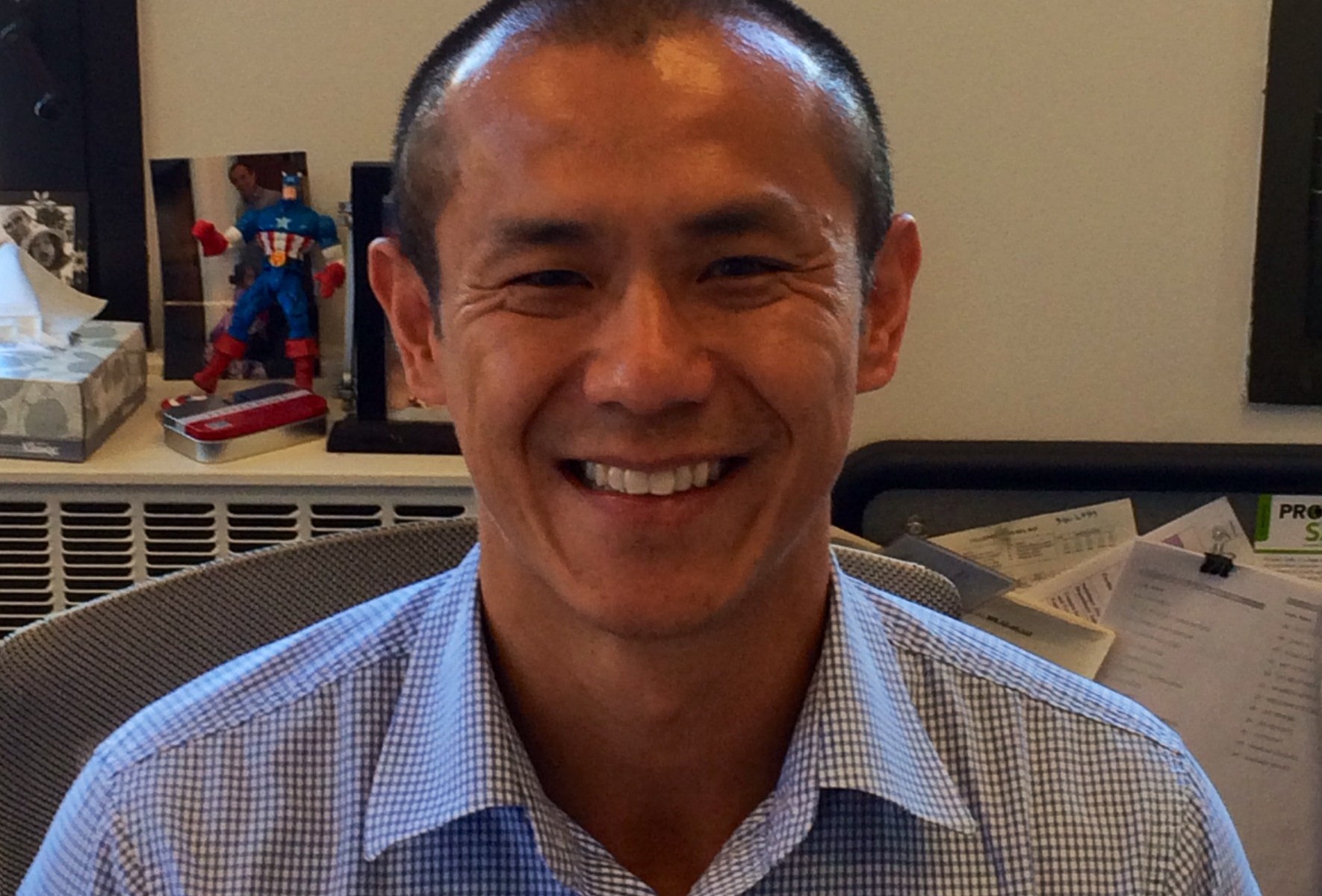
 1. What was your first role at King County? Ironically (see below), I was a Rule 9 Summer Intern with the Juvenile Unit at the Prosecutor’s Office handling misdemeanor cases.
2. What do you do as Senior Deputy Prosecuting Attorney? I am currently the Chair of our Juvenile Unit and oversee the prosecution of all juvenile criminal matters in King County.
3. What do you like most about your job? The wonderful, dedicated employees of the PAO that I have the privilege of working with every day.
Share this:

Nonprofits help to launch Employee Giving Program’s Ambassador Rally

The Seattle nonprofit, Teen Feed, provides meals for homeless youth in the University District 365 days a year, something it is able to do with help from King County’s Employee Giving Program.

Representatives from the Cascade Bicycle Alliance Education Foundation helped to inspire Ambassadors
“You are helping provide [homeless teens] what they need 24 hours a day,” Suzanee Sullivan the Development and Communications Director said at the EGP Ambassador Rally.
The August 26 rally was held in preparation for the Annual Giving Drive that kicks off on September 24, 2014, and to encourage ambassadors to invite non-profit speakers from the thousands of nonprofits connected to EGP into the workplace.
Share this:

Kudos! Tiffany Frank, Customer Service Specialist III, Records and Licensing Services Division

A customer called to express her thanks for the service she received from Tiffany Frank in the Recorder’s Office. You can listen to the customer’s voicemail here or read the transcript below.
My name is Ernestine Rutledge and I’m a senior citizen that had to have some documents completed and recorded on my house and adding my daughter onto my deed and I just wanted to call and let you know that the people who are answering your phone are just absolutely wonderful. Everyone I talked to took the time and gave me information on where to go on the website and they were just awesome, awesome, awesome. In addition to that, I tried to complete the forms and I took them down today and I met this angel, named Tiffany. she was just perfect for me, she gave me all the information, she helped me she didn’t make me feel stupid, she didn’t look at me like I was crazy. She was wonderful. She helped me and I got my form filed and I felt like I had done something. She said, “you know did really well without a lawyer,” and I know that she probably was thinking,” you should have gotten one,” but she didn’t say that to me, she said, “you did well.” And she herself was absolutely wonderful. But I wanted to have you give that information to her and if I need to type it up and send it to your office so you can read it in the staff meeting or whatever, I just wanted to let somebody know down here because you hear so much negative stuff that everybody I talked to were absolutely efficient, wonderful, courteous, and then I met Tiffany today and that just sealed the deal for me. So congratulations to what you’re doing down there, keep it up, keep helping us and keep helping us senior citizens, so you have a blessed day, thank you.
Share this:

Be prepared for an earthquake

Last week’s earthquake in California is a good reminder that we need to be prepared for an earthquake in Washington state. Our goal is always to continue providing as many County services as possible in an emergency, while also ensuring the safety of our employees. When reporting to work, remember to let safety be your guide for commute decisions and while doing your job, and check with your supervisor or manager for specific information or directions.
Please follow these general tips on earthquake preparedness both at home and at work:
Share this:

We are Replacing Your Email PST files

 Like many County employees, you may be using PST (Outlook data) files to store email that has outgrown your mailbox. Although using PSTs have been the County’s preferred practice for some time, this fall we are beginning the process to move all data contained in PSTs to Exchange Archive Mailboxes with the PST Replacement Project.
Please note that the ability to store a large volume of email records in the Exchange Archive Mailbox does not satisfy or remove your responsibility to manage your email. Remember, your email records are County property which must be retained, managed and disposed of in accordance with a State approved retention schedule based on the email content.
Share this:

King County Drug Court Celebrates 20 Years

King County Courthouse, Presiding Courtroom, 9:00 a.m., the second Wednesday of the month…the jury box fills with eager and excited men and women of different ages, races, and backgrounds all filled with a sense of accomplishment.

Judge Cheryl B. Carey. Chief MRJC Judge and Drug Court – Kent
Proud children, spouses, significant others, mothers, fathers, grandparents, counselors, and attorneys gather as spectators in the benches.
Everyone is waiting for the King County Drug Court judges to emerge from chambers and preside over a remarkable event – an event marking the completion of a minimum 11-month demanding and sometimes grueling program, the dismissal of felony charges, and the beginning of a profoundly different lifestyle.
Welcome to King County Drug Diversion Court graduation.
Share this:

Internet Gateway Filter (IGF) Update
In December of 2011 we implemented an Internet Gateway Filter to prevent users from accessing inappropriate (as defined by the county’s Acceptable Use Policy) or malicious web sites that can infect computers with viruses. Why do we need a filter? The King County network experiences an average of 100,000 malware attacks each week, 90% of which originate from the Internet. The Internet Gateway Filter helps to significantly reduce these incidents, resulting in less downtime and increased productivity. 
In September we will be making some changes, and moving the function to a different system. This change will cause some websites to be re-categorized, and some websites may be blocked that are currently available. The re-categorization process might place sites into a different category than in the old system.
Category change:
If you believe that the site is improperly categorized, please contact the IT Service Center (206-263-4357) and provide the following information:
- Your name
- Your user name
- The site you wish to access and what category it falls under
Share this:

WTD employee (and artist) helps kids create mural
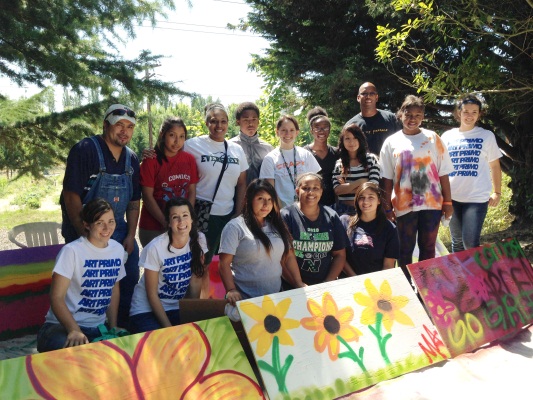
Seattle University’s CitySoil Farm collaborated with Ricardo Israel, a local artist and Wastewater Treatment Division (WTD) South Treatment Plant employee, and the Renton Area Youth Services (RAYS) to design an aerosol art mural in Renton.
Ricardo designed and created the center piece of the art installation and the youth group made several quarter-sized pieces to surround the centerpiece. The students created images of bugs, flowers, trees, fruits and vegetables. 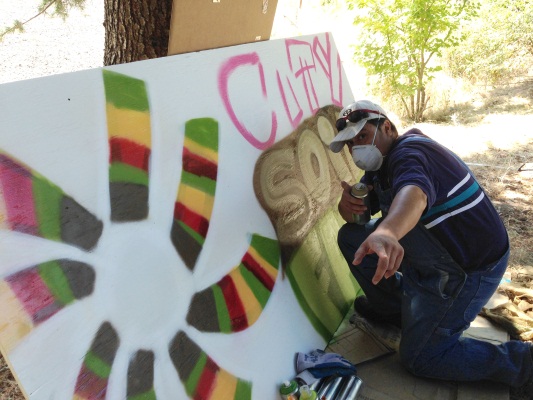
The mural will be displayed on the treatment plant’s fence facing Grady Way, and visible to passersby from I-405. Views of the mural will also be available from the Black River Trail and a nearby bus stop.
CitySoil farm offers environmental and food system education and donates all produce to the local food banks. Students touring the treatment plant also spend time in the garden planting, harvesting, and learning more about biosolids.
Share this:

Food: Too Good To Waste challenges consumers to cut food waste

On average, Americans waste 25 percent of all the food they buy. While most people think they’re not wasting much food, studies show that Americans waste much more food than they think they do.
“In collaboration with the Environmental Protection Agency Region 10, King County’s Solid Waste Division (SWD) has developed the Food: Too Good To Waste program to bring awareness to the environmental and financial impacts of wasting food and to offer residents helpful tips on reducing food waste,” said Karen May, the program’s manager.
Food waste makes up the largest percentage of what ends up in King County’s Cedar Hills Regional Landfill, and the greenhouse gas emissions in King County that result from food consumption (from farm to plate) are second only to emissions from personal transportation. King County is one of the first communities in the country to tackle the issue of consumer food waste – a worldwide problem with significant financial, environmental and social impacts.
“It’s not just wasting food and money, but also the natural resources that were used to produce, package and transport food from the farm to our plates,” May said.
Share this:

Employees learn about ethnic and disability media

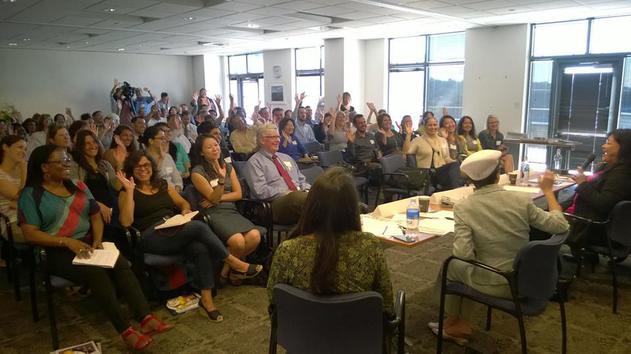
On Monday, July 28, King County staff spent a valuable morning learning more about the richness of ethnic and disability media in King County. The event included a panel of ethnic and disability media journalists, a networking session, and a Q&A session with Executive Constantine. The event provided various opportunities for King County employees and the Executive to interact with the ethnic and disability media.
Panelists shared great advice about working with ethnic and disability media to serve the growing diversification of people living in King County.
“We encourage you to contact us to help you in the development of your messages, content and approach to advertisement in a culturally sensitive manner,” said Teresa Jones from Univision TV.
King County Executive Dow Constantine expressed King County’s commitment to work more with the ethnic and disability media to serve the information needs of the increasingly diverse King County population. The audience asked various questions about King County’s plans to reach non-English speaking communities and ethnic groups with information about King County programs or services.
(Excerpted from the King County Equity and Social Justice Partner Newsletter, August 2014)






 Employee News