
Fighting to stop sex trafficking in King County

 Sex trafficking in King County is on the rise, nearly doubling in 2015 according to an Urban Institute study.
But King County is fighting to stop sex traffickers and buyers in the county and protect the victims of trafficking.
The growing problem came to law enforcement attention when officers on patrol began noticing a growing number of young girls working on the streets. Before long, officers were collecting evidence and bringing it to King County Senior Deputy Prosecuting Attorney Val Richey.
“People have this notion that sex trafficking doesn’t happen in the States, that it happens in Asia and other countries,” Richey said. “But the fact is it’s happening every day.”
Share this:

Public Defense employee brings legal knowledge to youth
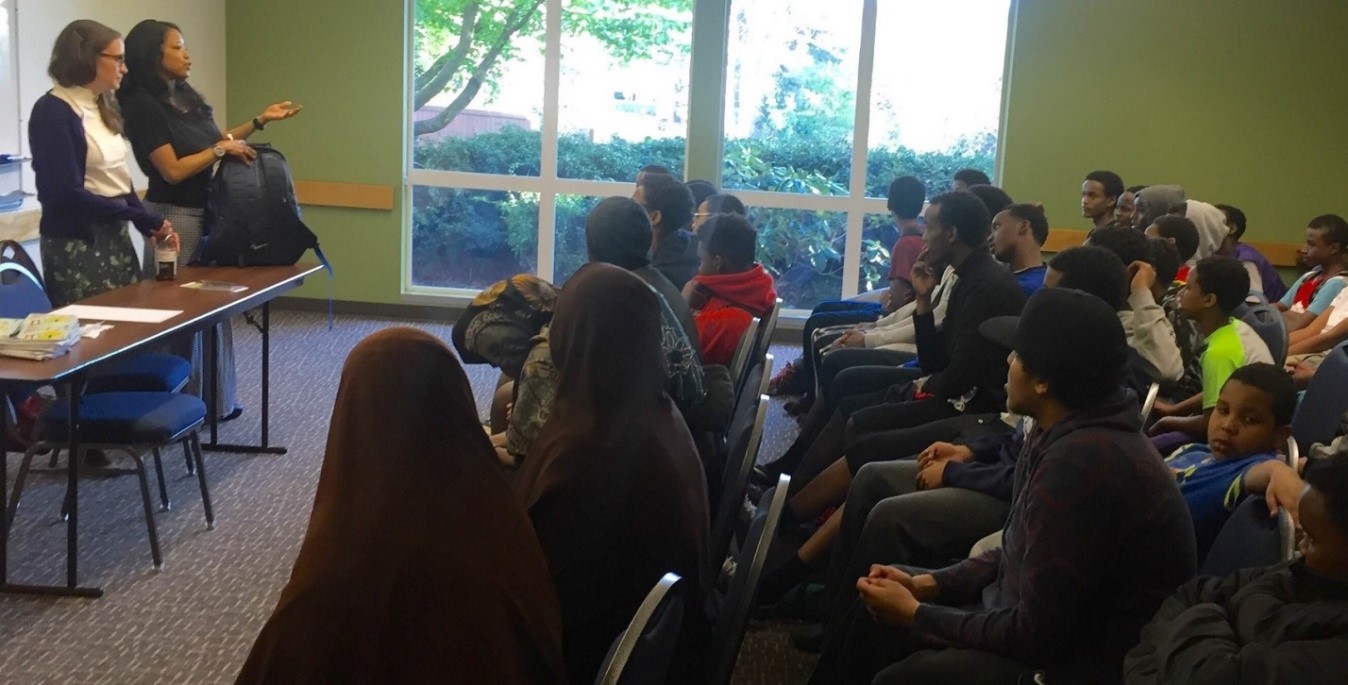

Misdemeanor Practice Director Twyla Carter shares her knowledge of the legal system with youth and families from underserved communities.
Serving as a voice for members of marginalized communities is all in a day’s work for Misdemeanor Practice Director Twyla Carter. Since she began serving as a lawyer in 2007, she has acted as an advocate for her clients, and after recently moving to her current role will be overseeing misdemeanor practice across the four divisions ensuring quality public defense in courts of limited jurisdiction, which includes Seattle Municipal Court and King County District Courts in Redmond, Seattle and Kent.
“I view my new role as being at thirty thousand feet and ensuring the court systems and practices serve clients in an equitable way,” she said.
“I’m helping to support public defenders and staff in their delivery of high quality representation to clients.”
Share this:

From the Hip: Natasha Jones, Director of Customer Service
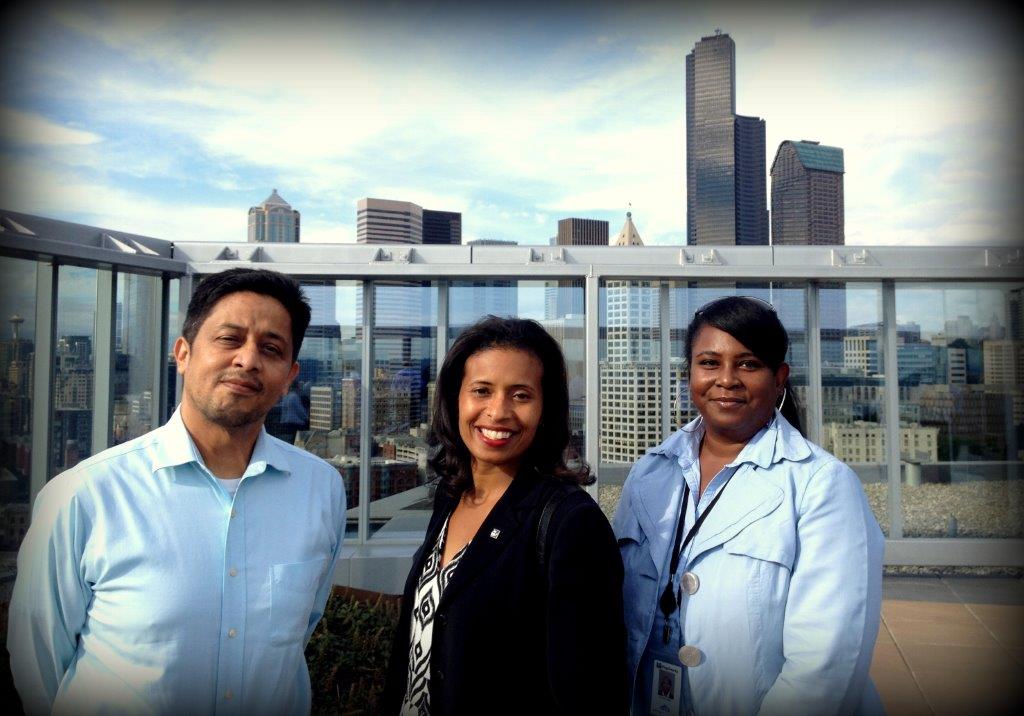
King County customer service: making it easier, faster, and better

Pictured, left to right: Executive Customer Service Team Mauricio Martinez, Natasha Jones and Cheeketa Mabone.
“So what do you do?” Love it or hate it, this common ice breaker question often becomes an opportunity for me to tell people about the great work county employees do, and how I get to help people and make our government better through my job.
As Director of Customer Service, for the past five years my team and I have worked with employees from every department to improve how the county delivers its service by focusing on four main areas:
- Developing and sharing a common definition of customer service across county government that is flexible enough for our varied lines of business
- Training and supporting staff and managers in delivering great service to the public and each other
- Gathering and using data to be more responsive, consistent, and coordinated in responding to customer requests
- Identifying and solving existing problems with our processes and systems for customers and staff.
Customer Service staff worked across departments to create the county’s Customer Service Promise (available in seven languages!) and “no wrong door” approach, meaning that even if the first employee a customer reaches isn’t the right person to help with an issue, they’ll try to get them to someone who is. The goal is helping customers solve problems in the fewest steps, with the least amount of effort.
Share this:

Featured Job: Business Analyst, Asset Management and Business Systems

Closing Date/Time: Sun. 06/12/16 11:59 PM
Salary: $78,644.80 – $99,673.60 Annually
Job Type: Civil Service, Full Time, 40/hrs Wk
Location: King Street Center – 201 S Jackson St, Seattle, Washington
Department: Department of Transportation – Road Services Division
Description: The Road Services Division (RSD) of the King County Department of Transportation is seeking a tech-savvy collaborator with a passion for Lean business process improvement; a desire to learn and apply GIS-centric technology to advance our asset management framework; and an iron-clad customer service ethic to join an engaged and highly productive team.
The RSD is working toward an integrated, enterprise asset management framework based on these core components, which will replace or supplant the functionality and data contained in separate legacy systems over time. While we have replaced many such siloes over the past several years, key functions and systems, including the life-cycle engineering of storm water and bridge infrastructure, remain to be streamlined and integrated. This position will play a direct role in this transformation. This is a rare opportunity to acquire hands-on experience in lean business process improvement (to which the RSD is deeply committed); to receive training and mentoring in a fast-growing application for which market demand currently exceeds supply; and to enjoy the creative challenge of mining data to “tell the story” of how the RSD is striving to carry out the goals set forth in its Strategic Plan for Road Services under financial constraint.
Learn more about this position or view all available jobs.
Share this:

Register now for 2016 Big Backyard 5K on June 5

 The seventh-annual Big Backyard 5K is happening on Sunday, June 5 at Marymoor Park in Redmond. This run/walk is an event for the whole family, and it’s dog and stroller friendly! All participants will receive awesome t-shirts, refreshments, snacks, prizes, and the satisfaction of supporting King County Parks! And thanks to our friends at Harborstone Credit Union, the Big Backyard 5K hoodies that everyone has grown to love will available for purchase until May 13. The chip-timed course winds around the magnificent (but flat) Marymoor Park, and for kids ten and under, there a free ¼ mile Kids Dash.
Participating in the King County Parks Fitness Challenge as part of your Healthy Incentive’s Individual Action Plan? Walking or running in the Big Backyard 5K is one of the challenges, so don’t forget to stop by the King County Parks information booth after the run to get your challenge code word.
More incentive? Use the promo code KCP5 and receive a $5 discount on your registration fee as a King County employee. And if you refer a friend, you will get a collectible BBY5K coffee mug! (Limit one mug per referred individual).
Register as an individual or team today and support Your Big Backyard!
Share this:

Keep your family safer: get rid of unwanted hazardous products

 Crossposted from the HazWasteHelp blog
You can’t watch children all the time. So how can you keep them safer?
If you have unwanted hazardous products you could get them out of your home and away from curious hands.
How can you tell which products under the sink or in the closet are hazardous?
Look on the label. If you see the words DANGER or POISON, that means the product is very harmful.
If you see the words CAUTION or WARNING, that means the products is somewhat harmful.
Share this:

King County Public Health at Aquarium’s Family Science Weekend

 Did you know that May is Asthma Awareness month? Asthma impacts nine percent of adults, five percent of kids, and one sea otter in King County.
Yes, a sea otter. Last fall, Mishka, a one-year-old sea otter at the Seattle Aquarium was diagnosed with asthma.
To learn more about asthma and how it impacts people, and otters, come see Public Health at the Aquarium!
Public Health is teaming up with the Seattle Aquarium for Family Science Weekend! Our Community Health Workers and Public Health Director Patty Hayes are helping give stuffed animal check-ups at the Aquarium on May 28 and 29 from 10:30 a.m. to 3 p.m. Find us at the Marine Mammal Exhibit—who knows, we might even have an otter surprise guest!
Read more at Public Health Insider
Share this:

Latest edition of King County @ Your Service show

View this video to get the latest information on a few of the most recent King County hot topics. Join host James Lynch for King County @ Your Service.
See how King County is expanding its use of a new crime-fighting tool and find out who the 911 Dispatch Center calls when the network has trouble.
Share this:

What I learned about leadership driving a bus
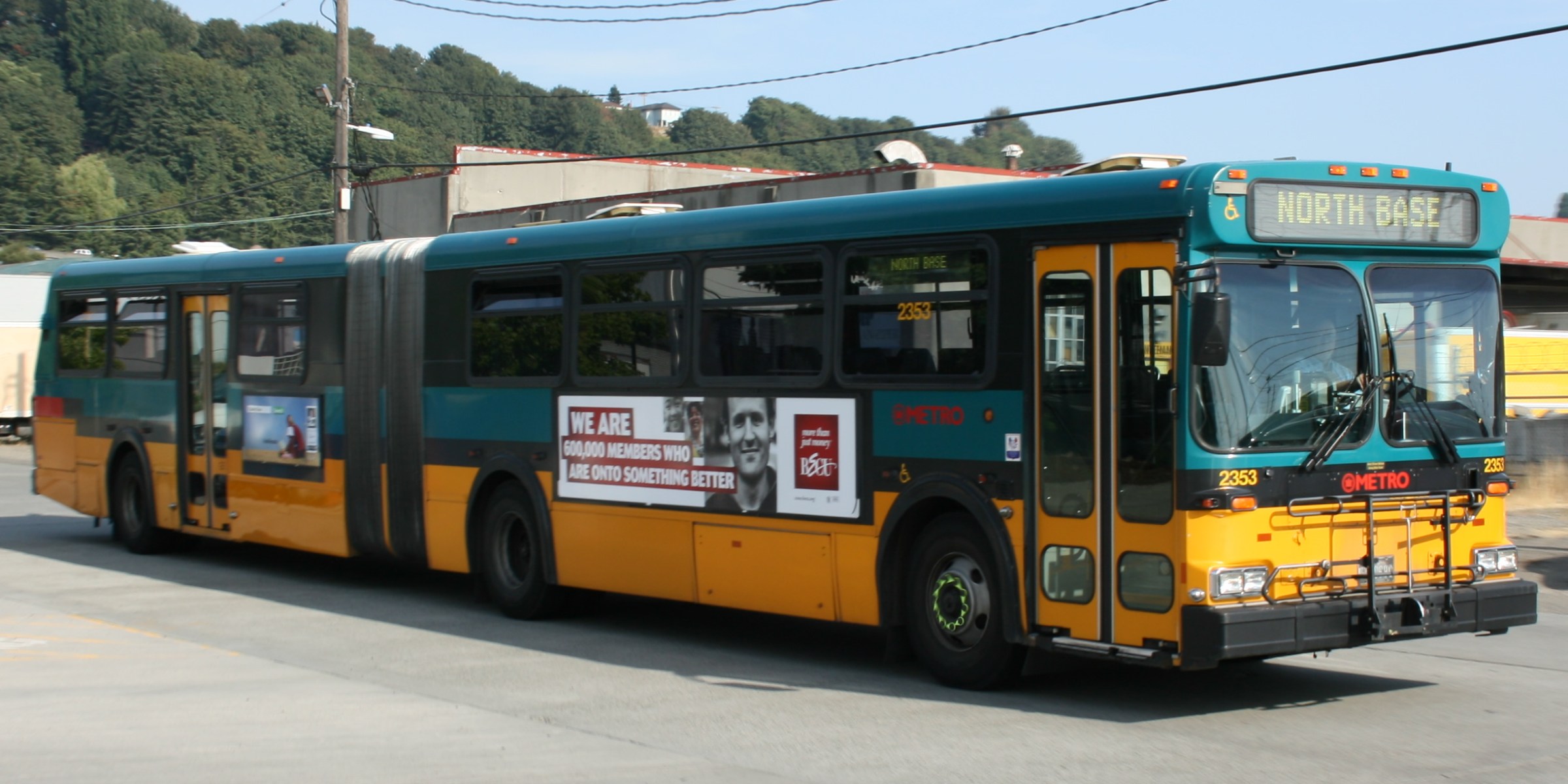
 Crossposted from the Expanding the Narrative blog
My story begins on a Saturday morning in early March. It was one of those beautiful spring days and I was on a bike ride with my friend Bonnie on the Cedar River Trail. I had recently finished my immersion role with the King County Facilities Management Division as part of the King County Bridges Fellowship program to develop leaders. So I was thinking about leadership stuff when I heard a loud splash.
I slowed down and Bonnie caught up to me, smiled and said “Did you see the beaver?”
I said “NO! Dang it I have always wanted to see a beaver!”
And that’s when I had my first “bucket list flash alert” of “I am 55 years old and I may well go to my grave with the only image of a beaver in my mind being that from Narnia!”
Read more at Expanding the Narrative
Share this:

Tech Tip: Changing the audio and loading your photo into Skype

 If you have Skype for Business on your computer, what picture do you have loaded? Is it your son’s hedgehog? Or maybe a bright red flower? A Skype photo of the Skyped person makes conversations easier. In today’s Tech Tip, we show you how to change the audio, change the picture and create a Skype group for conversations.






 Employee News