

Featured Headlines

DCHS-led Health Through Housing initiative hits major milestone
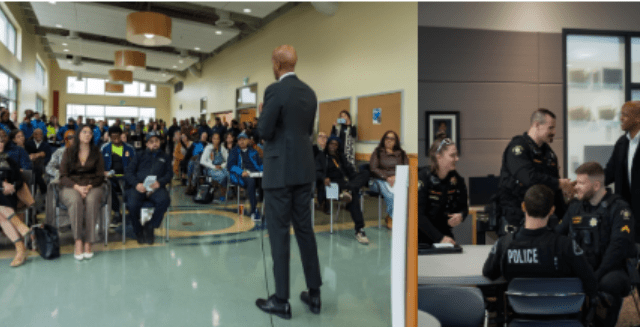
In the field with Executive Zahilay: Listening to staff and empowering solutions

Tap to pay: Puget Sound region transit systems to accept credit and debit cards, and digital wallets as fare payment
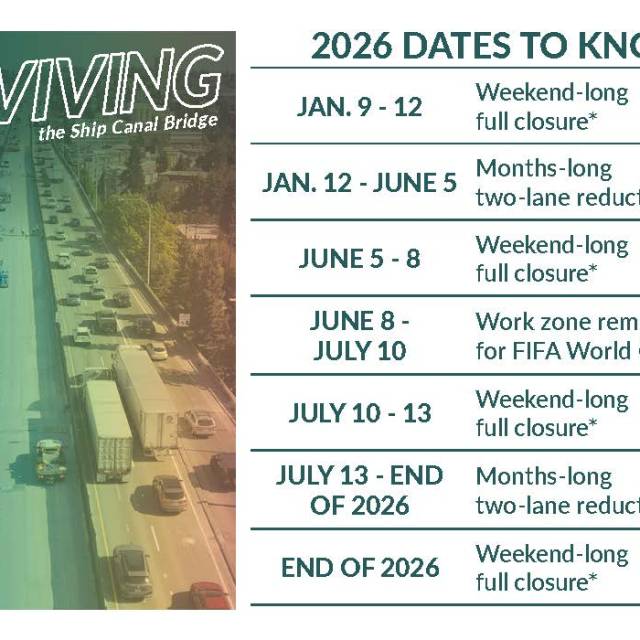
Major ‘Revive I-5’ repairs continue for Ship Canal Bridge
News
How Metro Transit helped employees make leap from driver to chief
Helping employees grow in their King County careers is a key objective of the Best-Run Government: Employees initiative and Metro Transit recently piloted an intensive program to help employees make the leap from bus operator to base chief. Transit’s Human Resources group built a process that recognized the skills of existing employees and helped them highlight their skills in the recruitment process. “We were understanding that we had a very well-qualified, diverse, talented pool of employees,” said Susan Eddy, Human Resources Service Deliver Manager with Metro Transit. “However when you took a… Read More
Healthy Local Eating coming to Healthy Incentives
King County’s Healthy Incentives program will begin a new pilot project in 2016 designed to help employees reduce their healthcare costs and support local farmers. The Healthy Local Eating pilot project, which will be implemented in two stages over 2016 and 2017, will offer employees the opportunity to reduce their out-of-pocket healthcare costs by purchasing locally grown fruits and vegetables through the Healthy Incentives employee wellness program. “We’re building on the success of our wellness program by providing employees and their families an extra incentive to support local farmers,” said Executive Constantine…. Read More
Environmental Lab protects local waters and public health
With more and more people enjoying water activities across our region each year, the work of the King County Environmental Laboratory is more important than ever in protecting the health of local waterways, wildlife and people. With five different lab areas, Lab employees are constantly collecting samples, analyzing environmental samples and generating data to protect the environment and those that live in it, Kate Leone, the Environmental Programs Section Manager, said. Unlike other laboratories, the Lab is a full service lab, meaning it runs through all the steps, from project planning, sample collection and testing, through to data generation. It processes… Read More
Untapped Potential: Behavioral Health Employment Program helps individuals with disabilities join the workforce
At a recent employment resource fair, staff from the King County Behavioral Health Supported Employment Program ran into Tiffany Turner, a graduate of the program. Tiffany now works full time as a manager at the Recovery Café, a community of support for individuals who have experienced trauma, mental health and/or substance use issues. As a single parent of three children, Turner had many challenges trying to raise her children with limited resources or support from others. She found herself overwhelmed and unaware of the symptoms of her illness or how to use… Read More
One King County for ending sexual exploitation and trafficking
Dear fellow King County employee, We’re fortunate to have a talented workforce dedicated to making King County a more just, more equitable community – a place where people’s rights are protected and everyone has the opportunity to achieve his or her full potential in life. As we showed when we helped nearly 200,000 residents sign up for affordable health insurance, we’re most effective at improving people’s lives when we work together as One King County to achieve a common goal. Now, I want to apply that same collective approach to confront a… Read More
Watching out for salmon in King County Waters
It’s that time of year again. The time when King County’s many creeks and rivers begin to receive colourful salmon for their spawning season. Each fall, several salmon species make their way from the ocean into the Puget Sound and into King County’s urban and rural streams to lay their eggs. It is an amazing natural process, Jennifer Vanderhoof said. As a senior ecologist for DNRP’s Watershed and Ecological Assessment, Vanderhoof coordinates a volunteer program to monitor salmon in the Lake Washington Watershed, called the Salmon Watcher Program. A multijurisdictional effort, the… Read More
Breaking down language barriers to make King County accessible to all
Imagine not understanding public service announcements or not being able to call an information line because they are not offered in your language. It is a problem that many King County residents face and something the Office of Equity and Social Justice (ESJ) and Customer Service Officers are trying to change. An Executive Order already requires printed public communications pieces and vital documents for broad distribution to be translated into at least Spanish, but the Office of ESJ and county agencies have been developing and implementing new ways to interact with the community and provide information. One approach is working with ethnic media, such as the… Read More
New IT tool helping local law enforcement
After two years of hard work, King County Information Technology (KCIT) and the Prosecuting Attorney’s Office (PAO) launched a new system known as eLODI, or Electronic Log of Detective Input. eLODI allows law enforcement officers throughout the county to electronically submit their referrals, evidence and case documents to the PAO’s case management system, PROSECUTORbyKarpel. One of the first to involve a Software as a Service (SaaS) vendor of this scale, eLODI was a collaboration of the PAO, Karpel Solutions, the KCIT Project Management Office (PMO), Business Analysis Group, Business Solution Services (BSS)… Read More
Dry summer means we still need to conserve more water
Think we’ve had enough rain? Think again. That’s the message from public water utilities that continue to urge businesses, governments and residents to take aggressive measures to conserve water by 10 percent. While recent precipitation and cooler temperatures did provide some relief, the extended hot, dry weather we experienced over the summer and the lack of snowpack in the mountains continue to create serious water management challenges. In King County, water conservation efforts are essential to maintaining water quality conditions needed to support our salmon populations. Low instream flows combined with high… Read More
Kudos! Four employees spotlighted in The Seattle Times’ Women in the Trades feature
Four King County employees were featured in The Seattle Times’ portrait series “Women in the Trades,” a look into Puget Sound’s hardworking women. Mari Jane Friel (pictured right) and Liesel Brus with Road Services Division, and Kate Osborn and Stacey Walker with Wastewater Treatment Division, spoke about their jobs in what have been traditionally male fields, and what they love about their work. “I love what I do,’’ Friel, a laborer with Road Services Division, said. “It’s something different every day.”
Kudos! David Yoshizumi, Senior Animal Control Officer, Regional Animal Services of King County
Hello Tim and Gene, We had a recent experience with one of your Field Agents who services Carnation, WA. I do not have his card in front of me, but I wanted to pass on my deep appreciation for the service he provided to us!! Our situation was that an elderly neighbor had left their cat (healthy and older) with us when they sold their home and went to assisted living. The cat was an outdoor cat with a “friend” who hung around with him who was quite sickly. Like the neighbor… Read More
Restorative Mediation making a difference for youth
Earlier this year, Juvenile Court implemented a Restorative Mediation Pilot option for youth in diversion. The pilot has since expanded beyond diversion and is now available to adjudicated youth. It provides youth with the opportunity to reduce time on supervision or in place of court-ordered community service hours. Restorative Mediation is an opportunity for an offender to have a facilitated conversation with the victim, giving the victim an opportunity to express how the event affected him/her, to provide space for understanding what took place for both parties, and to restore relationships that were… Read More
Women in Trades: King County Road Services
Mari Jane Friel is up to her knees in mud as dark as chocolate cake and smiling broadly. “I love what I do,’’ she says. “It’s something different every day.” Friel, 58, a laborer with King County’s Road Services Division 2, previously worked in corrections and as a chef in downtown Seattle. Her first day on the job, she was assigned to dig a ditch. Today, she’s wielding a shovel and a siphon to clear a drainage ditch of mud and weeds so that salmon can pass through during the rainy season…. Read More
Kudos! Metro Transit names Operator, Vehicle Maintenance Employees of the Year
Metro Transit employees John Boone and Ryan Stringfellow were recently honored with the Operator and Vehicle Maintenance Employee of the Year awards. Bellevue Base operator John Boone was honored on June 24 as Metro’s 2014 Transit Operator of the Year. At the surprise ceremony, held in the East Base Vehicle Maintenance bay, he was interviewed by local TV outlets before being escorted on stage. Boone was chosen by his fellow 2014 Operators of the Month because of his long and excellent record of providing high-quality customer service to his riders. One of… Read More
CASA program needs volunteers
Each year in King County, more than 12,000 children are separated from their families due to abuse or neglect. With the support of foster programs, many of the children are placed in foster care for the time being their parents are in court. But who represents the children in court? Court Appointed Special Advocates are trained volunteers who represent the children and their best interests during the legal process. “We say that a CASA is the voice of the child,” Pamela Beatty, a CASA volunteer said. “We do the speaking for the… Read More
Going mobile to manage hazardous waste
How can King County keep dangerous, hazardous materials from finding their way into landfills and the environment? One solution is the Local Hazardous Waste Management Program’s Wastemobile. Rather than a fleet of vehicles driving to various locations in King County, each “wastemobile” is a temporary tent location set up on the weekends, usually in parking lots of businesses or schools, where small businesses and home owners can bring their hazardous waste to be properly disposed of. “A little hazardous waste in the environment goes a long way and is very bad for… Read More
Fun Fest teaches teamwork, cooperation and more to detained youth
As part of King County Juneteenth celebrations, King County Juvenile Detention threw a Fun Fest for youth detained in the facility. For the youth, it was an opportunity to expand their learning during the break between school sessions. For those volunteering, it was opportunity to teach young people different life lessons. Spanning three days, Fun Fest offered three different programs for youth to participate in, picking one that interested them. The most popular was the Football Camp, which taught the youth the importance of teamwork and trust as well as football fundamentals…. Read More
Transportation program helps employees, environment and the region
With congestion on our roads growing as King County continues to grow, the Employee Transportation Program (ETP) is helping employees save money and time while reducing our impact on the environment with benefits including free rides on all regional buses, Sounder trains, Link light rail, Seattle Streetcar and the West Seattle and Vashon Island Water Taxis. But the benefits don’t stop there. “We aim to make it as easy as possible for our employees to leave their cars at home,” Hossein Barahimi said. As ETP Manager, Barahimi is in charge of developing… Read More
Sheriff’s employees run to end domestic violence
On Saturday, July 18, members of King County Sheriff’s Office along with their friends and family, readied themselves on the starting line by Safeco Field. For the second year in a row, the Sheriff’s Office was represented at the Refuse to Abuse 5K. An avid runner, Detective Jason Houck first heard of the race last year. Wanting to participate, Houck wondered if he could get any other Sheriff’s Office employees involved and sent out a department wide email in hopes of putting together a team. He received responses from all over King County, from non-runners to avid runners like himself. While the members had different reasons for joining, they all… Read More
Retired vehicles given life after VanPool with nonprofits
The dark blue King County Commuter VanPool Program vans are a familiar sight in our region. For some, the vehicles are a necessity for getting to and from work each day. But what happens once the vans have passed their useful economic life with the program? Since 1996, VanPool has been working with Metro’s Accessible Services and King County Councilmembers to pair nonprofits, in need of vehicles to meet their transportation needs, with retired vanpool vehicles. If a nonprofit agency meets the criteria of having adequate insurance and the ability to cover… Read More
About
We tell stories that highlight the work we do to support our residents,
build strong communities, and make our region a great place to live and work.
Our 17,000+ employees work every day to make King County
a welcoming community where every person can thrive.
Share this:

King County, WA LinkedIn
Follow us on LinkedIn to stay up to date with all King County professional news.

 Employee News