
Employees share learnings, successes on engagement work
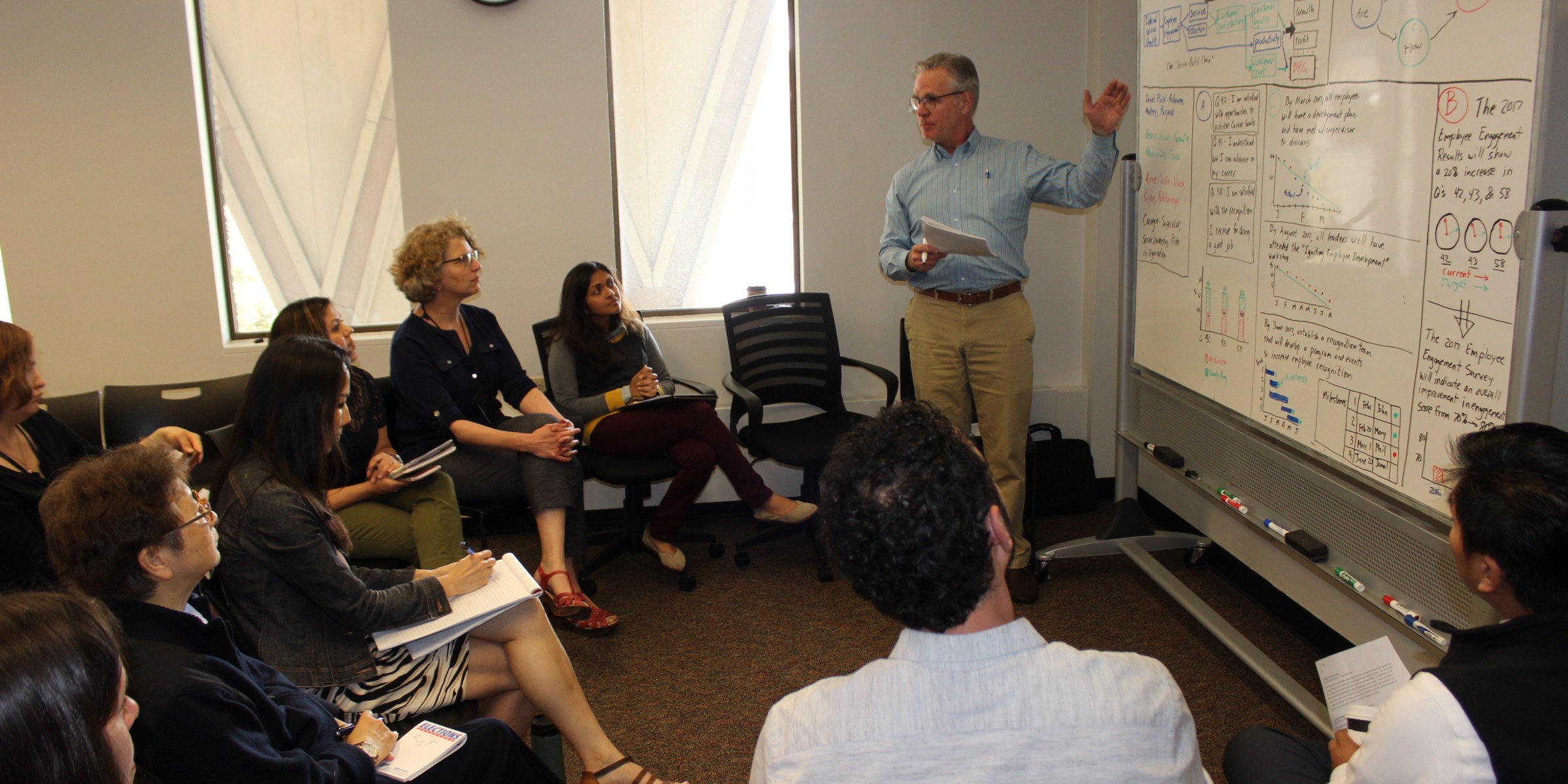
 About 40 employees attended the second Office of Performance, Strategy and Budget-sponsored Community of Practice event of 2017 to get an overview of the key findings in the 2016 Employee Survey and learn how workgroups, divisions and departments are acting on what respondents said.
“For those of you who are working on engagement teams I want you to know that it is making a difference,” Chrissy Russillo, Interim Director of Human Resources Division, said at the May 22 event. “I’m out and about and hear people talking about it all the time. The Executive Office has taken this work on as a priority. Executive Cabinet talks about it on a regular basis, it’s an agenda item for every meeting. So know that you are making a difference.”
Whitney Abrams, Director of Employee Engagement in the Executive’s Office, provided an overview of the work being done to bring together the employee-focused efforts in Best-Run Government: Employees, Equity and Social Justice, and continuous improvement to create a fairer, more supportive workplace.
“We’ve put together a strategic plan incorporating the employee-focused elements of the Equity and Social Justice Strategic Plan, what we’re doing in our employee survey action plans, what we’re doing around accountability, learning and growth, compensation, continuous improvement, into a plan called ‘Investing in You.’”
 She said that more details on how Investing in You is integrating the County’s employee-focused strategies would be released in June.
The event then broke into four groups to hear firsthand from four employees about their engagement efforts, successes and learnings – Shawn Abernethy from the Department of Executive Services Director’s Office; Van Badzik from the Office of Performance, Strategy, and Budget; Jackie Smith from the Department of Adult and Juvenile Detention; and Charlie Bozonier from King County Information Technology.
Sixty-seven percent of employees in participating agencies had their say in the 2016 survey, up from 60 percent in 2015. In 2015, 235 engagement action plans were created to respond to the issues that employees raised in the survey. More than 320 action plans have so far been created to respond to the 2016 survey, and are making positive changes across the County.
The King County Performance Management Community of Practice exists to increase cross-collaboration of data-driven professionals from inside King County and professionals in the region. The Community of Practice typically hosts four events each year and has existed for two years. To find out about future Community of Practice events please contact Abby Beatty to be added to the contact list.
Share this:

Social Media Spotlight: King County Wastewater Treatment Division blog

 WTD is an innovative clean-water utility that provides wholesale wastewater treatment services to 17 cities, 17 local sewer districts and more than 1.5 million residents across a 420-square-mile area in King, Snohomish and Pierce counties.
By exploring new technologies and harnessing valuable resources from the treatment process, such as energy, recycled water for irrigation, and biosolids to return carbon and nutrients to soils, WTD strives to support sustainable communities in the 21st Century.
Follow the Clean Water Stories, King County Wastewater Treatment blog today!
Click here to view all King County social media pages.
Share this:

Featured Job: Digital Engagement Manager

Closing Date/Time: Mon. 06/05/17 4:30 PM Pacific Time
Salary: $56.50 – $71.61 Hourly, $117,520.00 – $148,948.80 Annually
Job Type: Career Service, Full Time, 40 hrs/week
Location: King Street Center – 201 S Jackson St, Seattle, Washington
Department: King County Department of Information Technology
Description: King County Information Technology (KCIT) is seeking a Digital Engagement Manager to drive the vision, strategy and implementation of a countywide program that engages all residents in ways that are technologically convenient for them. Digital Engagement refers to the online conversations organizations have with stakeholders, whether one-to-one or one-to-many. This includes online civic engagement, social media, text messages, live video streaming, constituent relationship software, and more. Successful digital communications allow residents to access King County programs and services freely and easily, and to participate in their government through the innovative use of online tools.
Learn more about this position, or view all available jobs.
Share this:

Tech Tip: Skype for Business (S4B): How to set up and add people to a group

S4B groups are like email groups only better. With S4B, you can Instant Message, make a quick call, or set up skype meetings for the future – just to that group. The group an include internal and external team members. This video shows how to create then add members to your group.
Share this:

Kudos from a Vets 4 HIRE participant to DNRP section

This kudos comes from James Ott, who participated in the Vets 4 HIRE Program this year with the Department of Natural Resources and Parks.
My experience was incredible. I elected to do my entire time at the Bear Creek District due to child care. The crew there is wow, wow, wow. Parks District Maintenance Coordinator Joseph Hughes is a great leader and easily on par with any of the best military leaders I’ve worked with.
I have decided to pursue a degree in Parks Management at the University of Montana. You certainly helped me figure out what I’m going to be when I grow up!
Thank you for the experience.
Share this:

Tails from the Community: Photo shoot @ Zulily Studios

Crossposted from Tails from RASKC
 RASKC, along with other pet agencies, were selected to take part in a fun, community service project held at Zulily‘s studios. The project was created in the hopes of raising awareness of shelter pets by donating their time and expertise to capture the pets in a softer light, namely in a home-like setting. Zulily, which provided exclusive access to their studios and creative staff, set three beautiful backdrops ranging from playful room, to the “We’re going on vacation!” feel, and finally “This is home” vibe.
Below is an interview with the two amazing professionals that took action and got involved! (to see photos from the shoot, scroll past interview).
Read more at Tails from RASKC
Share this:

Mariners discount for Friday, June 23 and Saturday, September 9 games

 Enjoy Seattle Mariners baseball with fellow King County Employees, family and friends. Come out to the ballpark and watch the Mariners take on the Houston Astros on Friday, June 23 with a postgame fireworks show and again on Saturday, September 9 against the Los Angeles Angels for Robinson Cano Bobblehead Night (first 20,000 fans). Just visit the Mariners discount website and enter promo code KING. The deadline to purchase all tickets is 5 p.m. the day before.
See all available discounts on the Employee Discount webpage
Share this:

Remembering and honoring our fallen heroes

Each year on Memorial Day we pause as a grateful nation to honor the service and the ultimate sacrifice of the men and women who gave their lives fighting to preserve freedom here at home and around the world.
As we honor those we have lost, let us also remember the thousands of dedicated men and women who continue to put their lives on the line every day to protect us all.
Our gratitude and respect for the fallen moves us to act upon our duty to their families and their brothers and sisters in arms. One of the ways we honor their memory is to ensure that we make available the services and supports that families and veterans need to build successful lives in our communities. I am proud that the people of King County have demonstrated an extraordinary commitment to supporting our local servicemen and women, and their families.
At 3 p.m. on Monday, May 29, I ask you to join me in the National Moment of Remembrance as we together reflect on the extraordinary contributions of those who gave all in service to our country.
Thank you.

Dow Constantine
King County Executive
Share this:

BSK core team complete with new Trauma-Informed Advisor

Crossposted from the Best Starts for Kids Blog
 Sarah Wilhem is the new Best Starts for Kids Strategic Advisor for Trauma Informed Systems. The title is a mouthful but in a nutshell–Sarah’s role is to provide a trauma-informed perspective and lens that will influence all BSK strategies. With Sarah joining the BSK team, our core staff team is complete! The core BSK team is now 10 staff strong, but many more supporting positions will be popping up, so stay tuned for job postings.
In this blog post, Sarah shares her understanding of her BSK role and her personal story in how she’s grown into trauma-informed work. Welcome, Sarah!
As I transition into the role of Strategic Advisor for Trauma Informed Systems with the Best Starts for Kids team, I have felt a sort of integration of multiple parts of my personal and professional passions and interests.
Read more at the Best Starts for Kids Blog
Share this:

Gordon Hirabayashi Memorial celebrates his legacy
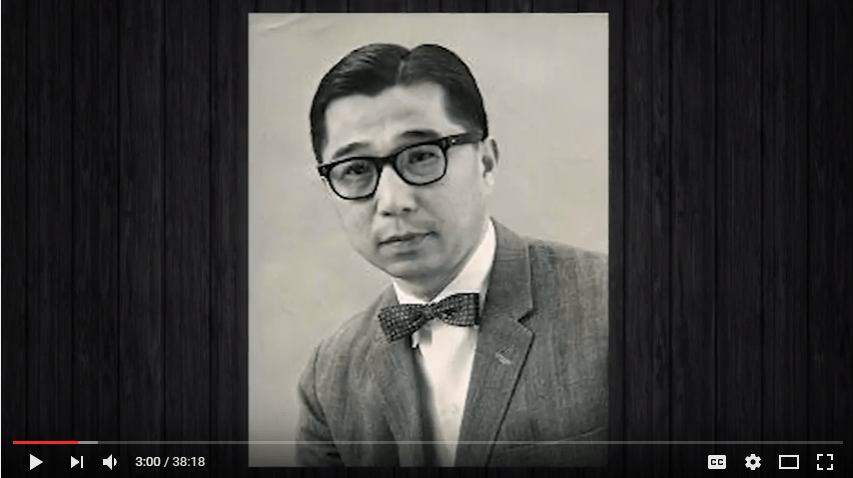
The late Gordon Hirabayashi is honored with a plaque where he was imprisoned for refusing to comply with Executive Order 9066, which ordered the forced removal of Japanese-Americans.
To read more about the memorial, read more in the official press release, or watch the video below.






 Employee News