
Five Questions with Judy Garcia, Director of Probation Services, District Court
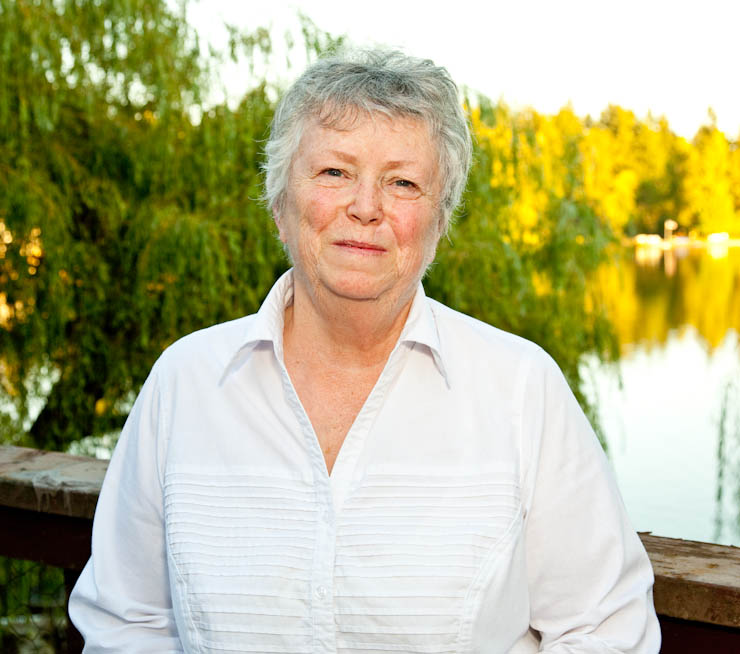
 1. What was your first role at King County and how did you progress to Director of Probation Services? I began as a Volunteer for the Federal Way District Court Probation Department in 1982, while working for the Weyerhaeuser Company. During my time as a volunteer, I enjoyed interviewing defendants about life problems and writing pre-sentence reports much more than I enjoyed talking with sawmill managers about log inventories, and writing competitor analysis reports. I found working in the criminal justice system, rather than in the timber industry, to be highly interesting and very satisfying. I instantly knew the work was a perfect fit for my personality and skill set and my commitment hasn’t wavered in my 30 years on the job. My employment with Weyerhaeuser was terminated during a major round of timber industry layoffs, and with a severance, I was able to continue the volunteer work until I was hired in the summer of 1983 to job share the half time Volunteer Coordinator position. I became a Probation Officer II (a supervisor with a full caseload) when a full-service probation branch office was opened in Federal Way in 1986 and continued in that capacity for Federal Way and other locations for approximately 20 years. I became the Probation Services Director in May of 2009, after serving 18 months as Acting Director in two non-consecutive stints.
2. What do you do as Director of Probation Services for District Court? Probation provides pre- and post-sentence investigations, to include in-custody interviews and monitors compliance with conditions of sentencing for misdemeanant offenders, primarily high-impact and repeat DUI offenders, those convicted of violent offenses, and those in need of drug, alcohol and/or mental health treatment. Services are provided for state cases in unincorporated areas of King County as well as the King County Domestic Violence Court, Regional Mental Health Court, Regional Veteran’s Court, and 12 cities that contract for the full array of District Court Services. Currently we have four probation mental health specialists and 12 probation officers in five courthouse locations, supervised by two management positions, including me. As the Probation Director, I am responsible for all program and staff activity and supervise and train new officers and supervisory staff. My responsibility also involves evaluation of departmental activity, community trends for use in short and long-range planning, being a liaison with treatment agencies, coordinating public relations efforts, and representing Probation and/or the Court on agency, county, and state committees and task forces.
Share this:

It’s not waste anymore at King County Transfer Stations
King County is reducing our impact on the environment by helping residents and businesses increase recycling at County owned transfer stations, keeping reusable and recyclable items out of the landfill.
Transfer station recycling is up by 2,057 tons or 49 percent over the first half of this year, due largely to a 21 percent jump in yard waste recycling, a 60 percent spike in scrap metal recycling, and a more than 400 percent increase in wood waste recycling.
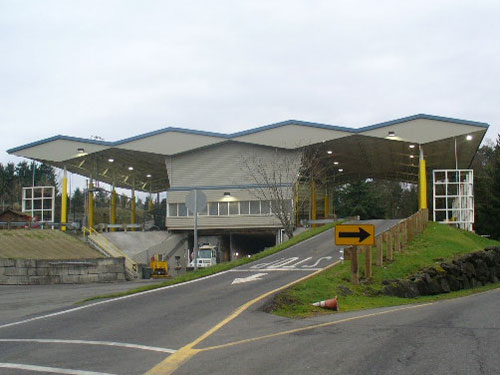
New roof at the Houghton Transfer Station in Kirkland
These increases are the result of a number of changes, including the full restoration of recycling services at Shoreline, Renton, and Houghton transfer stations in April 2013, the opening of a new recycling area at Bow Lake Recycling & Transfer Station last October, and the launch of a new Resource Recovery Pilot at Shoreline transfer station.
“Through the pilot we’re actively removing materials from the waste stream,” transfer station recycling manager Eric Johnson said.
Share this:

Helping young adults with disabilities make school-to-work transition

The transition from high school to adulthood can be scary for anyone, but particularly for someone who has a developmental or intellectual disability.
“You start to become an adult when you leave high school. Whether you’re an 18 or 21 year old like the people we serve, it’s just a pivotal time. Everyone wants to know, ‘Well what are you going to do?,’” Richard Wilson said.

A client working at Americas Foundation for Chess
Wilson is the program manager who heads up the Developmental Disabilities Division’s School to Work Program. The program works with school districts in King County to help students with developmental and intellectual disabilities receive job training and seek employment in their last year of high school, so that when they graduate they’ll have a job.
“What the program really does is bring adult-style employment services to these young adults at minimum a year before they can normally get it,” Wilson said. “We bridge the gap between school and our complicated adult service system that is difficult to access.”
Share this:

Transitional Duty Program a win-win for employees and King County

When an employee gets injured at work, returning to their job can sometimes be difficult.
That’s where King County’s Transitional Duty Assignment Program comes in. The TDA program helps employees who aren’t medically ready to return to their regular jobs because of temporary medical restrictions. A TDA helps employees get back into a work routine through short-term, temporary work assignments.
The TDA program, managed by Human Resources Division’s Safety and Claims, partners with work groups throughout King County to identify short-term work assignments that can be performed by employees with temporary medical restrictions. There is always a need for placement within the County. Employees in the program undertake administrative work, customer service, data entry, E-file management, scanning projects, surveys, phone work and other short terms projects lasting from a week to a maximum of six months. Injured workers participating in the TDA program earn vacation and sick days on top of being paid through their home departments. There is no cost for the receiving Department to host a TDA worker.
“Pleased supervisors typically note that they are surprised at the level of knowledge their TDA workers have. They are also comfortable working with me in finding the appropriate person for their tasks if a referral is not able to complete the scope of work needed,” said Aliza Hauser the TDA coordinator.
Share this:

Disproportionality in the jury room

Three attorneys with King County’s Department of Public Defense are partnering with the Public Defender Association’s Racial Disparity Project to prove what they have seen over and over again in their work as felony public defenders: African-Americans are not only vastly under-represented on juries, they’re also under-represented in the jury pool.
Ben Goldsmith and Twyla Carter, both felony attorneys in DPD’s The Defender Association Division (TDAD), and Daron Morris, deputy division director, hope to collect enough data to put forward a compelling case to court administrators and others in the criminal justice system about the disproportionate composition of jury pools. “I believe what my eyes are telling me – that minorities are under-represented in the jury pool,” Goldsmith said. “But to make some meaningful changes, we need to collect some data.”
To obtain that data, Goldsmith and Carter have asked the 15 attorneys in TDAD’s felony unit to complete declarations after each jury selection they participate in and note the apparent race of potential jurors. They’re also asking supervisors of the felony units in DPD’s three other divisions to have their attorneys do the same, Goldsmith said.
Meanwhile, Anita Khandelwal, an attorney who supervises the Racial Disparity Project for the Public Defender Association (PDA), and Lisa Daugaard, PDA’s policy director, are working with the judges and administrators in King County Superior Court to conduct demographic surveys of potential jurors in the jury room. The two efforts – the declarations and surveys – should provide sufficient data to begin the hard work of addressing the problem, Goldsmith said.
Share this:

Kudos! Wastewater Treatment Division employees

I am proud to announce that WTD employees have once again earned the Platinum Peak Performance Award for multiple years of consecutive 100 percent NPDES permit compliance for effluent limits for both West Point and South Plant. AND…
Brightwater, Carnation, and Vashon treatment plants will all win Gold Awards this year! The Gold Awards honor treatment works that have achieved 100 percent compliance with their NPDES permit for an entire calendar year.
West Point has achieved 100 percent compliance for 12 years, and South Plant has achieved this status for 16 years. This is Carnation’s 2nd year, Vashon’s 4th year, and Brightwater’s first year winning Gold.
Congratulations to all of you for a job well done! I want to thank all of you for the work you do every day that make achievements like this possible.
Sincerely, Pam Elardo, P.E. Wastewater Treatment Division Director
Share this:

Project RAMPART saving lives with AEDs
The city of Duvall is now better equipped to respond to cardiac arrest calls thanks to Public Health’s Project RAMPART.
Project RAMPART, an acronym for Regional Approach to Municipal Public Registry and Training, provides funding to cities within King County to purchase Automated External Defibrillators (AEDs) and train employees on how to use them. The project falls under Public Health – Seattle & King County’s Emergency Medical Services Division (EMS) and is funded by the EMS Levy.
Duvall Police Department recently received two AEDs under Project RAMPART—one AED for their office and the other for a patrol car.
 All Fire Department first responders have AEDs in their vehicles, but not all police responders do. With Project RAMPART’s efforts, more places and vehicles are equipped with AEDs and are contributing to a 62% survival rate of witnessed sudden cardiac arrest within King County—the highest rate in the world.
Share this:

Poetry on Buses showcases local voices

Starting in November, some of the spaces that contain advertisements on King County Metro Rapid Ride buses will display poetry instead.
“It’s about local voices and art in your everyday life,” Tamar Benzikry-Stern, Project Manager for 4Culture’s Public Art program and Poetry on Buses, said.
4Culture, King County’s cultural service agency, is a public development authority which works with County departments to bring art into King County buildings, infrastructure and public places – including buses. This year, 4Culture and King County Metro are rebooting “Poetry on Buses,” a program that originally started in 1992.

King County residents were asked to submit poems online and invited to attend community poetry workshops held in May and June 2014. A total of 365 of the submitted poems – one for each day of the year – will be selected for display by a diverse panel of professional poets. Starting in November, these poems will be displayed on RapidRide buses, stations and published online. There will be four designated Poetry Buses plus an online component that will be up and running for one year.
Share this:

Second Pet Adoption Center opens in Kirkland


From left: Gregory Surface, District Manager, Petco; Dr. Gene Mueller, Manager, Regional Animal Services of King County; Petco mascots Blue Mews and Red Ruff; King County Executive Dow Constantine; Kirkland Councilmember Shelley Kloba
On June 13, Regional Animal Services of King County (RASKC) opened a second Pet Adoption Center. The new Eastside facility is located inside the Kirkland Petco. Since the grand opening, about 50 pets have been adopted from the Eastside center.
“This translates to a quarter of our total adoptions during this time period,” said RASKC Operational Manager, Glynis Frederiksen.
Seven years ago, only 45 percent of animals in King County shelters were being adopted or returned to their homes. Now the rate of adoption or return in King County is 85 percent.
Last summer, the Pet Adoption Center in Kent took part in the ASPCA $100K Challenge, competing with other shelters around the nation to promote pet adoptions. As a result of the Challenge, RASKC received a grant from ASPCA.
Share this:

Kudos! Patti Gravel, Customer Service Specialist, DCHS
Department of Community and Human Services (DCHS) Education and Employment Resources employee, Patti Gravel is the first face that job seekers see when entering WorkSource Renton and she always greets them with a warm smile and a “how can I help you today?” Our unemployed job seekers appreciate Patti’s warmth and caring and she is a customer service champion for both job seekers and the staff at WorkSource Renton. She is always pleasant and helpful when staff needs anything from booking a room to directions within the Center.
Job seekers find her equally helpful and kind as she navigates both the customer service desk and often, the resource room to help a customer print their resume or put some paper in the copier. Patti is known for personal and “high touch” customer service, including remembering customers’ names to help facilitate their requests. Whatever the need, Patti is always there with a smile and this level of customer service contributes to the excellent reputation that WorkSource has in the community. Patti was a member of the WorkSource Renton customer service team that was recognized for “best practice in customer service” on behalf of the Seattle King County WorkSource Operator Consortium in 2011.Patti has worked for King County for 18 years, and at the front desk in Education and Employment Resources for 6 years, and we are so pleased to work with her. Thank you Patti! – Martine Kaiser, DCHS






 Employee News