
Featured Job: Registered Nurse (Juvenile Division)

Application deadline: Fri. 11/28/14 4:30 PM
Salary: $32.43 – $45.40 Hourly (20 hours)
Department: Department of Adult & Juvenile Detention
Description: The Department of Adult and Juvenile Detention (DAJD) is seeking a highly motivated individual to occupy the position of Registered Nurse for our Juvenile Division. This position is responsible for providing nursing services to detained youth that may possess a wide range of physical, mental health and behavioral problems.
Learn more about this position or view all available jobs.
Share this:

RACE: Are WE so Different?

The King County Employee-Based EEO/AA Advisory Committee presents “Bravery in Equity: Are you brave enough to have a conversation about equity?”
Beginning in November 2014, this project will bring a selection from the Pacific Science Center’s “RACE: Are WE So Different?” exhibit to King County facilities for one year. Each location will host four educational panels that will be rotated every three months. These panels provide a brief history of equity and social justice facts in King County and surrounding areas.
We hope this exhibit challenges King County employees and patrons to begin a conversation about race, equity and social justice in their workplace, neighborhoods and homes.
Site Locations:
- Administration Building, 500 4th Ave, Seattle — 4th Ave lobby
- Bellevue Base, 1790 124th NE, Bellevue — 2nd floor lobby
- Central/Atlantic Base, 1500 6th Ave S, Seattle — 2nd floor lobby
- Chinook Building, 401 Fifth Ave, Seattle — main lobby entrance area
- Elections Office, 919 SW Grady Way, Renton — main lobby
- Kent Regional Justice Center, 401 4th Ave N, Kent — West entrance lobby
- King Street Center, 201 S Jackson, Seattle — outside of 8th floor conference room,
- Learning Center North, 16101 Greenwood Ave N, Shoreline — 2900 Annex Building 2nd floor at Shoreline Community College
- North Base, 2160 N 163rd St, Seattle — North entrance across from lockers
- Ryerson Base, 1220 4th Ave S, Seattle — main lobby
- Renton Shop Administrative Support Building, 3005 NE 4th St, Renton — main lobby
- South Base, 12100 East Marginal Way S, Seattle — main lobby
- WorkSource Renton, 500 SW 7th St #100, Renton — main lobby
To learn more about Equity and Social Justice in King County, please visit: http://www.kingcounty.gov/exec/equity.aspx
To learn more about the Committee, please visit: http://ohrm.metrokc.gov/EEO/index.htm (Intranet site)
This exhibit was made available with funds provided by the Equity & Social Justice Opportunity Fund
Sincerely,
Employee-Based EEO/AA Advisory Committee
Share this:

Motorcycle accident can’t stop employee from returning to work

John Sharp worked as a truck driver for King County’s Solid Waste Division since 1990, something that he loved doing. But in 1999, he lost an arm in a motorcycle accident. Even with his disability, John wanted to get back to driving grapples, packers and other heavy machinery. So with the help of King County’s Disability Services Program, he was equipped with specially-designed accommodations that allowed him to operate heavy machinery at the Cedar Hills Regional Landfill, and get back to work.
Watch this short KCTV video on John’s story.
Share this:

Open enrollment information is in the mail

Dear King County Employee:
If you’re eligible for benefits with the County, begin checking your home mailbox for important information about this year’s benefits open enrollment, which will run Nov. 1 – Nov. 15.
While you’re waiting for open enrollment to begin, you can get ready by:
- reading the information you’ll be receiving, and
- updating the password for your PeopleSoft account if you haven’t logged in to PeopleSoft recently.
Every 90 days, PeopleSoft requires you to update your password. To do so, go to www.kingcounty.gov/mybenefits and follow the instructions. Call 206-263-4357 if you need help.
It’s also never too early to begin thinking about enrolling or re-enrolling in a health care or dependent careflexible spending account (FSA) for next year. Your contributions to an FSA are deducted from your paycheck before-tax, which offers you tax savings that help offset your costs. Learn more at www.kingcounty.gov/employees/benefits/YourKingCountyBenefits/FlexibleSpendingAccounts.
If you have questions after your receive your open enrollment information or if you need help during open enrollment, please call us at 206-684-1556 or email kc.benefits@kingcounty.gov.
Sincerely,
Benefits, Payroll and Retirement Operations
Share this:

Get Ready for Winter Weather at Home

Please take a moment to ensure you are prepared for winter weather at home:
- Make an emergency plan and assemble an emergency kit.
- Buy flood insurance now if you live in an area prone to flooding. It takes 30 days for a policy to take effect. Review your current policy; a standard insurance policy typically doesn’t cover flood damage.
- Have a plan to relocate your family and any pets or livestock out of harm’s way.
- Purchase an inexpensive battery-operated or hand-crank radio and fresh batteries so you can receive urgent news day and night even in a power outage.
- Bookmark the King County Flood Warning System webpage to get current flood data. Monitor area news media for information if severe weather is predicted.
- Listen for alerts about evacuation routes or find the latest evacuation route information.
- Monitor local road conditions and obey closure signs. Driving or walking through standing water is the leading cause of flood-related deaths.
- Multilingual documents about personal preparedness are available in many different languages. Please share this with family or friends who may speak languages other than English.
Share this:

Ebola outbreak and Annual Giving Drive
Dear fellow King County employee:
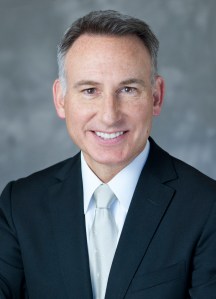
King County Executive Dow Constantine
As you know, the Ebola outbreak has caused devastating loss of life and decimated families in West Africa. The World Health Organization estimates 10,000 new cases of Ebola could occur every week by December if the virus is not contained.
With our Public Health department leading the way, we in King County are prepared in the event that the Ebola virus should ever come to Washington State. Our experts tell us that the most effective way to prevent the virus from spreading is to support the communities in West Africa that were first impacted.
Governments and non-profits are on the front lines of the response, and I have heard from many of you that as global citizens you want to do your part. As a result, I have directed the Employee Giving Program to set up a page dedicated to nonprofit organizations that are responding to the Ebola Crisis. Among the organizations the program has identified as first-responders are Partners in Health #3530, Medical Teams International #9461, and PATH International #3501.
During the Annual Giving Drive you have more options available through the workplace than any other time of year, by pledging before the deadline, November 21, 2014, and putting the words “In Honor of Ebola Response” in the dedication portion of your form.
There are three ways to give:
- Payroll Deduction – One time, once a month, or twice month.
- Time Donation – Now up to three nonprofit organizations. Please use a paper form for more than one. Read more here.
- Check – Made directly out to the nonprofit.
If you have already made your pledge and would like to make an additional donation, you must submit a paper pledge form with the “additional” box checked at the top of the form. You cannot make an additional online pledge if you have already pledged online.
Click here to make a pledge online
Click here to make a pledge with a paper form (for more than one time donation)
If you submit a paper pledge form, please send your form to the program at CNK-ES-0231 or by mail to 401 5th Ave, 2nd Floor, Seattle, WA 98104. If you have any questions you may contact Junelle Kroontje at 206.263.9405 or by email Junelle.kroontje@kingcounty.gov.
Thank you for opening your hearts to the people affected by Ebola and investing in a global health response that will save thousands of lives and improve the outcomes for thousands more.
Sincerely,

Dow Constantine
King County Executive
Share this:

Kudos! Ruth Ann Dunn, Metro Transit Operator

Greetings Harold [Taniguchi, Director, Department of Transportation], I am writing to let you know that tonight, your bus operator, route 17 bus #2737, was excellent at working with a rider with special needs. She was able to diffuse a potentially difficult interaction between passengers, and develop a trust with this young man in a very short time.
Her calm and caring command, her extra helpfulness, and lack of judgmental treatment, helped all of us riders. I am sure that this young man left the bus with a little less anxiety and a little more confidence to meet the big challenges he had before him. And who knows, it might have been just enough of a reduction in anxiety to enable him to reach success.
On the whole, I am usually impressed with your operators and the way they handle things. This operator this evening did something that meant even more – Stella Chao, Deputy Director, Environmental Health Division, Public Health – Seattle & King County
Share this:

Equity and Social Justice Fair coming Nov. 20

On Thursday, Nov. 20, King County will host an Equity and Social Justice (ESJ) Fair to showcase ESJ work efforts, results, and future plans across all of our departments and agencies.
The ESJ Fair has three goals:
- Build internal awareness of the ESJ ordinance among all King County employees;
- Showcase recent and current activities and the results of our ESJ work; and
- Share information and activities across departments in order to learn from each other, stimulate additional action, and inform future work efforts.
What can you do to help?
- Share your ideas with your Interbranch Team Representative (IBT) and internal ESJ teams to help decide what your department will showcase. Make it fun with activities to encourage participation and networking.
- Can you volunteer? Check with your supervisor if you would like to volunteer for planning committees, to staff tables, serve as greeters, decorate the room, or assist with set-up/tear-down. Your Interbranch Team Representative will be able to help you identify various roles.
- Attend! Register here, then save the date to your Outlook calendar, and come by to learn more about King County’s ESJ efforts.
The ESJ Fair will be held on Thursday, Nov. 20, from 10 a.m. to 2 p.m. in the Chinook Building, Rooms 121/123.Register here.
Share this:

County archivists preserve, celebrate our history

 Within King County Archives’ climate controlled vault resides the first record of marriage in Seattle, the minutes of an 1853 County Commissioners’ proceedings for the Washington Territory and a blueprint of a 1915 King County Ferry.
The documents were just a few of the artifacts Archives chosen to highlight for the nonprofit Historical Seattle’s workshop called “Digging Deeper.” The King County Archives was the last stop in the six month series where participants visited a different archive each month to get a behind-the-scenes look into research materials in the many archives in Seattle and King County.
“They wanted to increase their members’ comfort level with conducting searches within the archives,” Carol Shenk, a County archivist, said of the Digger Deeper series, something that she was very happy to support.
Share this:

Five Questions with Theresa Roscoe, Career Support Services Manager, Human Resources Division
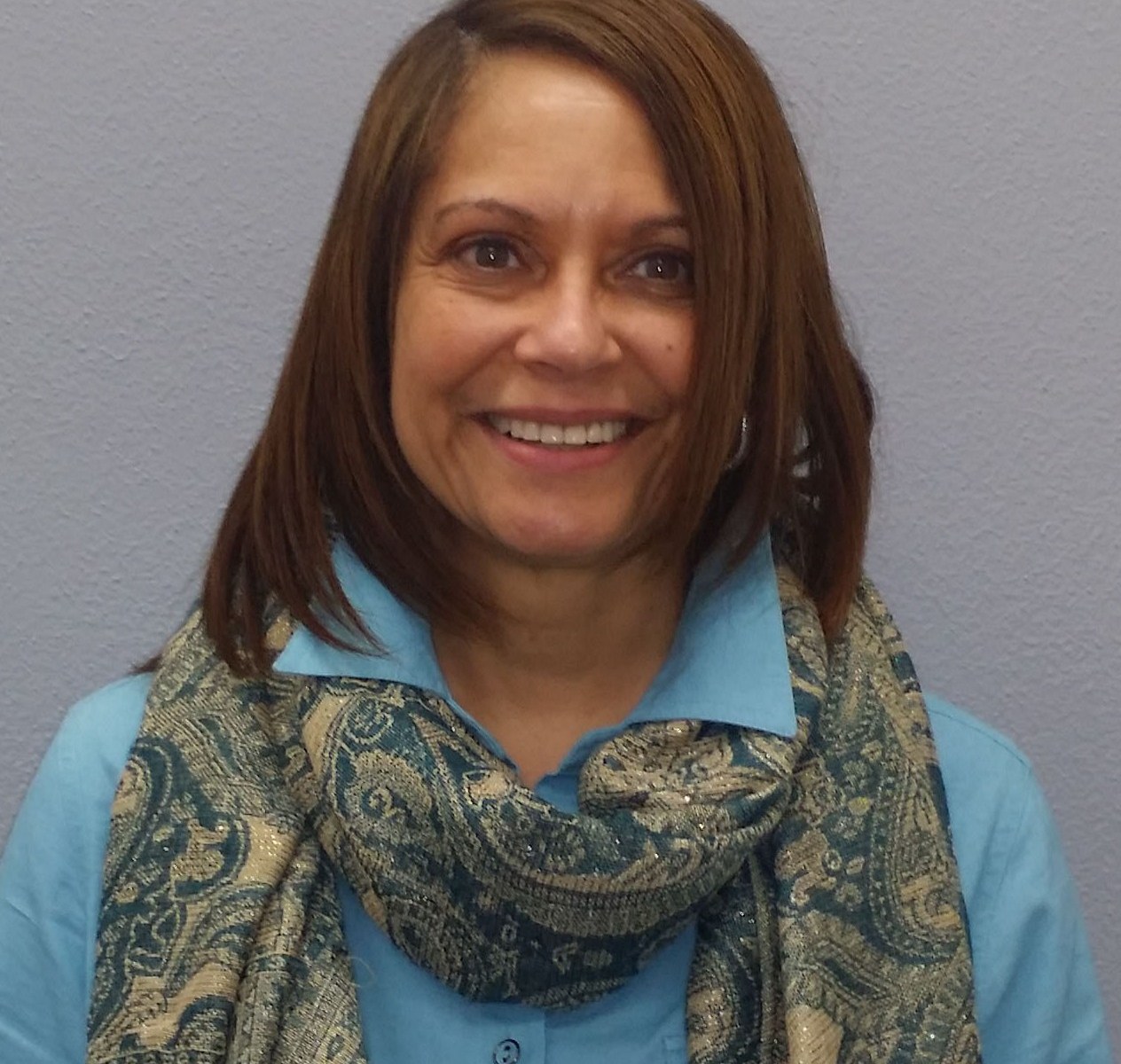
 1. What was your first role at King County? I began my career at King County 25 years ago as a temporary receptionist for the Office of Civil Rights, after identifying the County as an organization where I felt I could learn and further my career. During my career at King County I worked in Human Resources, the Executive Office and in Transit.
2. What do you do as Manager of Career Support Services? My role is to manage the day-to day activities of the Career Support Services staff. As part of my job, I am responsible for drafting and/or making recommendations on policies and procedures, designing new programs, developing online and classroom training, developing and maintaining good internal and external partnerships, and resolving issues and concerns. Because we provide countywide services, I work directly with the Office of Labor Relations, management from all departments, the Human Resources community and our employees. I love my work as a manager of this area because our team has the opportunity to help King County employees and watch them develop.
3. What services does your group offer King County employees? Career Support Services provides a variety of services and resources to County employees, community partners and the general public. This program was originally created to provide direct services and resources to assist employees who received lay-off notices. Some of these services include conducting individualized skill assessments; providing guidance in resume and cover letter writing; coordinating and facilitating informational meetings; coordinating a variety of external services; identifying and providing training to help employees be successful; providing mentoring and job shadowing opportunities; identifying, developing and facilitating a variety of training programs; and creating and maintaining internal/external relationships to provide additional services and resources to employees.






 Employee News