
Auburn Public Health employees discuss ideas, challenges with Budget Director
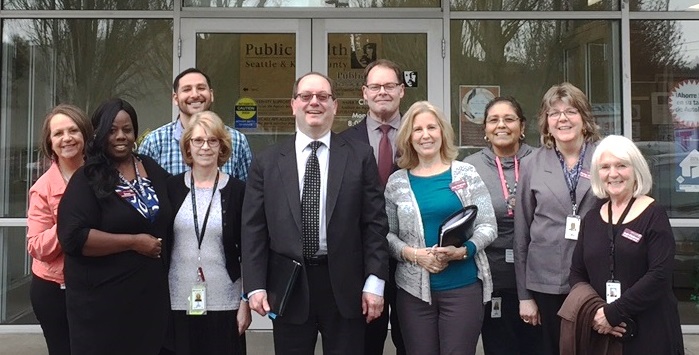
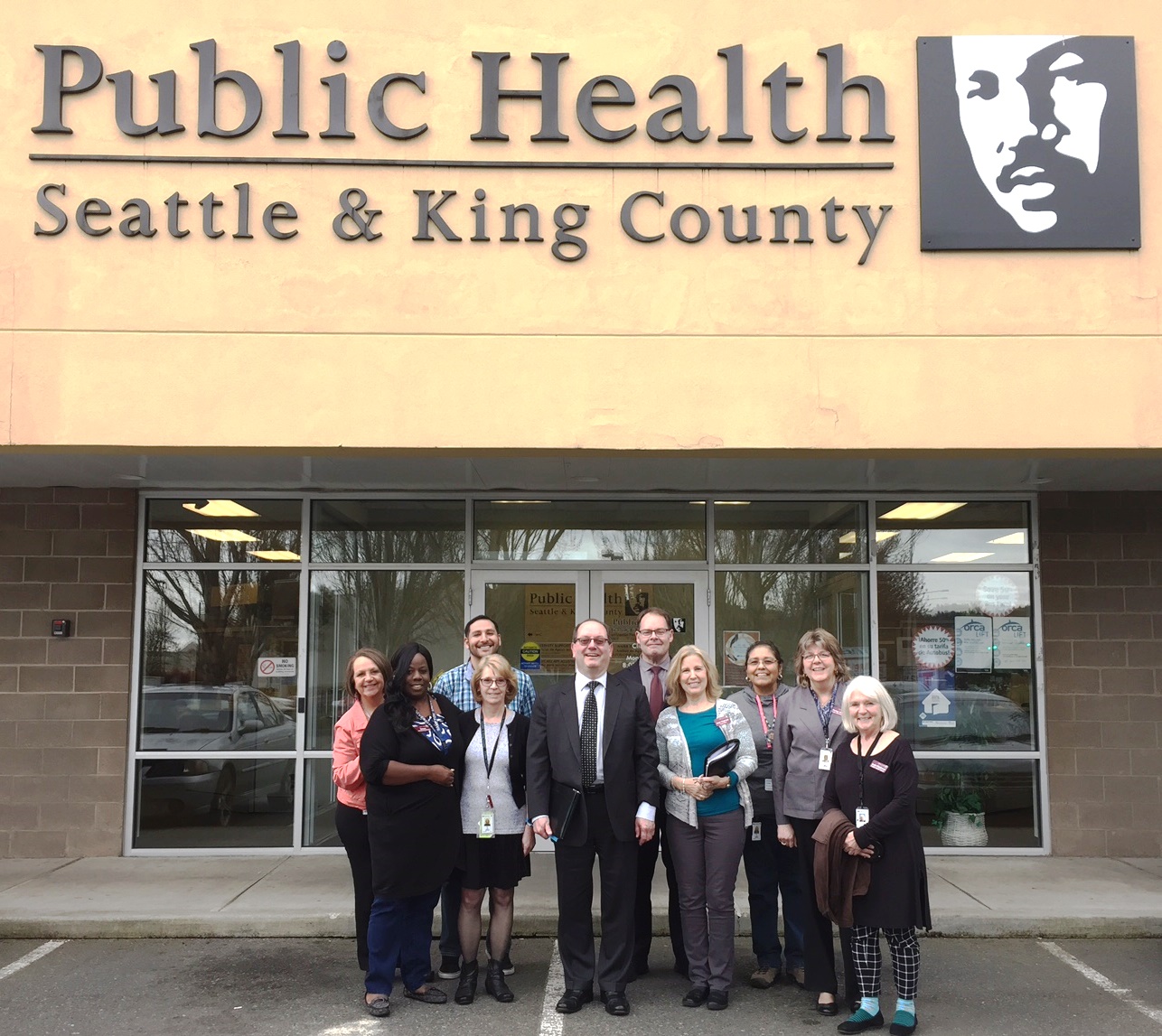 Dwight Dively, Director of Performance, Strategy and Budget, visited the Auburn Public Health Center on Monday, April 17, to talk with employees about the services they provide and what King County can do to help them serve their clients better.
Staff took Dively on a tour of the facility to showcase some of the services they deliver – such as Family Planning for teens and adults, and WIC nutrition plus maternity support for pregnant women and families. They discussed their work and raised issues they are encountering.
“I really appreciate Dwight making time to come out and see the great work we do here to serve our community at our South King County Public Health Centers,” Karen Russell, Area Manager for Public Health, said. “Staff were able to engage in a discussion on topics that are important to them.”
The tour was followed by a question and answer session with employees. One of the key issues raised was providing ongoing, sustainable funding for the Public Health Centers. Dively spoke about some of the actions the County is taking to try to ensure stable, long-term funding for Public Health, including working with the state on additional dedicated funding.
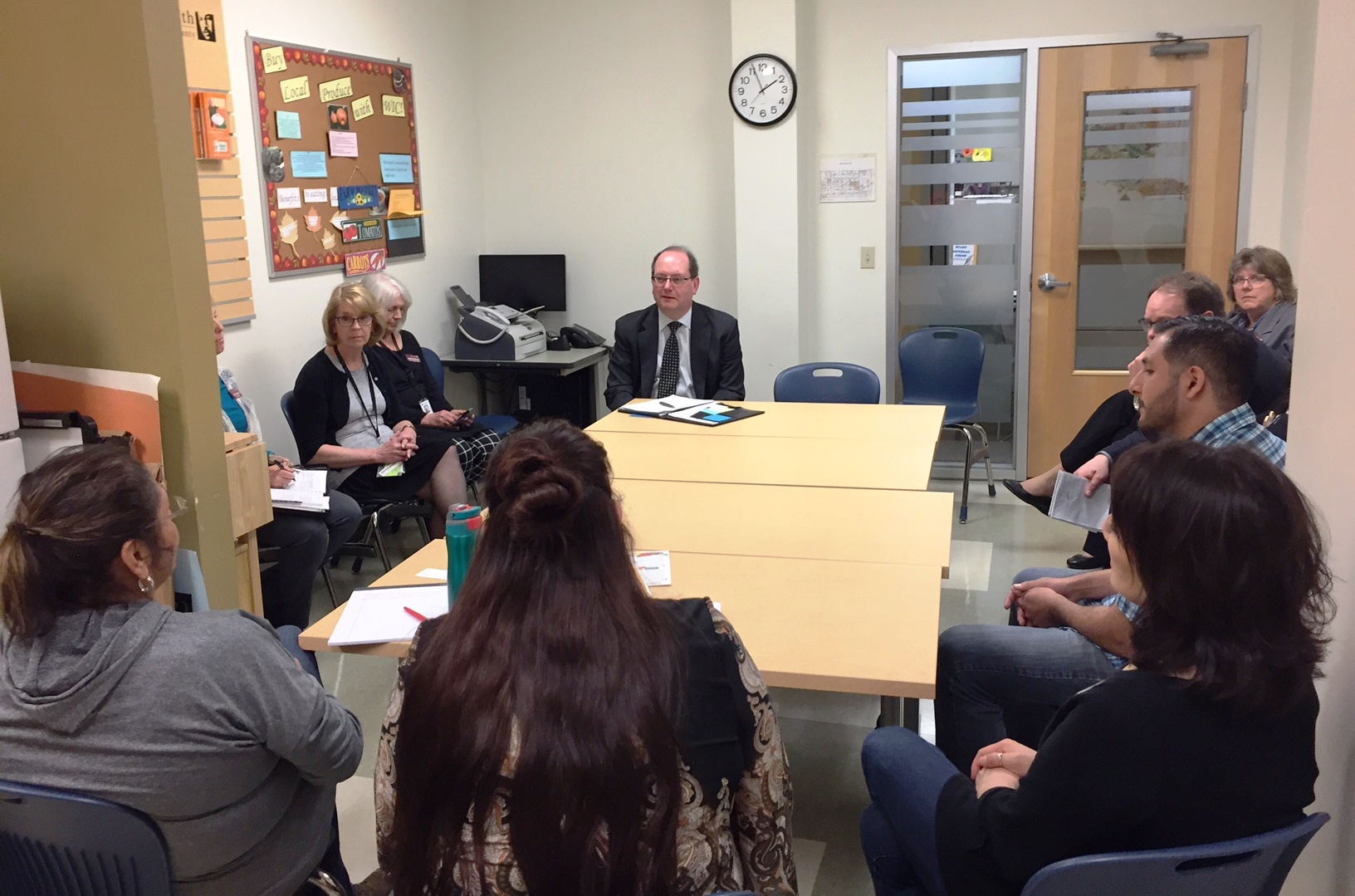 Employees also asked about the way that funding is distributed in the Public Health budget, how employees can become more engaged in the budget process, and discussed a Lean process to reduce missed appointments by patients.
“It was great to visit the Auburn Public Health Center and learn about the wide array of services they provide our clients. The staff is very dedicated to their work and it was great to hear about the challenges they’re experiencing and their ideas for doing it better,” Dively said. “I learned a lot about our programs, including ways to meet the needs of a diverse clientele and services we provide at satellite clinics and directly in the community.”
In 2014, many Public Health staff and labor partners worked at the grassroots level to help save public health clinics that were proposed for closure due to lack of funding. Executive Constantine created a partnership of funders – including cities, businesses and the Muckleshoot Tribe – to keep the clinic in Auburn open while the County works with the Legislature to create a sustainable funding source.
Share this:

Exciting news from the Facilities Management Division: New Customer Care Services
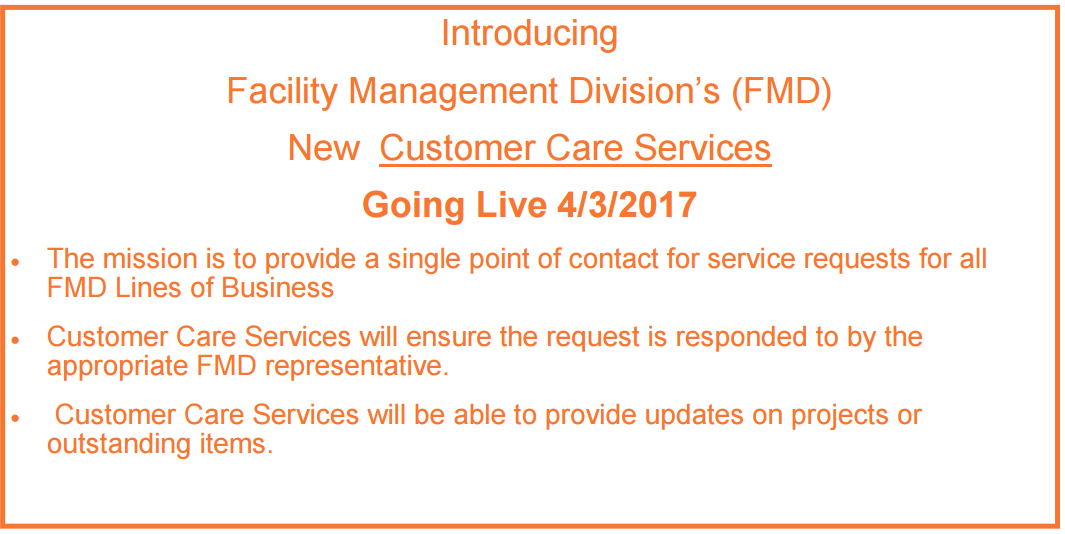
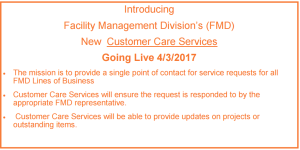 On April 3, the Facilities Management Division (FMD) went live with the new Customer Care Services to provide a single point of contact for service requests for all FMD Lines of Business. Customer Care Services will ensure the request is responded to by the appropriate FMD representative and will be able to provide updates on projects or outstanding items.
Employees are encouraged to contact FMD Customer Care Services at 206-477-9400 or Customercareservices.fmd@kingcounty.gov for assistance with changes to a workplace, maintenance requests, additional space needs, keys and a work authorization or order. Hours of operation are Monday through Friday from 8 a.m. to 4:30 p.m. More information about this new service can be found here.
Please note, employees are still to call the Security Emergency Dispatch Center for security emergencies at 206-296-5000.
Share this:

Kudos to Hizkiel Chibssa for outstanding work performance

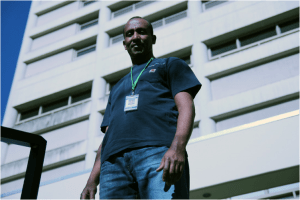 Sergeant Peter Boehme, with the Department of Adult and Juvenile Detention, recently shared this memo in praise of employee Hizkiel Chibssa, with Maintenance and Supply, King County Correctional Facility.
Share this:

Social Media Spotlight: KCIT on LinkedIn

 King County Information Technology is on LinkedIn and is a great resource for job opportunities, training opportunities, and technology news and information.
Follow KCIT on LinkedIn today!
Click here to view all King County social media pages.
Share this:

Featured Job: Project Program Manager II – Forester

Learn more about this position or view all available jobs.
Share this:

Meet a “do-it-all” nurse, with a special passion for social justice
Crossposted from Public Health Insider
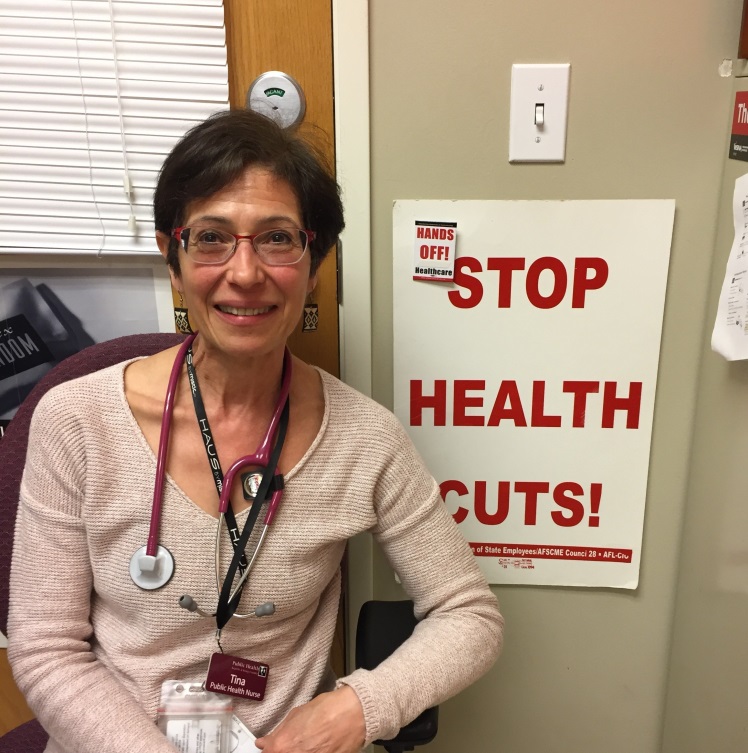
Tina Maestas, Public Health Nurse, as photographed by one of her clients at the Renton CSO.
Last week for National Public Health Week (April 3-7), the Public Health Insider featured unsung public health heroes who make our communities safer and healthier. Each day, they highlighted a public health worker through their own words, sharing their work and why they’re committed to serving our community.
Tina Maestas, who serves as a Public Health Nurse based in Renton, is one of seven Public Health Nurses whose office is located inside a “CSO” – a state office where people can apply for assistance with cash, food, child support, disability, and other services.
The CSO nurse’s office is strategically located so that people who come to enroll in state programs find one-stop-shopping, where they also can easily get pregnancy tests, STD tests, birth control, referrals to medical and dental care, and more.
Read more on the Public Health Insider blog.
Share this:

Sign up for your weekly Healthy Incentives CSA@Work produce boxes!

 Sign-ups are now open for Health & Well-Being’s CSA@Work program.
You can earn Healthy Incentives credit, support local farmers, achieve your healthy eating goals, and more! Available at 10 convenient King County worksites, CSA@Work connects eaters with local King County CSA (Community Supported Agriculture) programs that deliver weekly boxes of freshly harvested produce throughout the summer.
Read Healthy Eating Project Coordinator Audrey Royston’s CSA@Work blog post to identify and sign up with the correct CSA for your work location, and find FAQ answers on the web sites linked above. If you have any other questions, you can email the Healthy Incentives team.
Share this:

Employees redefine respect and cultural understanding, use KC eLearning as added resource

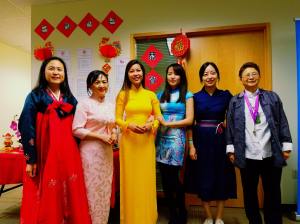
Pictured from left to right: King County Elections staff at the Lunar New Year Celebration: Kyung Jung (KC) from Korea, Signe Chan from China, Thanh Nguyen from Vietnam, Liwen Liu ( Lulu) from China, Jemi Kwon from Korea and Collen Kwan from China. Together they represent Language Services and Outreach, Voter Services and QC.
There’s strength in diversity. Different perspectives bring new insights, benefits and relationships. They can also bring challenges. A team of translators at King County Elections experienced this, and decided to overcome it, with great success.
“They come from four different countries and each one speaks a different language,” said Elections Supervisor Jacque Larrainzar. “Each of them has a different culture and way of looking at the world.”
The interpreters have backgrounds from Mexico, Korea, Vietnam and China. At a recent staff meeting, these differences became more apparent when Jacque asked her team to define respect. The answers were as varied as the people, and prompted an exciting discussion between several staff.
“As I was watching, I realized they were talking about the same thing, but they had different cultural lenses and that’s why there was a disconnect,” said Jacque.
When a staff member in the group recommended everyone participate in a series of training videos about cultural competence and cultural awareness on the KC eLearning website, Jacque agreed.
“We watched this training together and had a conversation about why conflict happens when you have such a diverse group of people,” she said.
“There’s a quote in the video about how conflict is usually due 99 percent to cultural differences and one percent to the actual disagreement.”
Jacque and her team watched the videos together, and separately, to help communicate about and explore these differences. They completed some of the suggested training exercises and found them useful in helping to work better together.
“We did these exercises about what support would look like for each of us,” said Jacque. “We even created this little sign in our cubicle that says ‘this is how I look when I need support’ or ‘this is how I look when I am not at my best’.”
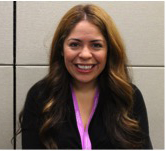
Interpreter Luz Barefoot
Through this process the group discovered they all have a passion for tea and enjoy food. They have begun to use this to build relationships and share with one another.
“One of our team members went to her hometown in Vietnam and brought tea from her trip to all of us,” explained Jacque.
These changes have added up to really positive results for the group. As the sole translators for all elections materials, deadlines can be tight, with each team member experiencing a lot of pressure. Through these trainings, the group has been able to reduce stress and friction between coworkers, channeling energy into more positive outcomes. For example, the team recently translated all print materials and the online webpage into Spanish and Korean, in a shorter period of time than expected because of how well they are working together.
Jacque has been with King County since June 2016, and recognizes the impact these cultural trainings have had on her work.
“It’s helpful for me as a supervisor because I can let them know how I am when I’m stressed, and they understand me,” she said. “And also I can do the same. I actually know the signs they are stressed and can offer a cup of tea, a snack, or a walk.”
“I can say it’s ok, go take your break.”

Interpreter Nhien Hyun
With the changing demographics of King County, it’s important to empower staff to respond in culturally and racially appropriate ways. Jacque and her team are glad King County provides easily accessible trainings and resources to help managers, supervisors and others understand how to better engage with their employees.
“I really am grateful to the County for bringing these tools to us and making them easy to use,” said Jacque. “Even though we all speak the same language – English – and everyone is an expert in their language and community, now they feel comfortable in asking to move a deadline, get support and be flexible.”
The entire team recently celebrated Chinese New Year on January 27 by sharing food, clothing and personal items from each of their cultures with the entire department. Additionally, each team member created a display about the languages served in King County, the history of those communities, the facts on voter turnout and how many elected officials represented those cultures. The informal event was so popular, the team hopes to host it annually. It helped to bring together the group, and introduce them, and their successes, to the department.
“The amazing thing is it also helped my program to host everybody in the department to create some awareness in a really fun way,” said Jacque. “We still have a lot of work to do but my team is amazing.”
Share this:

Enhanced Wireless at the King County Courthouse

Update provided by KCIT
 King County Information Technology is pleased to announce completion of the King County Main Courthouse Enhanced Wireless Network project. This means all floors and all devices – from 12 to the basement, laptop to smartphone – will now experience top-of-the-line, high-speed connectivity 24/7/365.
Some of you may have already noticed that you can take your laptop anywhere and stay connected everywhere. It’s more than connectivity. You can download documents, check calendars, exchange email without standing next to a hot spot or returning to your desk.
This project supports the KCIT Strategic Technology Goals of “IT Mobility” and “Workforce Engagement.”
There are two networks available:
- KCPublic – This is an open and unsecure wireless connection open to the public and for employee use on personal devices such as smartphones or tablets.
- KingCTY — This is the King County secured wireless network. It puts your device onto the same network as if you had plugged into one of the ports. This network requires your device to have a SSL certificate to connect. If you need help configuring this, open a helpdesk ticket.
To appreciate the challenges of this project, it’s important to know that the King County Courthouse installed wireless in patches, connected to specific projects, not the actual building and the people who did business throughout the structure. Connectivity ranged from non-existent to excellent.
It’s important to recognize, too, that each floor had a different design – floor densities varied, layouts were inconsistent. This made construction difficult, but not impossible.
We want to make sure it’s working perfectly. So please contact us through a help ticket if something isn’t working.
We appreciate your patience while we completed this important project. We are onto our next project: District Courts.
Share this:

KCIT deploying laptops to increase mobility and reduce costs
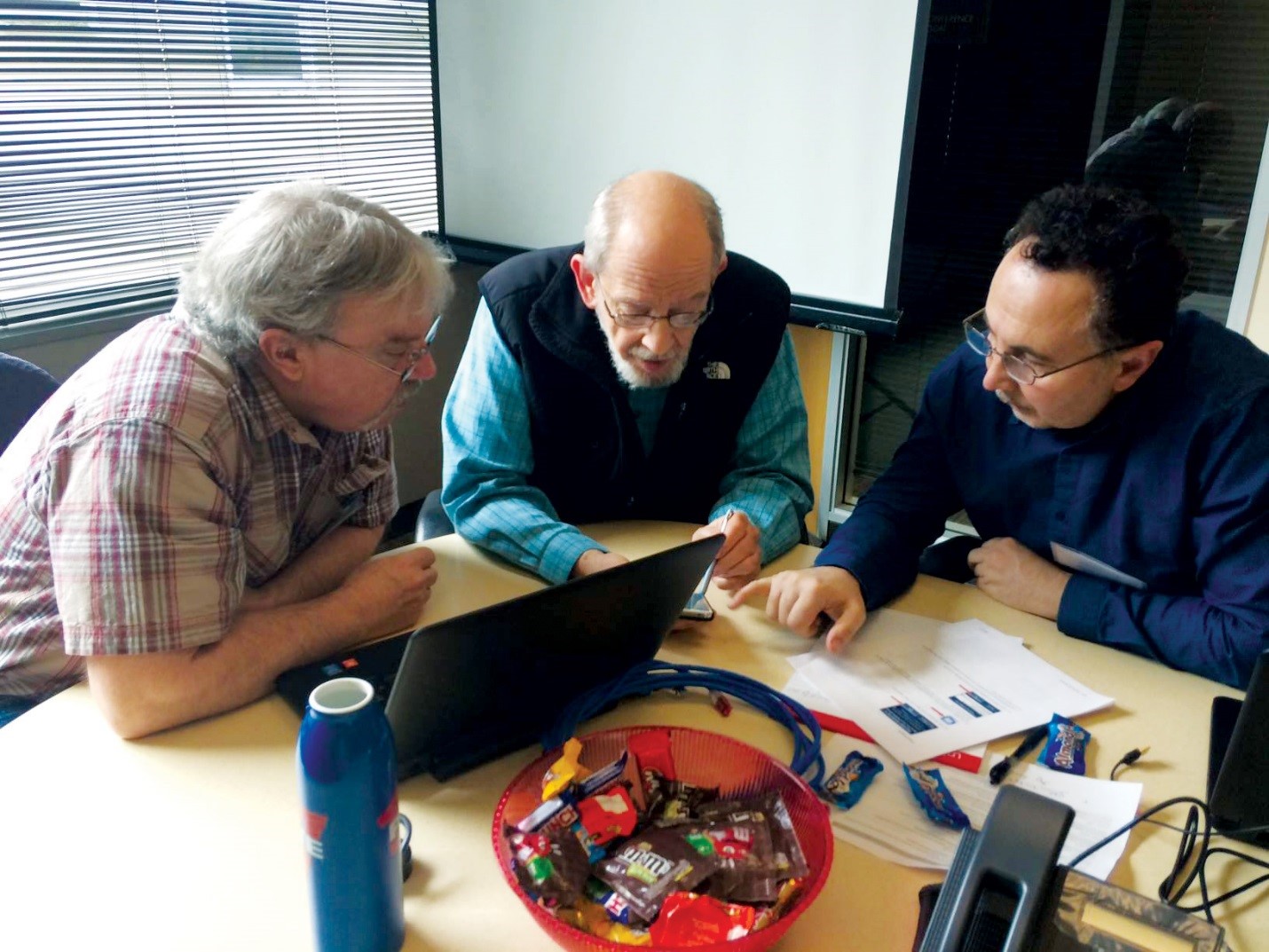
 King County is embracing mobile technology as it strives to help employees be more productive and efficient, regardless of where they are working from.
Nearly 8,000 of King County’s 10,000 PCs will be laptops by the year 2020.
“Laptops use less energy and allow more flexibility,” said KCIT Communications Manager Jamie Holter. “We have a goal of 80% laptop deployment by 2020, up from 27% a year ago.”
Last year, KCIT moved forward to standardize on laptop and mobile devices to reduce annual County expenses by some $800,000, providing employees mobility and flexibility with energy-efficient laptop computers.
That flexibility will allow County employees to be connected while working in the field, working from various County conference rooms and meeting venues, collaborating with other employees throughout the County, and while telecommuting when convenient or necessary. For example, an employee who assesses a piece of property can now take digital notes onsite and won’t have to spend time capturing data twice.
Mobility and flexibility are not the only benefits of the County’s decision to deploy laptops. According to Ashley Boyd, Enterprise Manager with KCIT, laptops use as little as one fourth of the energy a typical desktop PC might consume. “This 75% reduction in power consumption, for 10,000 county PCs, adds up to significant reductions in energy consumption and County utility spending,” said Ashley.
“We are also taking a new approach to procurement,” added Jamie. “We used to order as needed. Now we are moving to more of a life cycle approach and changing out entire departments at a time. It’s more cost effective to do business this way, and it helps us manage lifecycles and software upgrades.”
While a standard user laptop is now the default for all PC requests, KCIT recognizes that there are unique business requirements for full work stations for a variety of professions throughout the County. “In those situations, we continue to have other equipment types predetermined and readily available to meet these special business needs,” added Ashley. “These will be determined on a case-by-case basis.”
The increased deployment of laptops will also enhance King County’s reputation as a government technology leader. King County has been recognized by the Center for Digital Government as one of the United States’ top 10 digital counties 11 times over the past 12 years.
For more information, send KCIT and email or reach out to one of their Service Delivery Managers.






 Employee News